
Exclusive: Iran-IAEA letters show standoff over inspector access
 7 Min Read
Al Mayadeen publishes eight letters exchanged between Iran and IAEA chief Rafael Grossi, revealing Tehran's position on inspections of nuclear facilities targeted by the US and "Israel" in 2025, safeguards obligations, and threats against Iranian nuclear personnel.
-
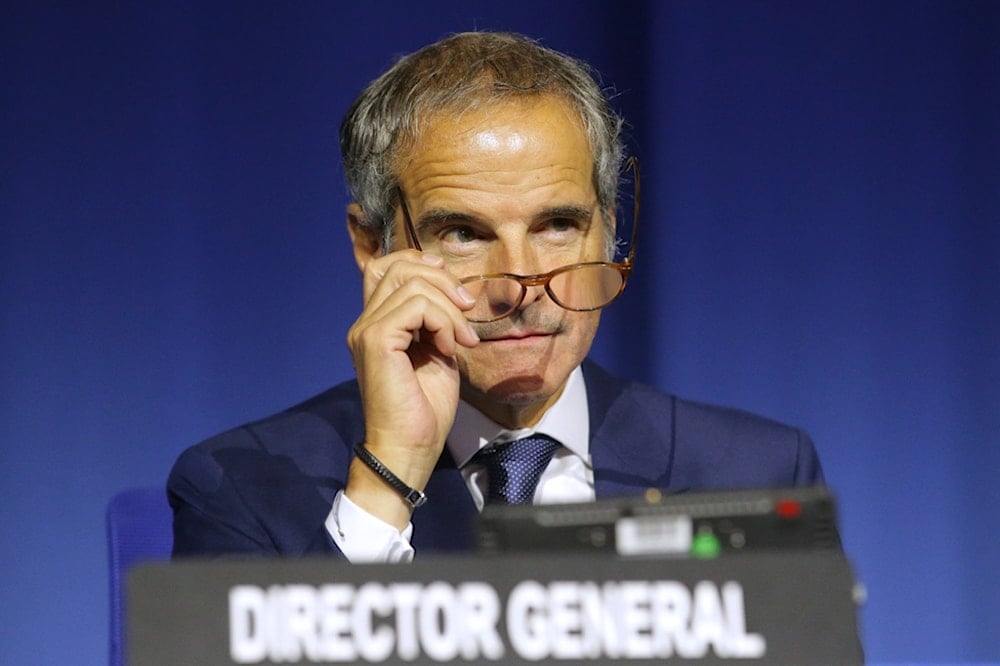
IAEA Director General Rafael Grossi watches from the podium during the annual General Conference of the IAEA in Vienna, Austria, Monday, Sept. 14, 2026. (AP/Heinz-Peter Bader)
Al Mayadeen has obtained a document circulated by the International Atomic Energy Agency (IAEA) to its member states, containing eight letters and responses exchanged between Iran and IAEA Director General Rafael Grossi between November 3 and 12, 2026.
The correspondence outlines Tehran's position on the return of IAEA inspectors to Iranian nuclear facilities targeted during the 2025 US-Israeli aggression, linking any resumption of inspections to the security conditions surrounding those sites and continued threats by US President Donald Trump to launch further attacks against Iran and its nuclear facilities.
Grossi's responses, meanwhile, welcomed Iran's reaffirmation that it had not suspended the implementation of its safeguards agreement under the Treaty on the Non-Proliferation of Nuclear Weapons (NPT), saying that the declaration was "important and encouraging".
The exchanges also highlight disagreements over the conditions and timing of inspections, the protection of confidential safeguards information, and the technical arrangements required to resume the full implementation of the agreement.
Iran links inspections to security conditions at nuclear facilities
In a letter dated November 3, 2026, Iran drew the IAEA's attention to a series of continued, explicit, and public threats by the US president to carry out further acts of armed aggression against the country, particularly targeting its nuclear facilities.
Tehran argued that these threats had "fundamentally undermined the legal, technical, operational, and security conditions indispensable for the safe, effective, and full implementation of safeguards measures."
It added that, as a result, the substantive requirements for implementing safeguards measures through normal procedures were no longer in place, making their implementation practically impossible under the prevailing circumstances.
In his response on November 4, Grossi recalled that he had repeatedly stated in reports and statements to the IAEA Board of Governors, as well as before the UN Security Council, that any armed attack or threat of an attack against nuclear facilities dedicated to peaceful purposes constituted a violation of the principles of the UN Charter, international law, and the IAEA Statute.
He reiterated that nuclear facilities must not be subjected to attacks under any circumstances, warning that such actions carried serious consequences for nuclear safety and security, the safeguards system, and regional and international peace and security.
However, Grossi stressed that Iran's safeguards agreement under the NPT remained in force and that neither party could suspend its implementation. He said safeguards activities should primarily focus on the submission of reports and access to safeguarded nuclear facilities and the nuclear material associated with them.
The IAEA chief also warned that, without receiving the required reports and access to the relevant sites, the agency would be unable to draw any safeguards conclusions regarding Iran's nuclear program.
In its November 6 response, Iran reaffirmed its commitment to resuming the full implementation of its safeguards obligations once the relevant legal and factual conditions allowed it.
Tehran also emphasized that protecting confidential safeguards information concerning nuclear facilities, materials, and personnel constituted a matter of vital national security. It warned that any unauthorized disclosure or public discussion of such sensitive information could have serious and irreversible security consequences for Iran.
Grossi welcomes Iran's commitment to safeguards agreement
In a November 10 response, Grossi welcomed Iran's statements, particularly its confirmation that, despite the exceptional circumstances created by armed attacks against its safeguarded nuclear facilities, it would continue implementing its safeguards agreement under the NPT and had not suspended the agreement.
He stressed that the statements were "important and encouraging", expressing hope that Iran's commitments would facilitate discussions between Tehran and the agency on concrete practical measures to ensure the full and effective implementation of the safeguards agreement.
Grossi also encouraged Iran to consider technical arrangements that could create the necessary conditions for a return to the normal implementation of safeguards in the country, while helping build confidence and paving the way for a broader diplomatic agreement.
He further called on Iran, as evidence of its declared commitment and in fulfillment of its legal obligations under the agreement, to submit reports on the current status of nuclear materials and facilities that had not been affected by military attacks.
Grossi urged Tehran to facilitate IAEA inspections at those facilities to verify the information provided, reiterating his call for constructive cooperation under the prevailing circumstances. He also expressed readiness to engage with Iran without delay on technical arrangements to facilitate the full and effective implementation of the safeguards agreement and contribute to a fully verifiable diplomatic arrangement.
Iran raises concerns over US reward offer for nuclear information
In a separate letter dated November 10, Iran drew Grossi's attention to a recent US government offer of a reward of up to $20 million for information concerning Iran's nuclear program, including individuals associated with it.
Tehran urged the IAEA chief to reaffirm the importance of preserving the confidentiality of the agency's safeguards activities, as well as its neutrality and institutional independence.
Iran called on the agency to ensure that safeguards-related information was not disclosed, misused, or exploited, placing particular emphasis on protecting the safety and security of Iranian nuclear scientists and personnel.
The letter also urged Grossi to raise the matter before the IAEA Board of Governors.
In his November 12 response, Grossi reaffirmed that the agency would strictly uphold its confidentiality commitments and protect all confidential safeguards information obtained in the course of implementing Iran's safeguards agreement under the NPT.
At the same time, he said he would continue submitting objective and fact-based reports to the Board of Governors, in accordance with the relevant resolutions adopted by the Board and the UN Security Council.
Grossi also reiterated the IAEA's commitment to carrying out its independent verification mandate under the safeguards agreement with Iran impartially, consistently, and effectively.
Tehran says security conditions prevent technical discussions
In another letter, dated November 11, Iran informed Grossi that discussions on technical and verification arrangements could not proceed until the root causes of the current situation were addressed and the essential conditions for the normal implementation of safeguards activities were restored.
Tehran said the objective restrictions arising from the prevailing security conditions had to be taken into account when assessing the feasibility and timing of any technical discussions.
It also clarified that its position "should not be interpreted as a rejection of cooperation with the Agency or a refusal to engage in future interactions."
In his response, Grossi referred to Iran's clarification, stressing that addressing the root causes of the current situation and implementing safeguards measures in Iran should not be considered mutually exclusive or sequential processes. Rather, he said, progress could be made on both tracks simultaneously.
The IAEA chief again expressed readiness to engage with Tehran without further delay on concrete practical measures aimed at restoring the full and effective implementation of the NPT safeguards agreement, while taking into account the prevailing circumstances, including Iran's safety and security concerns.
Grossi also cited the previous engagement that led to the "Cairo Agreement" as evidence that such an arrangement was possible and achievable.
Read more: IAEA inspections found no case of non-compliance in Iran nuclear sites


