
Five ISIS plots aimed to assasinate Syria’s Al-Sharaa: UN
 3 Min Read
The latest UN report on ISIS threat in Syria reveals five assassination attempts targeting President Ahmad Al-Sharaa and senior Cabinet ministers.
-
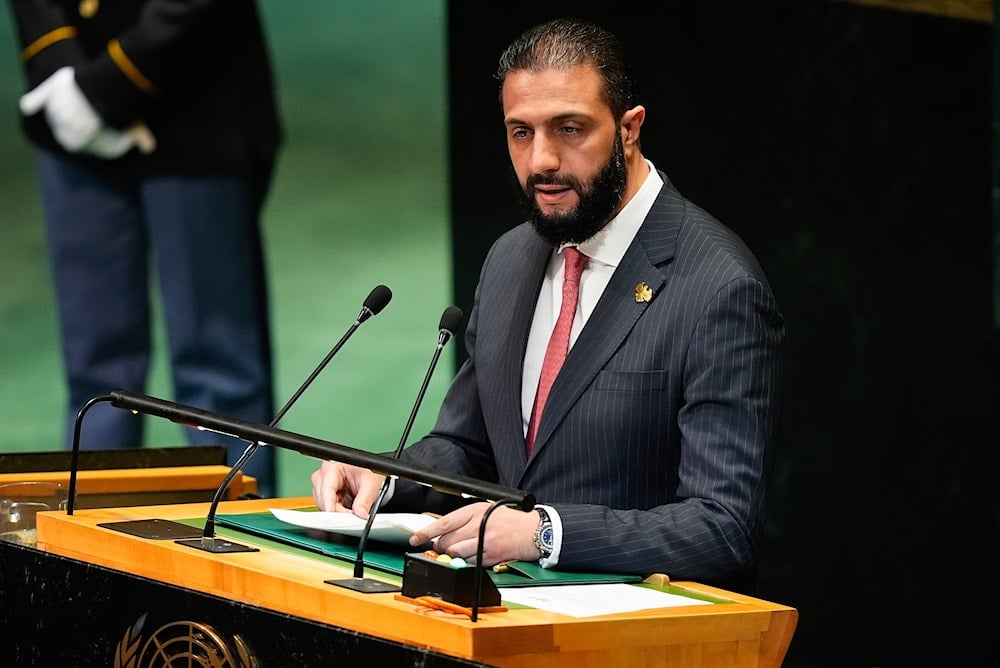
Syria President Ahmad Al-Sharaa speaks during the 80th session of the United Nations General Assembly, Sept. 24, 2025, at U.N. headquarters (AP)
Five assassination attempts targeting Syrian President interim Ahmad Al-Sharaa and two senior Cabinet ministers were foiled last year, according to the United Nations’ latest assessment of the threat posed by ISIS.
The details were outlined in the 22nd report of the UN secretary-general on the threat posed by ISIS to international peace and security, prepared in coordination with the UN Counter-Terrorism Office, The Washington Post reported on Wednesday. The report identified Al-Sharaa as a priority target, alongside Interior Minister Anas Khattab and Foreign Minister Asaad al-Shaibani.
According to the assessment, two of the plots against the interim president were carried out in the cities of Aleppo and Daraa by Saraya Ansar al-Sunnah, a group not listed by the UN but believed to operate as a front for ISIS. The arrangement allowed the group to maintain plausible deniability while expanding its operational capabilities.
Security in Syria remains fragile
Despite sustained counterterrorism operations, the report said Syria’s security environment remains fragile, with ISIS cells continuing to operate across the country. Attacks have primarily targeted security forces, particularly in the north and northeast, including an incident aimed at coalition forces jointly led by Syria and the United States.
The report also warned that ISIS has sought to inflame sectarian tensions to undermine national authorities, including through attacks on places of worship. An estimated 3,000 ISIS fighters remain active across Iraq and Syria, with the majority believed to be based in Syria.
While the Syrian desert retains strategic importance, it no longer serves as the group’s principal stronghold, the report noted. Nevertheless, ISIS maintains both the intent and capability to conduct attacks and exploit political and sectarian divisions.
Syria formally joined the anti-ISIS coalition last November. The coalition, formed in 2014, has conducted military operations against the group in Syria and Iraq, though Damascus was not previously a member. Since the fall of the Assad regime in late 2024, the new Syrian administration has worked to strengthen security conditions nationwide.
ISIS remains active
Since the fall of Bashar al-Assad’s regime on December 08 2024, ISIS (Daesh) has sought to reassert itself in Syria, exploiting security vacuums in eastern and northern regions. The group has relied on sleeper cells, hit-and-run attacks and targeted assassinations rather than territorial control, signaling a shift back to insurgent tactics.
On June 22 2025, ISIS carried out a suicide bombing at Saint Elias Church in Damascus, marking one of its deadliest post-Assad attacks and underscoring its continued ability to strike civilian targets in the capital despite intensified counterterrorism efforts.
Later, on December 13 2025, militants linked to ISIS targeted Syrian and US forces near Palmyra, highlighting the group’s ongoing focus on security and coalition personnel as part of a broader campaign to destabilize the country’s fragile transition.
Despite sustained military pressure throughout 2025 and early 2026, ISIS has continued to inflame sectarian tensions and mount attacks in remote desert regions and urban peripheries, demonstrating both intent and operational capability even without holding significant territory.


