
Flydubai attack raises questions over warnings, security checks
 4 Min Read
A reported prior flying ban on the co-pilot accused of attacking a Flydubai captain raises questions about recruitment checks and information sharing.
-
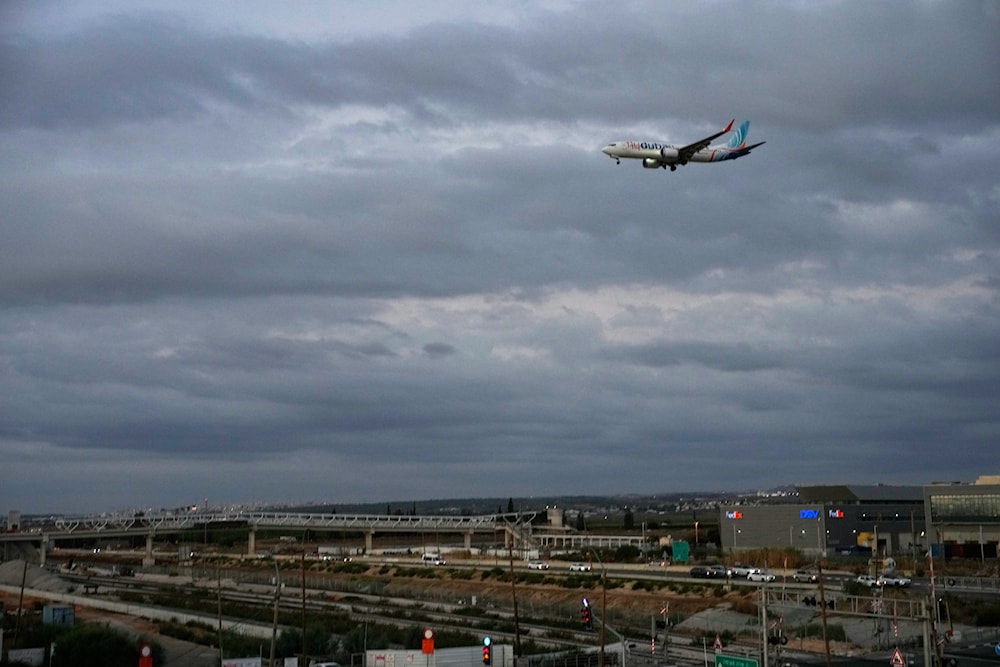
A Flyيubai plane carrying Israeli passengers who had earlier been aboard another Flyيubai aircraft that made an emergency landing in Saudi Arabia approaches Ben Gurion International Airport near Tel Aviv, occupied Palestine, Wednesday, Sept. 30, 2026 (AP)
Questions over prior warnings and airline recruitment have emerged following the attack aboard a Flydubai flight from Dubai to Tel Aviv, as UAE authorities pursue a "terrorism" investigation and key details about the suspect’s motives remain unresolved.
The Wall Street Journal, citing people familiar with the matter, reported that Oman had previously barred the co-pilot from flying over concerns that he had adopted "radical ideological views." Despite that restriction, the sources said, he was subsequently hired by Flydubai.
The newspaper could not establish whether Oman had shared its concerns with the airline or other countries, nor could it determine the nature of the alleged radicalization. Those gaps leave unanswered what information was available when the airline recruited him and whether any warning went unaddressed.
Wednesday’s incident aboard Flight FZ1073 forced the aircraft to divert to Saudi Arabia. The flight was carrying 172 passengers, including 166 Israelis, alongside crew members.
Read more: Saudi Arabia rejects Israeli request for military evacuation flights
UAE alleges planned attack as motive remains under investigation
UAE Attorney General Hamad Saif al-Shamsi said Saturday that “investigations into the incident involving Flydubai flight FZ1073 revealed that the co-pilot had attempted to carry out a terrorist operation," the Emirates News Agency (WAM) reported.
He said the suspect “began executing his plan during the flight, attacking the captain inside the cockpit with an emergency axe and attempting to seize control of the aircraft’s controls.”
However, the inquiry into the circumstances and possible links behind the attack remains open. Al-Shamsi said, “Investigations remain ongoing to uncover all the circumstances surrounding the incident, its motives and any associated connections.”
The UAE did not disclose the co-pilot’s nationality in Saturday’s announcement. The WSJ, citing people briefed on the investigation, identified him as an Omani national named Hamam al-Hammami.
Saudi authorities announced Thursday that the suspect and the Indian captain had been transferred to the UAE, which is leading the investigation.
What did the airline know?
The reported Omani ban places the recruitment process and the exchange of aviation-security information under scrutiny. The available accounts do not establish whether Flydubai knew of the restriction when it employed the co-pilot.
Asked about the suspect’s history in Oman, a UAE spokesperson declined to comment “to avoid prejudging the outcome of the investigation or interfering with its course.”
Aviation-security analysts interviewed by the newspaper described the incident as a significant security failure, stressing that identifying a potential attacker before they reach an aircraft is essential to preventing such incidents.
Whether the reported earlier concerns were documented, communicated, or assessed remains unclear from the accounts provided.
Israeli claims precede completion of inquiry
Israeli Prime Minister Benjamin Netanyahu described the incident as "terrorism" on Friday, claiming that "the attacker underwent Islamic radicalization” and that “he came to crash the passengers on board.”
Netanyahu said “Israel” was investigating whether the suspect acted alone or worked with others. The WSJ reported that Israeli authorities hoped to question him.
Those assertions about the suspect’s ideology go beyond what the newspaper said it could independently establish. While UAE prosecutors have alleged a planned "terrorist act", their statement also makes clear that motives and possible connections remain under investigation.
Witness accounts describe cockpit struggle
According to passengers interviewed by the WSJ, the aircraft entered a steep dive after the co-pilot attacked the captain.
The wounded captain reportedly managed to open the cockpit door, allowing passengers and crew members to overpower the assailant. Two reserve pilots travelling aboard the aircraft then stabilized it and landed in Saudi Arabia, the newspaper reported.
The reports use different descriptions of the assault: the WSJ said the captain was stabbed, while the UAE attorney general identified an emergency axe as the weapon. The supplied accounts do not clarify that difference or establish that another weapon was involved.
Flydubai initially said an altercation inside the cockpit had triggered a distress signal and prompted the diversion, while stressing that the reasons and motives remained unknown. The airline also announced the suspension of flights to and from “Israel” pending the completion of investigations.
Read more: Israeli envoy to UAE says Flydubai motive remains unclear


