
Forbidden Stories reveals Morocco Pegasus spyware network
 4 Min Read
A Forbidden Stories investigation reveals new details on alleged Moroccan use of Pegasus spyware to monitor journalists, activists, and officials.
-
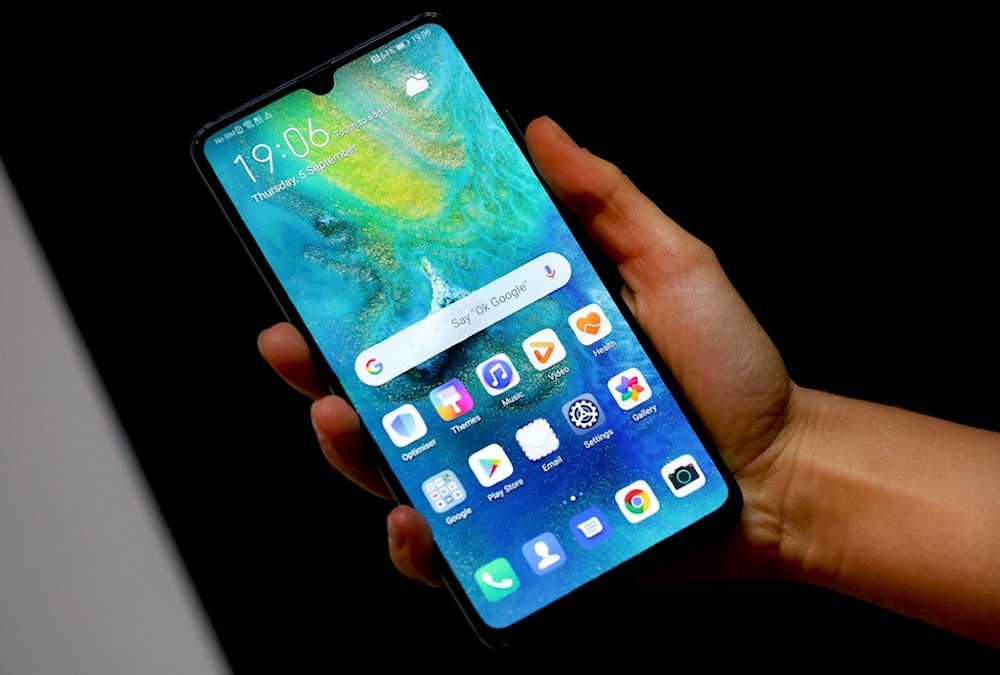
In this Thursday, Sept. 5, 2019 file photo a staff member holds a Huawei 'Mate20 X 5G' smartphone at the IFA 2019 tech fair in Berlin, Germany (AP)
A new investigation by Forbidden Stories and its partners has revealed previously unpublished documents and testimonies detailing Morocco’s use of surveillance tools, including Pegasus spyware, against journalists, activists, and political figures.
The report, published five years after the Israeli Pegasus Project investigations, examines the role of Morocco’s domestic intelligence agency, the General Directorate for Territorial Surveillance (DGST), in monitoring individuals inside and outside the country.
Moroccan authorities have repeatedly denied using Pegasus spyware.
Details of Pegasus surveillance operations
According to the investigation, Pegasus, developed by the Israeli company NSO Group, was allegedly used to access mobile devices without requiring interaction from the user, allowing operators to extract data from targeted phones.
Forbidden Stories said the investigation was conducted alongside Amnesty International’s Security Lab and 13 international media organizations, with researchers examining confidential documents, internal materials, and testimonies from sources linked to Morocco’s security apparatus.
The report includes testimony from a former DGST agent identified under the pseudonym "Safir," who claimed that Moroccan intelligence carried out extensive surveillance operations against domestic opponents and activists.
The investigation also cites the case of journalist Omar Radi, who was previously identified by Amnesty International and the Forbidden Stories consortium as a target of Pegasus spyware.
Journalist Omar Radi among reported targets
Radi, who was pardoned in 2024, said Moroccan authorities had monitored him for years before his 2020 arrest, including through surveillance of his phone and personal surroundings.
According to the report, a former intelligence officer said security services considered Radi a high-priority target and expanded their monitoring efforts after failing to find evidence against him.
The investigation said it uncovered documents related to an alleged operation labeled "Op S6_Edge," which it claims involved attempts to monitor activists in Morocco’s Rif region during protests that began in 2016.
The report says that intelligence agents distributed smartphones containing spyware through local shops and monitored internet cafes used by targets.
DGST expanded digital monitoring network
Forbidden Stories reported that Morocco used Pegasus technology to target thousands of phone numbers, citing data obtained during the Pegasus Project.
The consortium said it identified Moroccan phone numbers linked to DGST agents that appeared on Pegasus targeting lists, including numbers belonging to security officials who allegedly tested the spyware system.
The report also claimed that potential targets extended beyond Morocco, including foreign officials, journalists, and political figures such as French President Emmanuel Macron, Belgian Prime Minister Charles Michel, and journalists working for Mediapart.
A technical analysis by Amnesty International’s Security Lab, cited by Forbidden Stories, reportedly found links between accounts used to target Moroccan journalists and activists and those targeting French journalists and European political figures.
NSO Group has rejected previous allegations linked to the Pegasus Project, with company officials disputing claims made in earlier investigations.
Forbidden Stories said the latest investigation provides further insight into the operation of one of the world’s most controversial spyware tools and its use in suppressing dissent.
NSO control spyware operations
Legal documents from the ongoing lawsuit between NSO Group and WhatsApp have revealed for the first time that the Israeli cyberweapons firm, rather than its government clients, is responsible for "installing and extracting" data from mobile phones targeted by its hacking software, The Guardian wrote.
These revelations emerged from sworn depositions of NSO Group employees, portions of which were made public on Thursday. The lawsuit, filed by WhatsApp in 2019, followed the messaging app’s discovery that 1,400 of its users, including journalists and human rights activists, had been targeted by NSO's spyware over a two-week period.
WhatsApp's case centers on allegations that the Israeli firm, not its international government clients, operates the spyware. NSO has consistently claimed that its technology is designed to combat serious crimes and terrorism, with clients bound by agreements to avoid misuse of the software. The company has also alleged it has no knowledge of who its clients target.


