
Foreign enrollment drops at US universities amid visa clampdown
 5 Min Read
Foreign student enrollment at US universities declined for the first time in three years as visa restrictions and policy shifts under Donald Trump hit graduate programs hard.
-
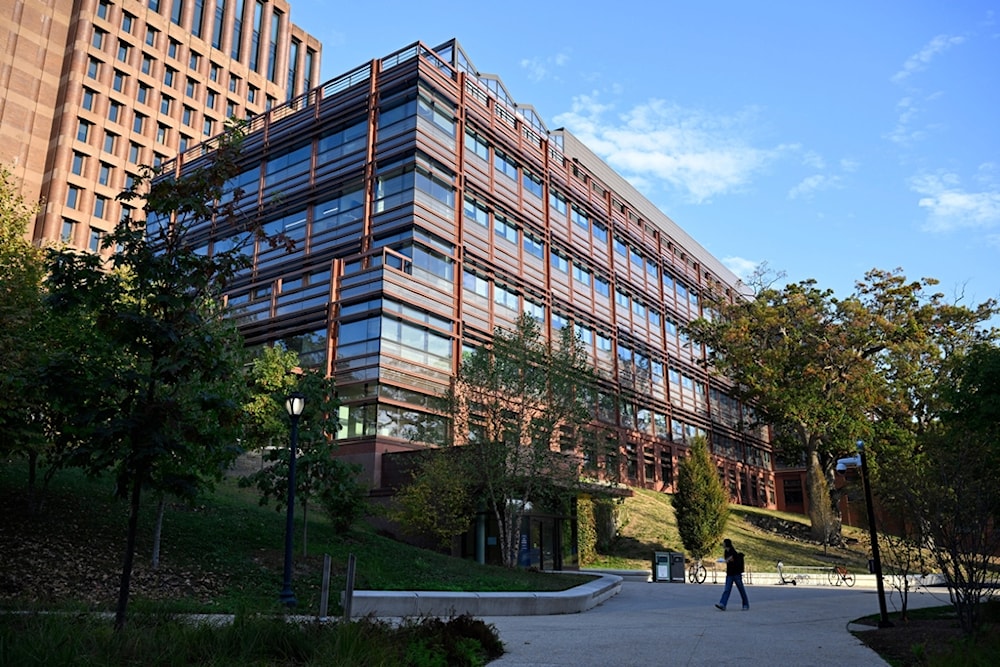
The Yale Science Building (YSB) at Yale University, Tuesday, October 7, 2025, in New Haven, Conn. (AP Photo/Jessica Hill)
Foreign student enrollment at US universities declined this fall for the first time in three years, as the administration of US President Donald Trump tightened visa restrictions and imposed new pressures on elite academic institutions.
According to data released by the National Student Clearinghouse Research Center, the number of international students dropped by nearly 5,000, even as overall student enrollment in the US grew by 1%. The decline was especially sharp in graduate programs, where enrollment fell by 6%, nearly 10,000 students, following a surge of more than 50% between 2020 and 2024.
The downturn marks a significant shift in foreign student enrollment patterns and poses a financial challenge for US universities. The Trump administration’s policy moves, including travel bans, increased visa scrutiny, and the revocation of thousands of student visas, have disrupted the academic pipeline that many institutions rely on for both talent and tuition revenue.
The US Department of State announced earlier this week that it had revoked 8,000 student visas as part of efforts to “keep America safe,” underlining the impact of tighter visa restrictions. At the same time, top universities have faced endowment taxes and federal funding freezes under Trump’s broader higher education overhaul.
Bloomberg reports that Matthew Holsapple, senior director of research at the Clearinghouse, called the drop in graduate student enrollment a “stark difference” from recent years. “It follows several years of strong growth, making this year’s downturn a pretty meaningful shift after that long period of expansion,” he said.
Read more: China vows to protect international students amid Harvard visa crisis
Visa policy hits mid-tier institutions hard
Lewis University, a private institution near Chicago, experienced a 37% decline in new international students entering graduate programs after a summer pause in visa processing. The decline forced the university to cut 10% of its workforce.
“It was a very dramatic shift in a very small amount of time, and we had to make quick adjustments,” said Provost Christopher Sindt, per Bloomberg. “We had been growing our staff and resources, but this decline required us to right-size the institution to a smaller enrollment profile.”
DePaul University also reported a steep decline. Foreign student enrollment fell by 755 students compared to fall 2024, while new graduate students from abroad dropped nearly 62%.
The school attributed the losses to visa challenges and waning interest in studying in the US. “Our FY26 budget planning did not anticipate a reduction of this magnitude,” Bloomberg reports DePaul’s leadership said in a September update announcing cost-cutting measures.
Top schools resist the downturn
While mid-tier and private schools struggled, some elite institutions have continued to attract international students. Harvard University, often targeted by Trump’s rhetoric, reported a record number of foreign students this academic year. In fall 2025, international students made up 28% of the student body, the highest share since at least 2002.
Bloomberg writes that in Gurgaon, near New Delhi, Adarsh Khandelwal, co-founder of the college counseling firm Collegify, said his clients are now focused solely on top-tier universities in the US due to the rising risks.
“Now the feeling in this part of the world is that if you want to go to the US, you should only look at a top school because only then you’ll have a good future or a good job or a good ROI,” he said.
Previously, students would apply to about eight schools, often including liberal arts colleges. Now, application pools have nearly doubled, but are limited to the most competitive institutions.
Shift toward affordable and flexible pathways
Beyond international enrollment trends, the data also show shifting preferences among the broader student population. Graduate enrollment in computer and information science programs, a field popular with foreign students, fell by 14%, the first drop since 2020. Undergraduate enrollment in the same field declined by 3.6%.
Meanwhile, students appear to be moving toward more affordable and flexible education models. Private four-year schools experienced a 1.6% decline in enrollment, while public universities grew by 1.4% and community colleges by 3%.
Shorter-term programs are also gaining momentum. Certificate and associate degree programs grew by 1.9% and 2.2%, respectively, outpacing bachelor’s degree enrollment growth. Community colleges now enroll 28.3% more students in certificate programs than they did in fall 2021. “We are continuing to see students shifting out of some of the more traditional pathways into these shorter-term, more flexible, perhaps more job- and career-oriented fields,” Holsapple noted.


