
France sets 2027 election date, Mélenchon emerges as strong contender
 3 Min Read
France has confirmed the dates for its 2027 presidential election: first round on April 18 and runoff on May 2, marking the end of Emmanuel Macron's final term.
-
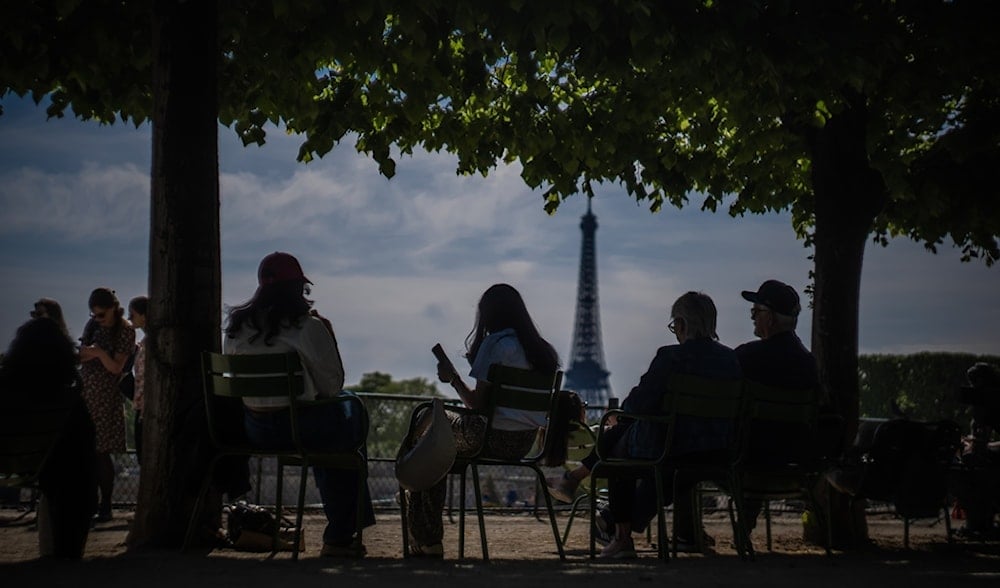
People relax in the Tuileries Garden in front of the Eiffel Tower in Paris, Saturday, April 25, 2026, in Paris (AP)
France will hold the first round of its next presidential election on April 18, 2027, with a runoff scheduled for May 2, an executive source told AFP on Tuesday. The date will be formalized on Wednesday at the Council of Ministers.
The vote marks the end of President Emmanuel Macron's second and final term. Under the French constitution, the election must take place between 20 and 35 days before his term expires.
Marine Le Pen's National Rally views the election as its strongest opportunity yet to take power, with polls repeatedly showing the far right leading in the first round. It remains unclear who will represent the party, however.
Le Pen hopes to run for a fourth time, after finishing third in 2012 and losing two runoffs to Macron. Her candidacy depends on the outcome of a July 7 appeals court ruling on a fake jobs scandal tied to the European Parliament, which could bar her from holding office.
Mélenchon positioned as Left's strongest contender
The 2027 race could produce an unexpected outcome on the left, drawing a comparison to Zohran Mamdani's mayoral win in New York City, according to Bloomberg Opinion columnist Lionel Laurent.
France Unbowed leader Jean-Luc Mélenchon has a "head start" among candidates seeking to challenge the National Rally, investment banker Matthieu Pigasse said last week, as cited by Laurent.
In a televised interview, Pigasse pointed to public frustration with an "exhausted" capitalist system and said he would back the far left over the far right in a runoff between the two, despite disagreements with some of Mélenchon's positions.
French politics have shifted toward concerns over immigration and insecurity, particularly among an electorate where more than a quarter of voters are over 65, Laurent writes. At the same time, inflation, inequality, and unemployment are becoming greater concerns, which he says works in Mélenchon's favor given his platform of expanded state ownership of the economy.
Mobilizing non-voters key to Mélenchon
Mélenchon is currently polling at 13 percent, putting him close to former prime minister Edouard Philippe and ahead of other centrist candidates, Laurent notes.
France Unbowed's strategy centers on mobilizing voters who typically abstain, according to pollster Jerome Fourquet, cited in the piece. Around 26 percent of the electorate did not vote in 2022. The party is focusing on lower-income banlieues, where support is already strong but turnout is historically low, using issues such as police violence, social mobility, and Gaza to drive engagement.
Mélenchon's strategy also extends to overseas territories, including New Caledonia, where he has said he would support a path toward independence if elected. This could bring tens of thousands of additional votes from the territory's indigenous Kanak population, Fourquet says.
Pigasse's comments should be read as a signal to France's political establishment rather than a prediction, Laurent argues, adding that the center has yet to present a clear alternative to the country's polarized political landscape ahead of the vote.


