
France urges structured US military drawdown in Europe
 4 Min Read
France is calling for a coordinated US military reduction in Europe, warning against abrupt troop changes as NATO allies debate burden-sharing ahead of a key summit.
-
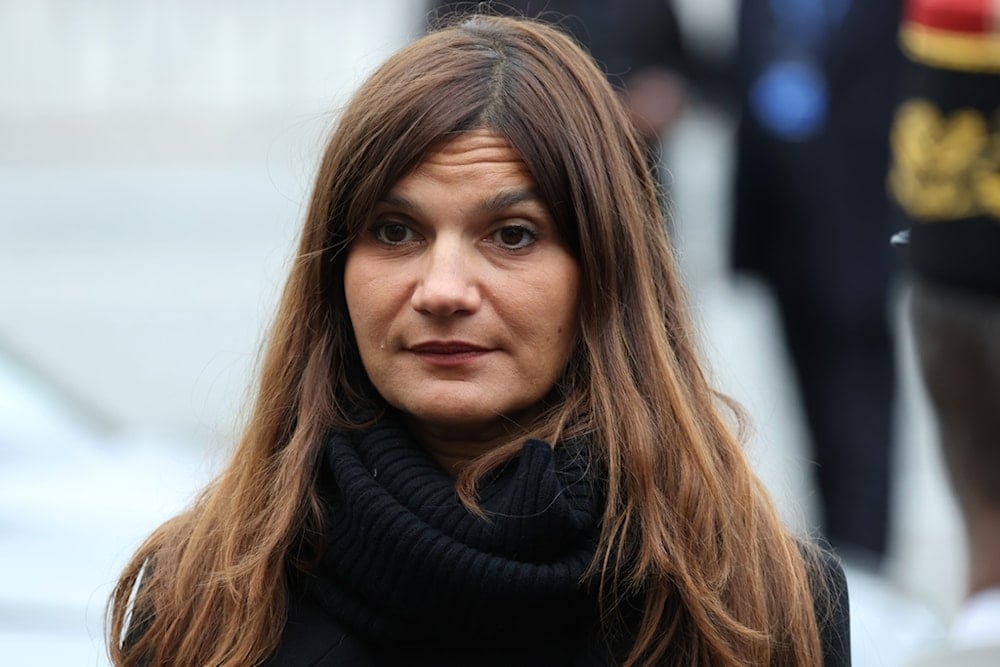
France's Deputy Defense Minister Alice Rufo before a wreath-laying ceremony in front of the statue of Georges Clemenceau on the Champs-Élysées Avenue in Paris on November 11, 2025 (Ludovic Marin, Pool via AP)
France has called for a gradual and structured reduction of the United States’ military presence in Europe, urging Washington to avoid sudden changes that could destabilize NATO planning and European defense coordination.
French Deputy Defense Minister Alice Rufo told POLITICO Paris wants any US adjustments to be implemented in an “orderly, coordinated and efficient manner,” stressing the need to prevent strategic uncertainty among European allies. “We would like the U.S. shift to take place in an orderly, coordinated, and efficient manner to avoid creating dilemmas for Europeans,” Rufo told POLITICO following meetings in Brussels with NATO Secretary-General Mark Rutte.
She also cautioned against overreaction or complacency in the face of shifting transatlantic dynamics. "Given the extreme volatility of transatlantic relations, we must avoid both catastrophism and denial", she added.
Read more: France urges 'Israel' to respect MoU deal amid aggression on Lebanon
NATO allies seek clarity amid US force adjustments
The French position comes amid a series of US announcements affecting its military posture in Europe, prompting concern among NATO members about the pace and coordination of change.
Recent US decisions have included a review of troop deployments in Europe, adjustments to force allocations, and shifting planning assumptions regarding future contributions to NATO’s defense structure.
POLITICO reports that European officials have expressed concern that abrupt or uncoordinated changes could complicate defense readiness, particularly in regions closer to Russia, where NATO maintains forward deployments and rapid response structures.
The outlet also states that Polish officials, for example, have reportedly sought clarity after changes to US deployment plans, while also exploring the possibility of securing a more permanent American presence.
Burden-sharing debate ahead of NATO summit
The issue is expected to feature prominently at the upcoming NATO leaders’ summit in Ankara on July 7–8, where allies will discuss so-called "burden-shifting", the redistribution of defense responsibilities between the United States and European members.
France, which maintains one of NATO’s three nuclear arsenals, argues that Europe must assume a greater share of conventional defense responsibilities while adapting to a changing US strategic focus.
Rufo also told POLITICO that European forces should prepare for a potential reduction in US troop levels to pre-2022 positions, while acknowledging that certain high-end capabilities remain heavily dependent on Washington. “The challenge Europeans will face is finding a way to compensate strategic enablers, especially,” she told the outlet, referring to US-provided assets such as airlift, refueling, intelligence, and space-based systems.
However, she rejected the idea of direct duplication of US capabilities. “But it doesn’t make sense to do a one-for-one replacement,” Rufo told POLITICO. “Europeans don’t wage war the same way Americans do.”
Read more: Baghaei: NATO chief's remarks confirm alliance role in US war on Iran
European defense models and strategic autonomy debate
French officials have pointed to evolving NATO structures as evidence that Europe can adapt its defense posture with fewer permanently stationed foreign forces.
They cite multinational forward deployment frameworks and rotational command structures as potential models for future arrangements, including initiatives where framework nations provide the core of deployed forces.
France itself leads NATO’s multinational presence in Romania, reflecting its growing role in alliance operations on Europe’s eastern flank.
POLITICO reports that officials also highlight emerging models in Northern Europe, where force structures are increasingly based on exercises, mobility, and shared command rather than permanent basing.
Calls for unity amid transatlantic tensions
The debate comes as US political rhetoric and policy shifts have at times unsettled European allies, raising questions about long-term strategic cohesion within NATO.
French officials have warned against internal divisions among European states, arguing that fragmentation would weaken collective defense planning. “It is important to avoid the blame game among Europeans. It is also important to understand that what matters are the actual military effects, not just the numbers,” Rufo told POLITICO.
Despite acknowledging capability gaps, Paris maintains that European states are increasingly able to assume greater responsibility for regional defense. “We have plenty to show that Europeans are capable and know what they’re doing,” Rufo added.


