
From Gaza to Berbera: Why 'Israel' is courting Somaliland
 5 Min Read
The Israeli occupation becomes the first to recognize Somaliland, triggering condemnation from Arab, Muslim, and African states over security and sovereignty risks.
-
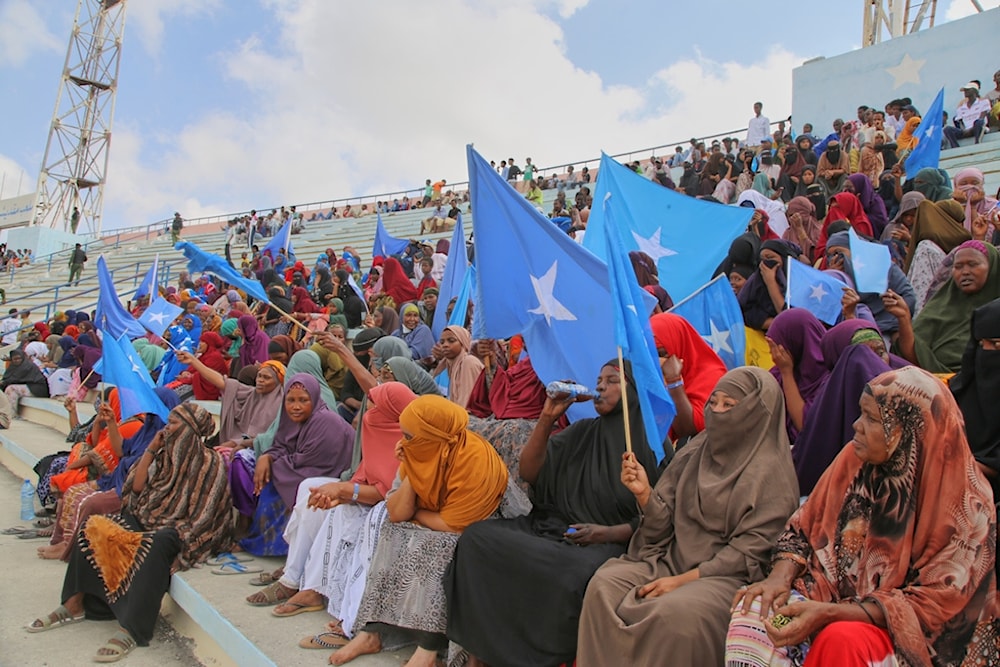
Hundreds of Somalis gather at the Mogadishu stadium as they protest the Israeli recognition of Somalia's breakaway region of Somaliland as an "independent nation", in Mogadishu, Somalia, Tuesday, December 30, 2025 (AP)
After more than three decades of seeking international recognition, Somaliland has secured its first formal endorsement of statehood from the Israeli regime, a move that has sparked sharp opposition across Africa and the Arab and Muslim worlds.
Israeli Prime Minister Benjamin Netanyahu announced last week that "Israel" would recognize Somaliland as an "independent state", 35 years after the region declared independence from Somalia. Netanyahu framed the decision as consistent with the “spirit” of the US-brokered "Abraham Accords", which normalized relations between the Israeli occupation and several Arab states in 2020.
The move appeared to catch Washington off guard. The US State Department reiterated that it continues to recognize Somalia’s territorial integrity, including Somaliland. US President Donald Trump, when asked whether the United States would follow the Israeli regime's lead, appeared sceptical, saying the issue was “under study” and questioning Somaliland’s international profile.
Somaliland President Abdirahman Mohamed Abdullahi welcomed the decision, saying Hargeisa would join the "Abraham Accords" and describing the step as a contribution to regional and global peace.
African, Arab states warn of dangerous precedent
Regional reaction was swift and hostile. The African Union warned that recognizing Somaliland undermines Somalia’s sovereignty and risks setting a dangerous precedent for other separatist regions. More than 20 Arab, Muslim, and African states, including Saudi Arabia, Egypt, Jordan, and Turkey, issued a joint statement warning of “serious repercussions” from the unprecedented move.
Arab and Muslim states have voiced particular concern that the decision reflects a more assertive regional posture by Netanyahu’s far-right government following Operation Al-Aqsa Flood and that it could give the Israeli occupation a strategic foothold along the Gulf of Aden and the Red Sea. Analysts say Somaliland could, in return for recognition, allow an Israeli military presence that would bolster operations against Yemen’s Ansar Allah, which has targeted Israeli-linked shipping and territory.
Israeli analysts have linked the recognition directly to regional security calculations. Asher Lubotzky of the Israeli-African Relations Institute said the move was driven by the Israeli occupation's need to expand intelligence and operational reach in the Horn of Africa, particularly after attacks by Ansar Allah.
Concerns over post-Gaza regional assertiveness
At the same time, Arab states fear the move could be tied to Israeli efforts to persuade African countries to accept Palestinians displaced from Gaza, a prospect they have firmly rejected. Somaliland has denied holding talks on resettling Palestinians.
The Horn of Africa has become an increasingly contested geopolitical arena. Turkey maintains its largest overseas military base in Mogadishu, while the UAE operates a base at Berbera port in Somaliland, which is run by DP World. Ethiopia has also explored recognizing Somaliland in exchange for long-term access to Berbera, though it has not taken that step.
While Somaliland has long portrayed itself as a stable alternative to conflict-ridden southern Somalia, analysts warn that the Israeli recognition could carry risks. Lubotzky cautioned that Somaliland may now face "heightened threats" from Ansar Allah or al-Shabaab, even as it hopes the Israeli move will pave the way for broader international recognition.
Why is 'Israel' eyeing Somaliland?
The Israeli occupation officially recognized the Republic of Somaliland as an "independent" and "sovereign" state, following the signing of a joint declaration between Prime Minister Benjamin Netanyahu, Foreign Minister Gideon Sa'ar, and Somaliland President Abdirahman Mohamed Abdallah.
Somaliland hosts a major Emirati military presence at Berbera, developed by the UAE as part of its broader regional footprint stretching from the Horn of Africa to the southern Red Sea. The base has played a central role in Abu Dhabi’s efforts to project power across maritime chokepoints and to support operations linked to Yemen, including attempts to restrict the operational depth of Ansar Allah and limit Saudi Arabia’s exposure along critical shipping lanes, which greatly benefits the Israeli occupation.
US military planners have also long viewed Somaliland as a strategic fallback and logistics hub near the Bab al-Mandab strait, especially to protect their interests as Ansar Allah grows. Israeli security officials, meanwhile, have reportedly sought access and intelligence cooperation in the area as part of a wider push to monitor Red Sea traffic and Resistance-aligned movements operating across Yemen and the Horn of Africa.
The recognition of Somaliland aligns with this emerging security architecture, effectively granting political cover to an already entrenched military and intelligence reality. By formalizing relations, the Israeli regime positions itself alongside Washington and Abu Dhabi in shaping Red Sea security arrangements that aim to control maritime routes, constrain Ansar Allah’s reach, and reinforce a regional bloc extending from occupied Palestine to East Africa.


