
FT editorial: Trump is surrendering 'America's moral leadership'
 3 Min Read
The Financial Times editorial board writes that Trump's threats to destroy Iranian civilian infrastructure have "done grave harm" to the decades-long quest to enforce rules of war and to the US' moral standing, warning that "the world is indeed a more dangerous place."
-
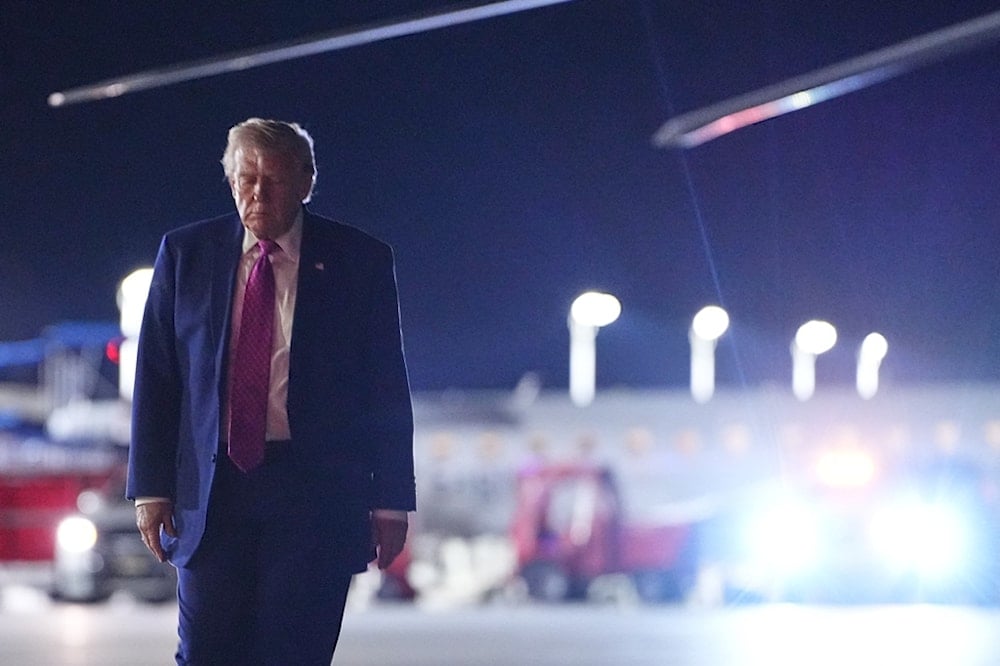
President Donald Trump walks from Marine One to board Air Force One at Charlottesville-Albemarle Airport, in Charlottesville, Va.Friday, April 10, 2026 en route to Washington. (AP)
The Financial Times editorial board has condemned US President Donald Trump's threats against Iran, writing that his words were "some of the most shocking ever issued by a modern-day US president."
The board noted that Trump wrote early on Tuesday that "a whole civilization will die tonight, never to be brought back again." Two days earlier, he had warned in an expletive-laden post that "Tuesday will be Power Plant Day, and Bridge Day in Iran" if Tehran did not reopen the Strait of Hormuz.
The editorial acknowledges that those threats were not fulfilled. The White House has argued that Trump's "tough rhetoric" achieved its purpose by coercing Iran into a ceasefire deal. However, the board notes that this deal delivered neither the president's main stated war aims nor, "with any certainty of durability," his immediate goal of allowing shipping through the strait.
Damage already done
The FT board points out that Iranian civilian infrastructure, including gas, petrochemical and steel plants, as well as research institutes, universities and its biggest bridge, were already bombed during the US-Israeli war.
Together with Trump's calls for mass strikes on infrastructure that would amount to war crimes, the president has "done grave harm to the decades-long quest to enforce rules of war, and to America's moral standing in the world," the board writes.
The editorial recalls that after the horrors of the Second World War, the US and other states signed the 1949 Geneva Conventions to prevent any repeat of atrocities. The board notes that these rules have come under intense pressure in recent years, pointing to "Israel's" genocide in Gaza, which led the International Criminal Court to issue arrest warrants for Prime Minister Benjamin Netanyahu.
The FT board writes that humanitarian law has "repeatedly come under strain, with the US often responsible." While the US has, after successive conflicts, gone through soul-searching and tightened its military codes, the Trump team has instead been retreating from international norms.
The board notes that Secretary of War Pete Hegseth told officers last year there would be "no more politically correct and overbearing rules of engagement" and has reportedly rolled back much of a civilian harm mitigation plan put in place by the Biden administration.
A more dangerous world
The FT board observes that nearly 100 states, including France, China and Brazil, have joined an initiative to strengthen humanitarian law, alarmed by the erosion of the rules of conflict. However, it claims that without "US moral leadership", such efforts "may lack real substance."
The editorial concludes: "If the mightiest global military power is making little pretence of even trying to uphold the rules, the world is indeed a more dangerous place."
The FT's condemnation reflects growing alarm among traditional US allies about Trump's disregard for international law. While European leaders have largely remained silent, the editorial board of one of the world's most influential financial newspapers has spoken out.


