
Gaza death toll after ceasefire rises to 418 amid ongoing attacks
 3 Min Read
The Palestinian Ministry of Health in Gaza reports 418 martyrs and over 1,100 wounded since the ceasefire began, as Israeli violations and humanitarian suffering continue amid harsh winter storms.
-
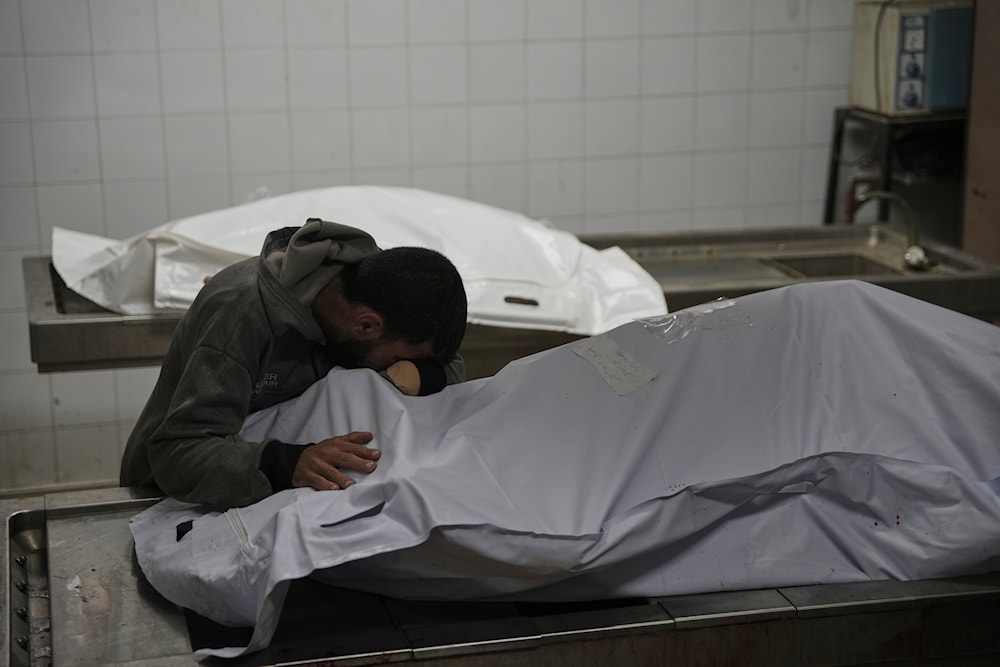
Magdi Abu Al-Khair bids farewell to his mother Amal Abu Al-Khair at Al-Shifa Hospital in Gaza City on January 2, 2026. (AP Photo/Jehad Alshrafi)
The Palestinian Ministry of Health in the Gaza Strip announced on Saturday that three martyrs had arrived at hospitals across the Strip over the past 48 hours. The report included two newly martyred individuals and the recovered body of another, along with 18 injuries resulting from ongoing Israeli attacks.
According to the Ministry’s daily statistical update, the death toll since the start of the ceasefire now stands at 418 martyrs, with 1,171 wounded, and 684 bodies of martyrs recovered from the rubble. The cumulative death toll from the genocidal war on Gaza, which began on October 7, 2023, has reached 71,384 martyrs and 171,251 wounded, according to the Ministry.
The Ministry also confirmed the addition of 110 martyrs to the official cumulative list, following verification and approval by the Martyrs’ Approval Committee. These individuals were documented during the period between December 26 and January 2, after their data was completed and confirmed.
Despite the ceasefire agreement that came into effect on October 8, Israeli aggression against the Gaza Strip continues.
Violations include persistent aerial and ground attacks, the prevention of humanitarian aid, and obstruction of relief efforts. Additionally, the humanitarian catastrophe in Gaza has further intensified due to ongoing winter storms, compounding the suffering of a population already displaced and deprived of the basic necessities.
Gaza shelter crisis deepens as tents fail to withstand winter storms
Tens of thousands of displaced Palestinians in Gaza are facing worsening conditions as inadequate shelter fails to protect them from harsh winter weather. A new assessment by shelter experts in the devastated territory has revealed that many tents donated by countries offer little protection from wind and rain.
The findings contradict claims that Palestinians are receiving adequate shelter and underscore the growing humanitarian crisis in Gaza.
According to the Palestine Shelter Cluster, which coordinates nearly 700 NGOs and is jointly chaired by the Red Cross and the UN, most of the newly delivered tents "likely need to be replaced." The assessment, based on 9,000 survey responses and field observations, identified severe shortcomings in the provided tents.
Egyptian tents were described as poorly sewn, prone to tearing, and not waterproof. Saudi tents were made of thin, non-waterproof material with weak structures. Chinese tents were found to be "very light" and similarly unable to withstand weather conditions. By contrast, tents supplied by Qatar, the United Arab Emirates, and the United Nations were considered to meet acceptable specifications.


