
Gaza hospitals face blackout as fuel runs out, amid rising death toll
 2 Min Read
Israeli occupation forces advance near Kamal Adwan Hospital and expand the "Yellow Line" east of al-Maghazi.
-
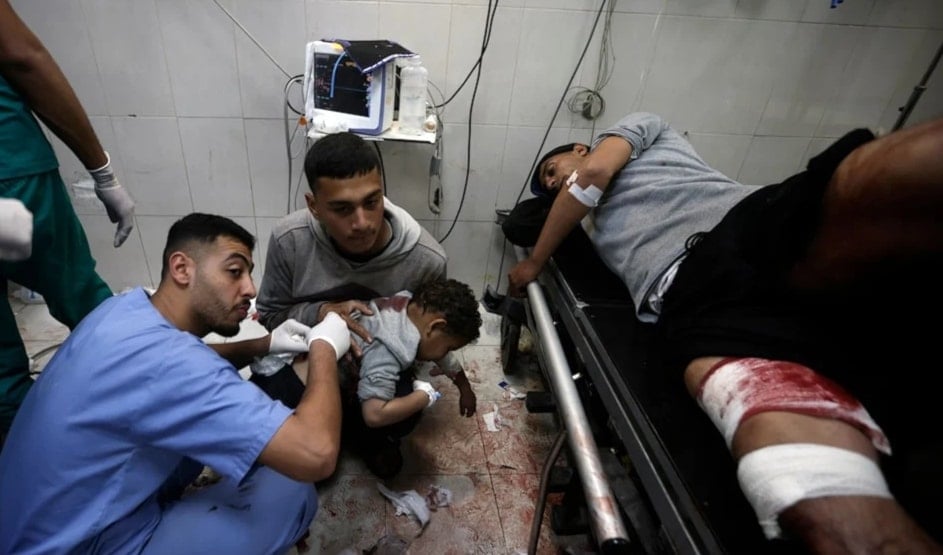
Palestinians wounded in Israeli bombardment of the Gaza Strip receive treatment at the Nasser Hospital in Khan Younis, southern Gaza Strip, occupied Palestine, January 22, 2024 (AP)
Israeli aggression on the Gaza Strip has not stopped for a moment since the ceasefire was announced more than a year ago, Al Mayadeen's correspondent in Gaza reported.
Last night, Israeli occupation forces advanced toward the vicinity of Kamal Adwan Hospital amid intense shelling of the area, our correspondent said.
A video has emerged of how Israeli troops are firing on homes and tents in Gaza nowadays especially at late hours of the day. You can see the deliberate intent to harm and kill civilians by squeezing off stray rounds at their shelters. https://t.co/xJMTEqJkD2
— Abubaker Abed (@AbubakerAbedW) October 20, 2026
Meanwhile, the IOF are continuously moving "blocks" to widen the area under their control within the so-called "Yellow Line", our correspondent added, noting that the army is pushing the line east of al-Maghazi.
Gaza Health Ministry: 1,534 killed since ceasefire
Gaza's hospitals received 7 Palestinian martyrs and 24 wounded over 24 hours, the Palestinian Ministry of Health in Gaza said in its daily statistical report.
Since the ceasefire took effect on October 11, 2025, 1,534 Palestinians have been killed and 5,486 others have been wounded, while 841 bodies of Palestinian martyrs have been recovered, the Ministry said. The cumulative toll since the genocide began stands at 74,494 killed and 175,604 wounded.
Hospital generators face collapse as fuel supplies run out
In an urgent statement, the Ministry of Health said fuel needed to run hospital generators has run out. The shortage, it warned, means the immediate breakdown of the few generators still operating under complex engineering and technical conditions, and their shutdown would cut power to many vital, life-saving departments.
The generators require more than 2,500 liters of fuel a month, according to the Ministry.
It said it has long cautioned that "emergency solutions" providing limited quantities of oil buy no extra time, as long operating hours raise the generators' fuel consumption and leave them in urgent need of maintenance.
The Ministry called on all concerned parties to act on their humanitarian responsibilities and intervene immediately to ensure the entry of oil and spare parts needed to keep the generators running.


