
Germany approves new military service plan as Europe rapidly rearms
 3 Min Read
Germany has approved a military service reform that strengthens screening and recruitment efforts amid a broader European militarization push.
-
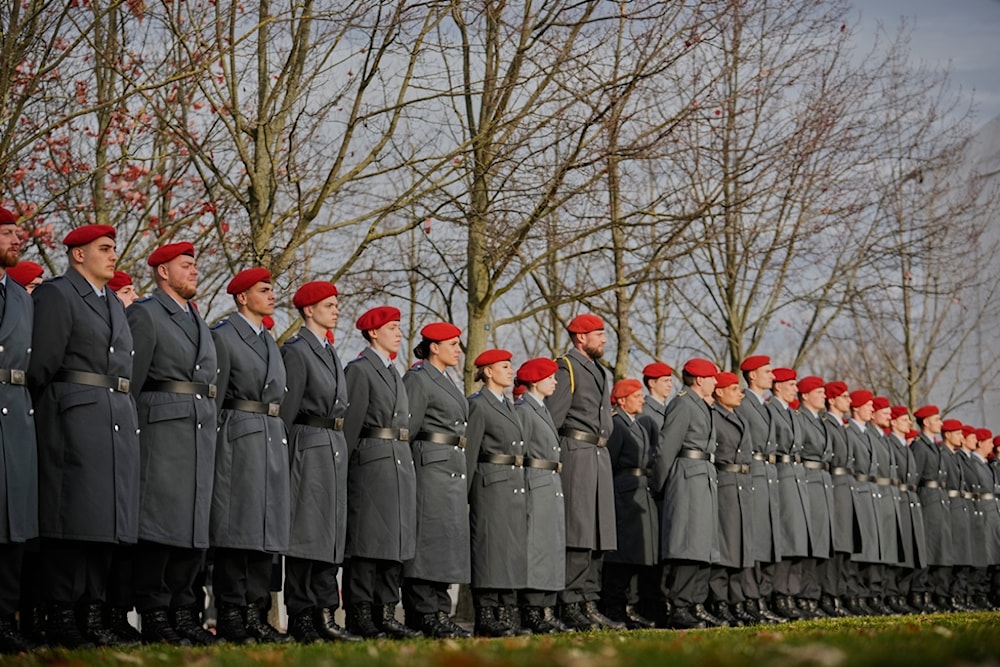
Soldiers attend an event to mark the 70th anniversary of the Bundeswehr (German army) in Berlin, Germany, Wednesday, Nov. 12, 2025. (AP Photo/Ebrahim Noroozi)
Germany has moved to expand its military obligations as part of a wider acceleration of European rearmament, with the Bundestag passing a service reform that edges the country closer to compulsory enlistment. The vote reflects a political climate in which governments across the continent are funneling unprecedented resources into defense, reviving debates once thought settled after the Cold War.
The measure does not fully restore conscription, but it requires all men turning 18 to undergo mandatory assessments and introduces new financial incentives to draw them into service. Chancellor Friedrich Merz has tied these steps to an ambition to build Europe’s strongest conventional military at a moment when Washington’s long-term security commitments, particularly under the Trump administration, appear increasingly uncertain.
NATO guidelines envision Germany fielding 460,000 personnel, 260,000 active soldiers, and 200,000 reservists, yet the Bundeswehr currently operates with around 182,000 in active duty and approximately 49,000 in the reserves. Years of understaffing and equipment shortages have widened the gap between Berlin’s obligations and its actual capabilities.
Defense Minister Boris Pistorius urged lawmakers to approve the reform, describing it as a “decisive step for our ability to defend ourselves.” He reminded MPs, “Our allies are looking to us,” framing the buildup as a necessary response to Europe’s shifting security landscape. Pistorius also warned that if recruitment levels remain inadequate, parliament would eventually need to consider “at least a partial reintroduction of conscription.”
Conscription Clash
The bill passed with 323 votes to 272, with one abstention, and is expected to clear the upper house before the holidays. However, the decision has underscored internal divisions: parts of the CDU/CSU demand a swift return to full conscription, while Pistorius and the SPD maintain they prefer a voluntary system, at least for now.
Opposition came from both ends of the political spectrum. AfD MP Heinrich Koch said many families fear “our children will be sent to conflicts outside our borders,” citing Ukraine as an example. The government has rejected this fear, stating the reform does not force anyone into deployment abroad.
Die Linke MP Desiree Becker condemned the measure as socially regressive, arguing it burdens working-class youth while protecting elite interests. “Young people have other plans than serving in a 'Merz regiment' to protect the capital of the rich,” she said, referring to anti-conscription protests held outside parliament.
Despite a slight rise in enlistment, about 15,000 recruits expected this year, an increase of 5,000, Germany remains far from its long-term goals. Berlin hopes to nearly triple annual volunteer numbers to 40,000 by 2031, a target critics say is unlikely to be met without resorting to more coercive measures.
Read more: Europe is driving the continent toward war: Putin


