
Ghalibaf: China’s joint security approach aligns with Iran’s vision
 3 Min Read
Iranian Parliament Speaker Mohammad Bagher Ghalibaf says China’s emphasis on joint security reflects Iran’s call for a regional security framework.
-
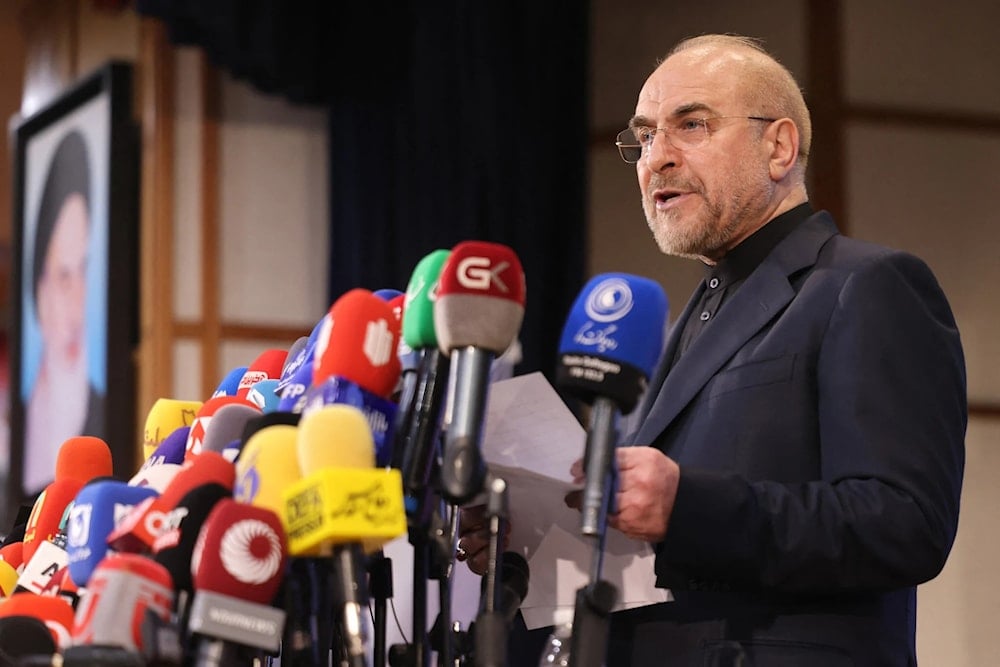
Iran's Parliament Speaker Mohammad Bagher Ghalibaf addresses the media after submitting his candidacy for the Islamic Republic's upcoming presidential election in Tehran on June 3, 2024 (AFP)
China’s emphasis on enhancing joint security reflects a principle that Iran has consistently advocated, Iranian Parliament Speaker Mohammad Bagher Ghalibaf on Friday stated, affirming the need for regional countries to take charge of their own future.
In a post on the social media platform X, Ghalibaf said that achieving genuine stability in the region requires the establishment of a new security framework originating from within the region itself. He also affirmed Iran’s readiness to contribute to this process.
China’s emphasis on fostering common security reflects a principle Iran has long championed.
— محمدباقر قالیباف | MB Ghalibaf (@mb_ghalibaf) September 4, 2026
Regional countries must be taking their future into their own hands, and true stability can only come through a new security architecture that is homegrown. Iran stands ready.
Earlier on Thursday, China strongly condemned and formally opposed new United States sanctions imposed on Chinese companies and individuals over alleged Iran-related issues, the Global Times reported, citing a spokesperson for the Ministry of Commerce.
The spokesperson issued the remarks during a regular press briefing, stating that China "strongly deplored and firmly opposed" the measures, calling on the United States to mmediately revoke the sanctions.
The spokesperson said the US unilateral sanctions improperly interfere with normal economic and trade exchanges between relevant countries and seriously disrupt global energy security and stable supplies.
US economic pressure fails
This comes after the United States announced “Operation Economic Outcast” earlier this week as part of its campaign to isolate Iran economically. The US Treasury has described the initiative as an effort to target Iran’s financial links and pressure foreign entities conducting business with Tehran.
The sanctions, like previous packages aimed at choking Iran economically, have evidently failed. Chinese refiners are still importing about 1.2 million barrels of Iranian oil a day this year, a figure barely below last year's pace.
Real volumes could be higher, since ships carrying Iranian crude have gotten better at avoiding detection. Meanwhile, The Wall Street Journal (WSJ) revealed that Iranian commercial and financial activity continues across Dubai despite Washington’s push to sharply restrict Tehran’s access to regional markets and financial networks.
According to the newspaper, Iranian banks, airlines, restaurants, and businesses remain active in the United Arab Emirates.
At one Bank Melli branch in Dubai’s old city, around a dozen tellers were continuing to serve Farsi-speaking customers, according to the report. Employees said they had received no instructions ordering the branch to cease operations. “We put our trust in God on what happens next,” an Iranian bank employee said.


