
Ghalibaf says Soleimani’s legacy lives on as resistance model
 3 Min Read
Iran’s Parliament Speaker says Martyr Qassem Soleimani’s legacy endures as a global model of resistance and national unity.
-
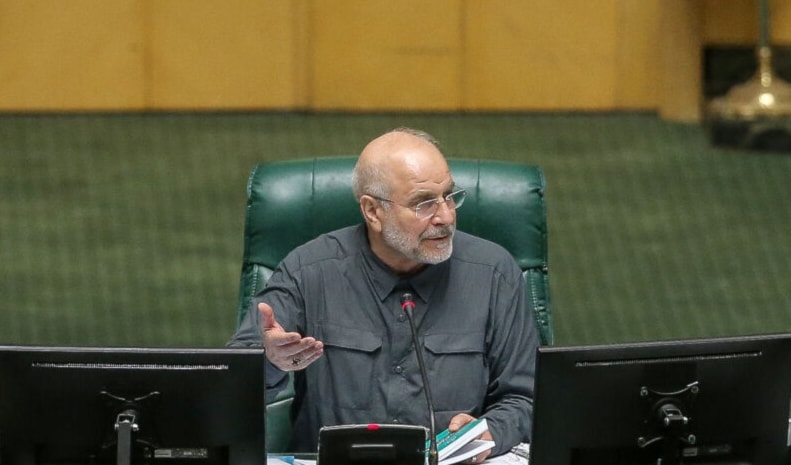
Iranian parliament speaker Mohammad Bagher Ghalibaf speaks during a session of parliament in an undated photograph (IRNA)
The ability to turn threats into opportunities was the defining trait of martyr Lieutenant General Qassem Soleimani, said Iran’s Parliament Speaker Mohammad Bagher Ghalibaf, stressing that the Major General's legacy and school of thought remain alive and instructive.
Speaking during an open session of Parliament on Wednesday, Ghalibaf commemorated the birth anniversary of Imam Ali and National Father’s Day, while also marking the approaching anniversary of the assassination of Soleimani and his Iraqi companion Abu Mahdi al-Muhandis.
Ghalibaf described Martyr Soleimani as a global symbol in the fight against terrorism and a figure admired by oppressed nations around the world, adding that his martyrdom did not signal the end of his path but the beginning of a wider movement to expand the logic of resistance globally.
Hajj Soleimani lives on through Resistance
As long as the idea of resistance remains alive among the people, demonstrations continue in support of the liberation of Palestine, and the Israeli regime loses credibility among global youth, Ghalibaf said, the school of thought associated with martyr Soleimani will endure.
He added that Soleimani’s legacy is now deeply rooted among Iranian youth and continues to illuminate the path of resistance against what he described as global arrogance.
According to the parliament speaker, Soleimani demonstrated courage and initiative in the most difficult moments, advancing when others retreated and opening new paths where political and military deadlocks existed.
Turning to domestic priorities, Ghalibaf stressed that following Soleimani’s path requires placing public welfare first, emphasizing that resolving people’s livelihood challenges should take precedence, national interests must outweigh factional disputes, and Iran should stand above all political divisions.
Soleimani's assassination
On January 3, 2020, the US carried out a drone strike authorized by then-US President Donald Trump targeting a car carrying the commander of the Quds Force of the IRGC, General Qassem Soleimani, and the second-in-command of the Iraqi Popular Mobilization Forces (PMF), Abu Mahdi al-Muhandis.
Both commanders and their companions were killed in the treacherous strike. The assassination led to an escalation of tensions between the United States and Iran, which pledged to avenge the martyrs.
Martyr Soleimani was on an official visit to Iraq and was in a car with martyr al-Muhandis at Baghdad's International Airport when the US strike struck shortly after his arrival.
Days after his martyrdom, the anti-terror icon’s body was transferred to Iran and was laid to rest in his hometown of Kerman.
Read next: Iran to announce results of probe into Martyr Soleimani assassination


