
Ghalibaf warns US: “If you strike, you will be struck back”
 3 Min Read
Iranian Parliament Speaker Mohammad Bagher Ghalibaf warns the US that attacks on Iran will face retaliation, saying the Strait of Hormuz will only be opened through Iranian arrangements.
-
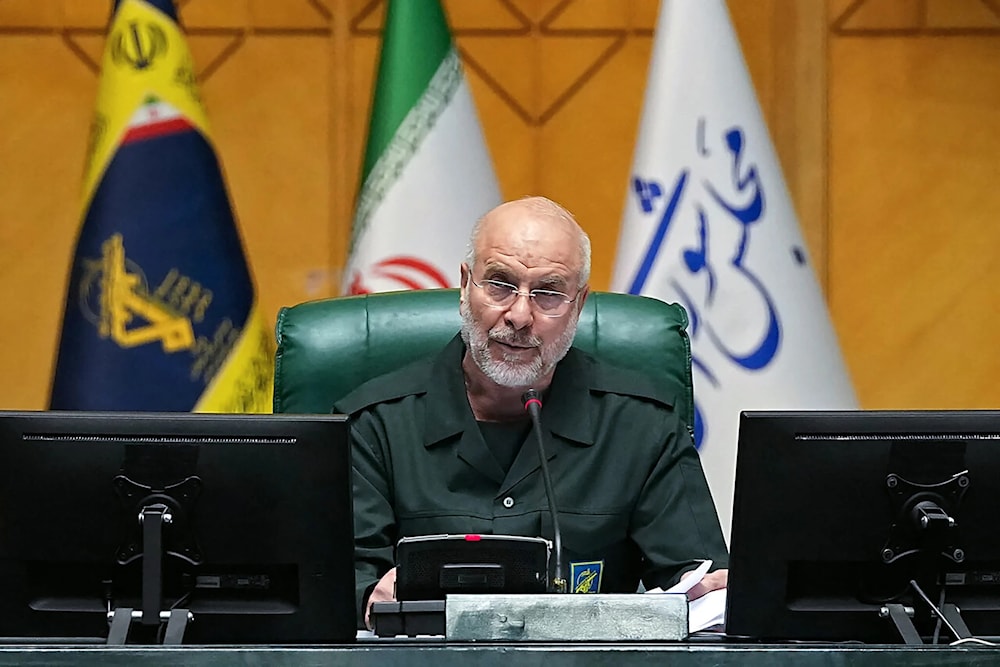
Iran's Parliament Speaker Mohammad Bagher Ghalibaf, dressed in an IRGC uniform, chairs a session in Tehran, Iran, on February 1, 2026 (AFP)
Iranian Parliament Speaker Mohammad Bagher Ghalibaf warned the United States against further attacks on Iran, saying Washington will face retaliation if it continues military action.
In a post on X, Ghalibaf said the United States has yet to understand that "bullying and reneging on commitments are no longer without consequences."
"Let me be clear: if you strike, you will be struck back," Ghalibaf wrote, adding that continued pressure against Iran would only deepen the crisis.
He also addressed tensions surrounding the Strait of Hormuz, stating that the strategic waterway "will only be opened through Iranian arrangements, not through American threats."
Iran launches response after US attacks
Ghalibaf's remarks came after Iran began its response to the latest US aggression, with Iran's Fars News Agency reporting that a ballistic missile campaign targeted US-linked sites in Qatar and Bahrain.
Mehr News Agency reported that loud explosions were heard near the headquarters of the US Navy's Fifth Fleet in Bahrain, while Tasnim News Agency reported that powerful blasts shook US military bases in Kuwait.
Iranian media also reported the activation of sirens at Jordan's Muwaffaq Salti Air Base, where US forces are stationed. Around an hour after the initial reports, Fars News Agency reported that multiple explosions were heard again at US military bases in Kuwait, while direct impacts were reported again in at the Fifth Fleet base in Bahrain.
The developments followed repeated warnings from Iranian officials that US attacks on Iran would be met with a decisive response.
US attacks target Iranian sites
The Iranian response followed a new wave of US attacks against Iran, which targeted multiple locations across the country.
Al Mayadeen's correspondent in Tehran reported that the latest US aggression was the largest against Iran since the signing of the memorandum of understanding, adding that the heaviest strikes targeted Chabahar Port in southern Iran.
Iranian reports said the attacks struck civilian infrastructure, including Chabahar Port, where two maritime piers and a navigation control tower were targeted. Shrapnel from US projectiles also struck Imam Ali Hospital in Chabahar.
Additional strikes were reported in Bushehr Province, Sirik, Jask, Abu Musa Island, and transport infrastructure in northern Iran.
Following the reported Iranian response, Kuwait activated its air defense systems, while Bahrain activated sirens and reported explosions. Qatar also raised its security threat level and urged residents to remain in homes and safe locations.
Washington says ceasefire has “temporarily ceased”
The escalation comes after a US official told CNN that the ceasefire with Iran has "at least temporarily ceased" amid renewed military operations.
The official said the situation remains "very dynamic" and that additional strikes have not been ruled out, adding that recent US attacks targeted missiles and drones that could threaten US assets, including aircraft carriers, as well as locations near the Strait of Hormuz.
The remarks followed US President Donald Trump's announcement that the memorandum of understanding with Tehran was "over," while saying talks could continue.
An informed Iranian security source previously told Al Mayadeen that any attack on Iran would face an immediate response on a wider scale, adding, "If Trump wants higher oil prices, we welcome that."
Read more: IRGC: First stage response targets US bases in Kuwait, Bahrain


