
Gharibabadi: US minesweepers would be prime targets
 4 Min Read
Iran's Deputy FM Kazem Gharibabadi said Tehran alone knows the location of mines in the Strait of Hormuz, contradicting Trump's claim that the waterway is now clear.
-
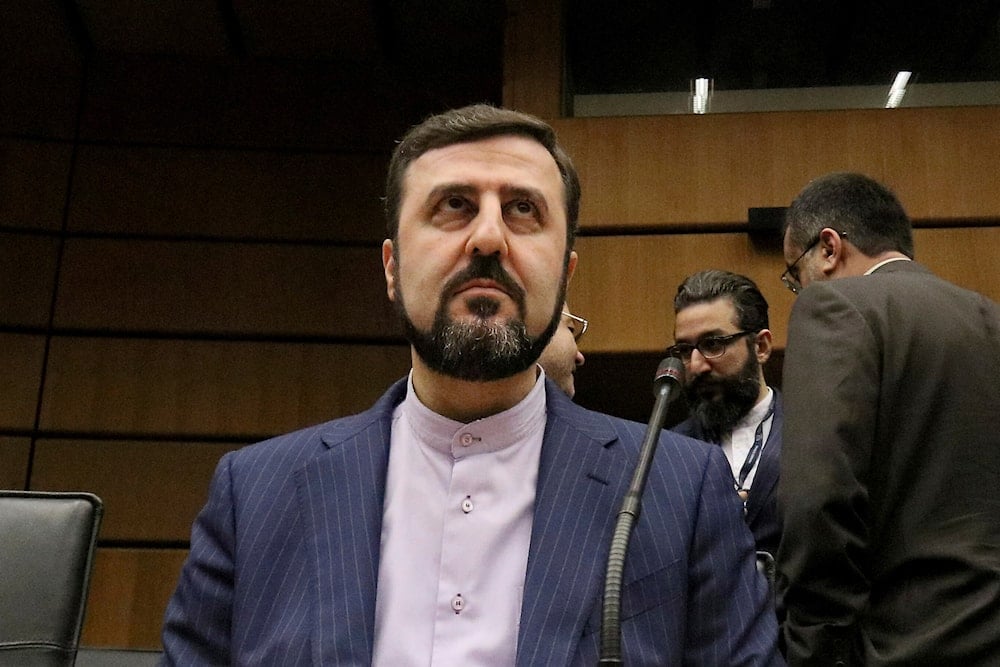
Then Iran's Ambassador to the International Atomic Energy Agency, IAEA, Kazem Gharibabadi, waits for the start of the IAEA board of governors meeting at the International Center in Vienna, Austria, on November, 21, 2019. (AP)
Iran's Deputy Foreign Minister Kazem Gharibabadi said Tuesday that Iran remains the only party that knows the precise locations of mines in the Strait of Hormuz, warning that any US naval minesweepers entering the waterway would become very good targets for Iranian forces.
He said statements by US President Donald Trump about removing the mines were aimed only at calming markets. The claim runs directly counter to a separate statement from Trump, who said Tuesday that the US Navy had removed or detonated all mines in the strait's international waters, warning Iran of a "zero tolerance" policy toward the placement of any new ones.
Gharibabadi said Iran remains in a state of war and that the Strait of Hormuz will stay closed, with passage limited to commercial vessels under the terms of the existing memorandum of understanding.
He said a full reopening of the strait would only come in exchange for ending the war on all fronts, lifting the blockade on Iran, and determining Yemen's fate. He added that Iran would reveal new capabilities if American measures continue, warning Washington against assuming it is the only side capable of inflicting economic damage.
A new corridor with Oman, but no military ships
Gharibabadi said negotiations between Iran and Oman would begin to replace the previous maritime traffic arrangement with a new transit corridor. In remarks to state television, he said the arrangement with Oman would allow only commercial vessels through the strait.
"No military vessel will be allowed to pass," he said, adding that the route would be temporary while Iran and Oman negotiate a permanent one within 30 to 60 days.
"We had expected to close the southern route in the Strait of Hormuz with the help of our Omani friends, but US pressure prevented that and we were forced into a military confrontation," Gharibabadi said, adding that the arrangement does not mean the strait will reopen immediately and that Washington must fully meet commitments it has previously failed to uphold before any move to reopen it.
A joint Iranian-Omani statement said the two countries' foreign ministers had discussed a phased framework for managing the situation in the strait, including an agreement to establish a temporary, jointly run navigation corridor alongside a joint project to clear naval mines.
The statement said technical negotiations would continue toward a permanent navigation corridor and a future management arrangement for the strait, including a mechanism for information-sharing, traffic coordination, and maritime and security services, with both sides stressing the importance of opening dialogue with other Gulf states.
Iran had previously stressed that any agreement with Oman on navigation arrangements does not mean the Strait of Hormuz is reopening, insisting a full reopening requires Washington's compliance with the terms of the Islamabad memorandum of understanding.
Escalating economic pressure in the background
The statements come as Washington escalates economic pressure on Iran. Trump announced what he called an "unprecedented economic war" against Tehran last week, and US Treasury Secretary Scott Bessent said Monday that countries continuing business with Iran past a set deadline could face penalties under an expanding sanctions campaign.
Gharibabadi has repeatedly rejected US claims of control over the strait; earlier this month, responding to Trump's suggestion that he would declare Hormuz US territory, he said the strait "cannot be seized with a tweet, an aircraft carrier, an executive order, or a campaign speech," adding that Iran "neither fears threats nor is intimidated by displays of force."
Read more: Tanker hit by projectile off Oman, engine room disabled


