
Global aid cuts could cause nearly 10mln deaths by 2030, study warns
 4 Min Read
A new study warns that global aid cuts could lead to 9.4 million deaths by 2030, threatening decades of health progress in developing nations.
-
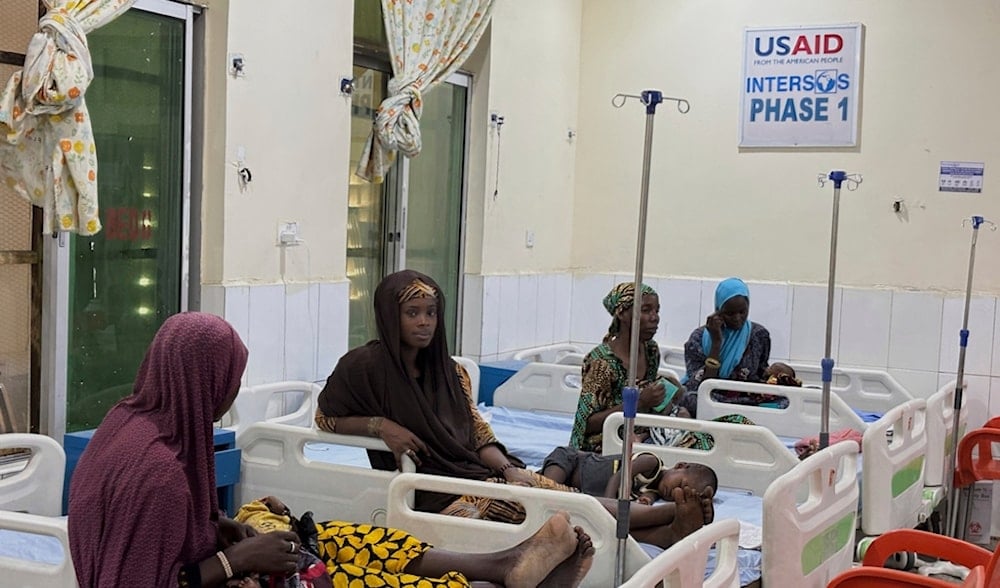
Malnourished children receive treatment at the Intersos facility, an Italian humanitarian organization, the only remaining facility providing inpatient services for malnutrition in Maiduguri, Nigeria, May 1, 2025 (AP)
Over the past year, sharp global aid cuts have severely impacted vulnerable populations. Soup kitchens have closed in war-torn Sudan, medicine shortages have spread across sub-Saharan Africa, and food rations have been slashed in regions like Somalia and Haiti.
A new study published in The Lancet projects a grim outcome if current trends persist: an estimated 9.4 million additional deaths by 2030 due to funding reductions in the global humanitarian system.
USAID elimination and its ripple effect
The projected toll comes approximately one year after the Trump administration eliminated the United States Agency for International Development (USAID). While the move was abrupt, it reflects a broader trend among Western donors, including France, Germany, and Britain, who have reallocated resources toward domestic spending amid economic uncertainty and skepticism toward foreign aid effectiveness.
The US State Department defended the shift, claiming that older models of foreign aid fostered “a global culture of dependency” and failed to empower recipient nations. “This has prompted development donors everywhere, not just the United States, to reconsider their approach to foreign aid,” it said.
While the Trump administration has gone after USAID over wasteful spending of American taxpayer dollars, this does not come without historical precedent. The agency has repeatedly faced allegations of covert activities and political interference in several countries over the years, as in Cuba, in the ZunZuneo Project, Bolivia, through support for opposition groups, Russia, for alleged economic reform through the Harvard Institute for International Development, Brazil, through influence on political reforms, and Peru, in a forced sterilization campaign.
Study projects millions of preventable deaths
Conducted by the Barcelona Institute for Global Health, and funded by the Rockefeller Foundation and the Spanish government, the study models the human cost of a scenario in which international aid declines by 10.6% annually after 2025. This estimate is based on current trends in development aid cuts.
The study does not isolate specific causes of death but highlights deep concerns among health experts over resurgences of HIV/AIDS, malaria, and tuberculosis, diseases whose tolls had declined thanks to decades of coordinated aid.
Rajiv Shah, president of the Rockefeller Foundation and former head of USAID, warned, “It is the dismantling of an architecture that took 80 years to build. The scale of the cuts far outstrips what philanthropy can make up.”
A more severe scenario outlined in the study suggests up to 22.6 million additional deaths if aid budgets face deeper slashes. A previous report in July projected 14 million deaths if USAID programs are almost completely halted.
Experts fear the rollback of support could reverse decades of progress in battling infectious diseases. Even minor disruptions can collapse fragile healthcare systems. Davide Rasella, co-author of the study, shared an account from a doctor in sub-Saharan Africa who faced antibiotic shortages because USAID had helped with transport logistics. “In a complex health care system, even if you take out a part, you collapse the system,” he said.
Donor nations shift priorities
The Organization for Economic Co-operation and Development (OECD) anticipates global development aid to fall by 9% in 2024 and between 9–17% in 2025. In sub-Saharan Africa, reductions could reach 28%.
Despite cutting USAID, the US introduced a new "America First" global health strategy and entered bilateral health agreements with select developing nations. A proposed 2026 spending bill allocates $9.4 billion to international health, more than double the administration's request, but still below the $12.4 billion budgets of 2024 and 2025.
Some leaders argue that countries prefer investment and trade over reliance on handouts. However, many experts caution that dismantling existing structures without adequate replacement puts millions at risk, particularly in nations with fragile governments and poor infrastructure.
What comes next?
Heiner Janus of the German Institute of Development and Sustainability notes that the future of aid remains uncertain due to global political volatility. “It could be the beginning of a longer reversal … but it could also be stabilizing,” he said.
Rajiv Shah remains concerned, “To me, it’s a big signal that in this moment, action saves lives. What is happening out there is a human catastrophe.”
Read more: Trump’s USAID cuts expose flaws of global aid dependence


