
Global reactions pour in following Iran-US MoU
 4 Min Read
World leaders, including the UK, France, Qatar, the UN and Türkiye react to the US–Iran memorandum of understanding.
-
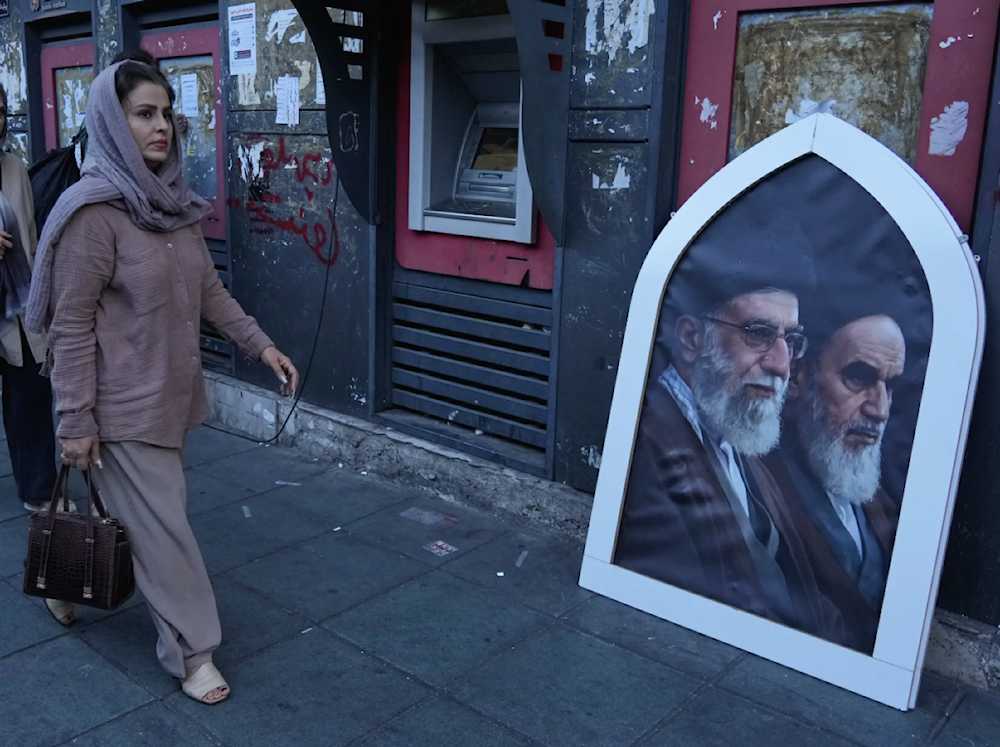
Pedestrians walk past a poster showing the slain Iranian Supreme Leader Ayatollah Ali Khamenei, left, and the late revolutionary founder Ayatollah Khomeini on a sidewalk at the Islamic Revolution square in Tehran, Iran, Sunday, June 14, 2026. (AP)
British Prime Minister Keir Starmer welcomed the US–Iran Memorandum of Understanding, calling it “a hugely important step forward” toward ending the war and stabilizing the region. He emphasized that attention must now shift to implementation, particularly ensuring that the Strait of Hormuz is fully reopened and remains permanently accessible to global shipping.
Starmer also said the UK stands ready to support technical talks and broader verification mechanisms, including potential maritime security and mine-clearance operations coordinated with international partners.
Macron calls for rapid execution and international deployment
French President Emmanuel Macron also welcomed the agreement, urging all parties to ensure its “rapid and full implementation.” He stressed the importance of immediately reopening the Strait of Hormuz and restoring unrestricted maritime traffic.
Macron said an international mission involving the UK is prepared to support implementation, including potential deployment for mine clearance operations.
Qatar and mediators back continuation of talks
Qatar’s Prime Minister Sheikh Mohammed bin Abdulrahman Al Thani welcomed the memorandum of understanding between the US and Iran, thanking mediators, including Pakistan, for their role. He expressed support for continued negotiations aimed at consolidating the agreement and strengthening regional stability through dialogue.
UN describes deal as “critical step” toward ending war
UN Secretary-General António Guterres described the agreement as a “critical step” toward ending the war. The UN statement highlighted provisions for an immediate ceasefire, reopening of the Strait of Hormuz, and further negotiations, while praising the role of regional mediators, including Qatar, Türkiye, Saudi Arabia, and Pakistan.
Turkiye calls agreement a milestone for regional peace
Turkish Foreign Minister Hakan Fidan described the deal as an important milestone toward lasting peace and stability. He welcomed the mediation efforts and stressed the need to prevent any attempts to undermine the agreement, urging all parties to act responsibly to preserve regional security.
Iran-US MoU outlines end of war, sanctions talks, and maritime reopening
The Supreme National Security Council of Iran announced that it finalized the memorandum of understanding on the Iran-US end-of-war negotiations on June 14, confirming that all military operations across all fronts, including Lebanon, would cease immediately and permanently. It added that the naval blockade imposed on Iran would be lifted without delay, marking a major shift in maritime security arrangements in the Strait of Hormuz.
US President Donald Trump said the agreement with Iran had been completed, describing it as a breakthrough that ensures the Strait of Hormuz will be “permanently toll free,” alongside the removal of the US naval blockade. He stated that the deal represents a strategic outcome that prevents further escalation and sets the stage for a new phase of engagement between Washington and Tehran, with technical negotiations expected to begin in Switzerland ahead of the formal signing on June 19.
Pakistani Prime Minister Shehbaz Sharif, whose country played a mediating role alongside Qatar, Saudi Arabia, Turkiye, and other regional actors, confirmed that both sides agreed to an “immediate and permanent termination of military operations on all fronts, including in Lebanon.” He added that the agreement was reached after intensive negotiations and that mediators would oversee a series of preparatory meetings leading to the signing ceremony in Switzerland.
According to details circulated by Iranian and international statements, the memorandum includes the immediate lifting of the naval blockade on Iran and the phased reopening of the Strait of Hormuz under Iranian arrangements, as well as a framework for follow-up negotiations on sanctions relief. These talks are expected to address the lifting of primary and secondary sanctions, the status of UN Security Council and IAEA-related resolutions, Iran’s nuclear file, reconstruction and economic development mechanisms, and implementation and monitoring frameworks.
Iranian officials also indicated that negotiations on a final comprehensive agreement will be suspended until the other party fulfills its commitments under the memorandum, while describing the current phase as a 60-day framework for structured talks on core outstanding issues.


