
GOP lawmakers fear renewed war on Iran could cost them midterms
 3 Min Read
Republican lawmakers warn a renewed US war on Iran threatens midterm losses, citing gas prices, sinking approval ratings, and no clear exit plan.
-
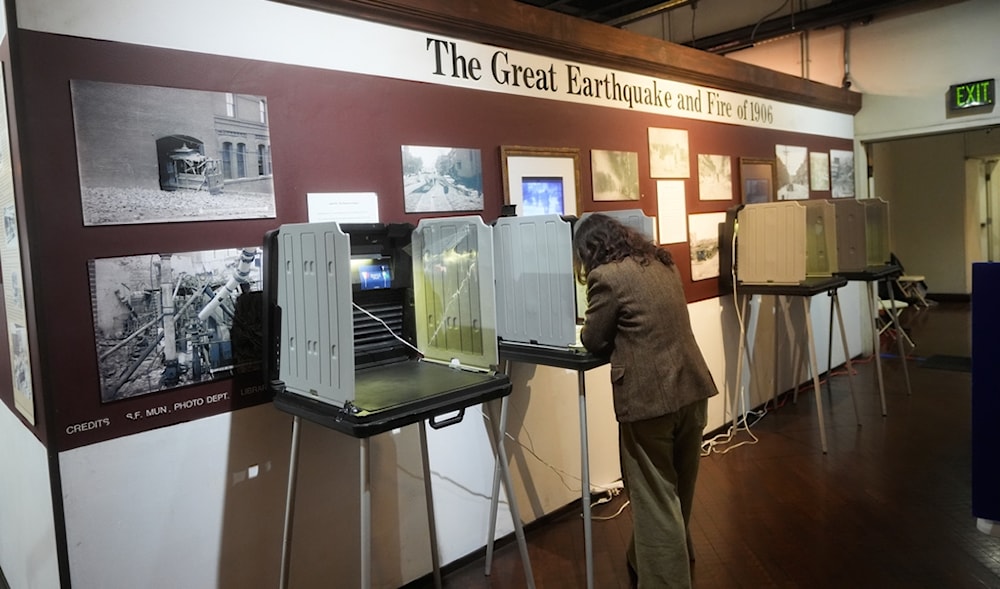
Stacey Ramirez casts her ballot for the California primary election at the Cable Car Museum on Tuesday, June 2, 2026, in San Francisco. (AP Photo/Jeff Chiu)
Republican lawmakers in Washington are increasingly anxious about the fallout from a fresh escalation in the US war on Iran, warning that renewed hostilities could compound what is already shaping up to be a difficult midterm cycle for the party, according to a report by MS NOW published Friday.
Citing an unnamed Republican lawmaker, the outlet reported that the resumption of attacks paints a troubling picture for the GOP heading into November. Beyond the immediate risk of another spike in oil prices, the lawmaker said a renewed war threatens to undercut the White House's broader claim to competent governance.
The same lawmaker questioned whether the administration has articulated any credible exit strategy, noting that voters tend to fixate on fuel costs in the run-up to elections, a factor the lawmaker said carries outsized psychological weight with the electorate.
A second, unnamed GOP member told MS NOW that most Republicans in Congress privately favor bringing the war to a close as quickly as possible, arguing that continued fighting is politically costly for the party. Behind closed doors, the report said, the prevailing sentiment among Republicans leans toward winding the conflict down rather than sustaining it.
The 2026 midterm elections are scheduled for November 3. Analysts cited in the report believe Republicans are at risk of losing control of the House, attributing the threat largely to declining approval ratings for the administration amid the US war on Iran and the resulting rise in energy prices.
GOP's broken promises
The concerns voiced this week build on months of internal GOP unease that has tracked closely with the trajectory of the war itself. Trump's approval on economic management has fallen sharply, with some polling putting it in the low 30s or lower.
The drop marks a stark reversal from the party's own pitch to voters. Republicans built their 2024 campaign around a promise to lower costs and restore prosperity through tax cuts, betting that message would carry them through the midterms.
Instead, gasoline price increases estimated at roughly 30 to 50 percent have fed into wider inflation on food and other commodities, landing hardest on the working-class voters central to Trump's coalition.
Seat losses could dwarf historical norms
The scale of the potential damage has alarmed party strategists. Historically, a sitting president's party loses an average of roughly 30 House seats and four Senate seats in a midterm, according to figures cited by Fortune and CNN.
But some Republican officials have privately floated far steeper losses tied to the war. NBC News reported that one House Republican warned a prolonged war could cost the party 60 to 70 House seats, more than double the historical baseline.
Fortune, citing a Morgan Stanley political risk note, has also flagged the Senate, long assumed safe for the GOP, as newly vulnerable if elevated oil prices and weak approval numbers persist through the fall.
POLITICO has reported that some Republican strategists are pressing the administration to bring the war to a close by around Labor Day, hoping that would give prices enough time to ease before voters head to the polls in November.


