
Graham pressures Trump to rethink US bases over no-fly restrictions
 4 Min Read
US Senator Lindsey Graham urges relocating American bases from uncooperative allies, exposing deep divisions within NATO over the war on Iran.
-
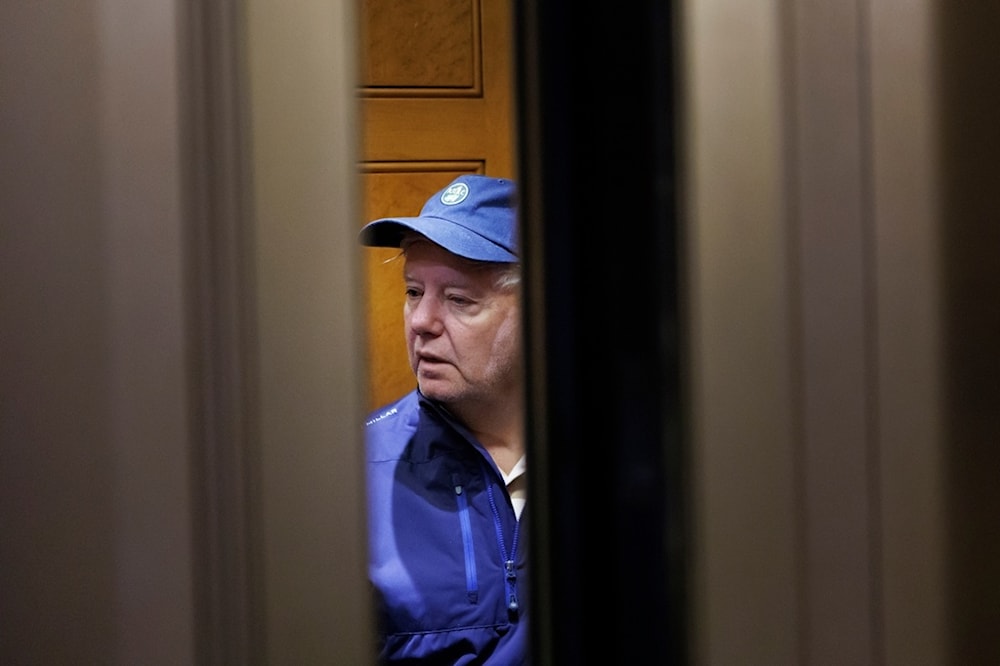
Sen. Lindsey Graham, R-S.C., speaks to reporters outside the Senate Chamber following a vote on Capitol Hill in Washington, Saturday, March 21, 2026 (AP)
US Senator Lindsey Graham has called on US President Donald Trump to reconsider the placement of American military bases in countries that refuse to support Washington’s use of assets in the ongoing war on Iran.
In a post on social media, Graham urged the administration to take a firmer stance toward allies who restrict the use of US military assets stationed on their territory.
“We should consider removing U.S. bases from countries who won’t let us fly from them,” he said, framing the proposal as a necessary response to what he described as unreliable partnerships.
Mr. President, one of the things I like about you most is that, now, our allies take America for granted at their own peril.
— Lindsey Graham (@LindseyGrahamSC) March 20, 2026
As to my suggestion, I meant it then and I’ll repeat it now: We should consider removing U.S. bases from countries who won’t let us fly from them as we… https://t.co/ZIxOuH9vme
Tensions with NATO over war on Iran
Graham’s remarks come amid growing tensions between Washington and its NATO allies, many of whom have declined to participate in military operations tied to the confrontation with Iran.
The dispute has been particularly evident in efforts to secure the Strait of Hormuz, a vital global energy route that has become a central axis in the war.
Despite US requests for naval support, several European countries have refrained from committing military assets, exposing fractures within the alliance over the scope and risks of escalation.
Disputes over use of European bases
A key point of contention has been the refusal of some European states to allow US forces to operate freely from bases located on their soil.
Spain, for example, rejected the use of its jointly operated bases for offensive operations. Foreign Minister José Manuel Albares stated that such use would fall outside existing agreements and international legal frameworks.
"Spain’s refusal to allow American aircraft stationed in Spain to fly in support of Operation Epic Fury is an insult and an outrage to the alliance," Graham wrote in his post. "Mr. President, I think America’s interests would be well-served to move those aircraft from Spain to a country that we can actually rely on in a time of great need. I trust your judgment."
The United Kingdom, however, has taken a more cautious position. While allowing limited defensive use of its bases, London has stopped short of endorsing broader offensive operations.
These divergences have intensified pressure within Washington, where officials view unrestricted access to overseas bases as critical for sustaining military operations.
Escalation rhetoric targets Iran’s energy infrastructure
Graham, known for advocating an aggressive approach, has also pushed for direct action against Iran’s economic lifelines.
He recently suggested targeting Kharg Island, a key oil export hub, arguing that such a move would significantly impact Iran’s economy.
The proposal reflects a broader strategy of economic warfare, aimed at undermining Tehran’s ability to sustain its position in the war. However, such rhetoric also raises the prospect of further escalation, particularly given Iran’s demonstrated capacity to respond through both military and energy channels.
Western divisions on war
The war on Iran has exposed deep divisions within Western alliances, particularly between the United States and European powers wary of being drawn into a broader confrontation.
Several European states have resisted US pressure to escalate militarily, reflecting concerns over economic fallout, energy security, and domestic opposition to war.
These fractures coincide with increasing pressure from the Axis of Resistance, which has expanded the scope of confrontation across multiple fronts, including strategic waterways and regional bases.
Within this evolving landscape, disagreements over military coordination and base access underscore a weakening consensus among Western powers, even as the war continues to intensify.


