
Gulf states urge US to avoid military action against Iran: WSJ
 4 Min Read
Gulf Arab states are privately warning Washington that military action against Iran would risk regional destabilization and global economic fallout, even as US officials signal escalation remains likely.
-
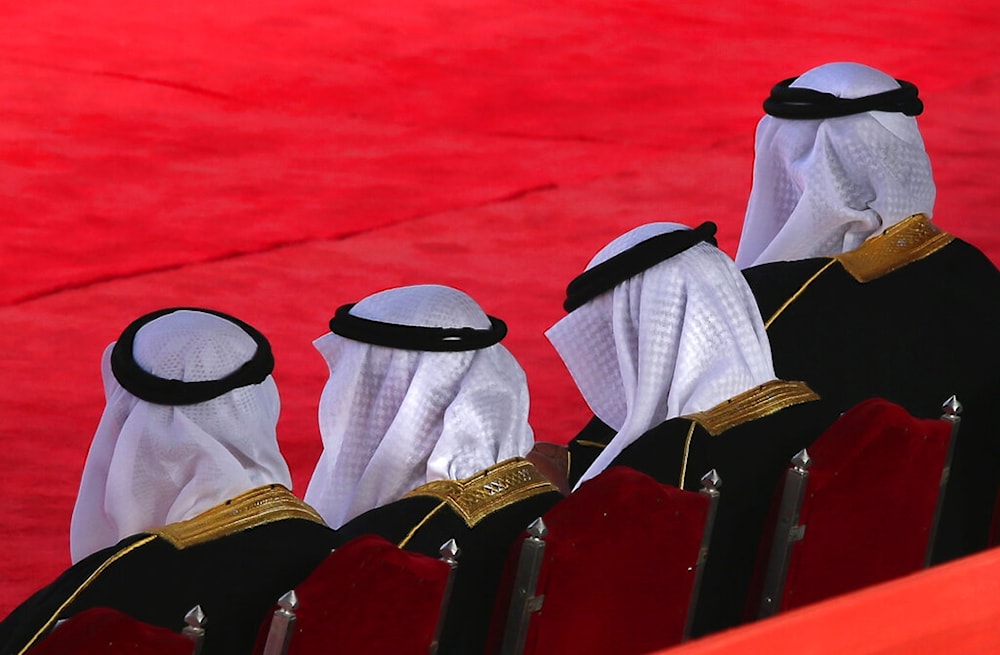
Officials traveling with Bahrain King Hamad bin Isa Al Khalifa are pictured in New Delhi, India Wednesday, Feb. 19, 2014. (AP Photo /Manish Swarup)
Several Gulf Arab states have quietly moved to restrain Washington from escalating toward military confrontation or regime change in Iran, even as senior US officials signal that force remains a serious option, the Wall Street Journal reported on Tuesday.
According to the report, Saudi Arabia, Oman, and Qatar have privately urged the Trump administration not to pursue attacks on Iran, warning that such a move would destabilize global energy markets and ultimately harm the US economy. While the three states have avoided public commentary on the unrest inside Iran, Gulf officials told the newspaper that their concerns have been conveyed through diplomatic channels.
Despite those warnings, US officials cited by WSJ said a strike on Iran was “more likely than not,” revealing growing anxiety across the region that Washington may be preparing for escalation regardless of regional opposition.
Saudi Arabia, long portrayed as aligned with US pressure on Iran, has meanwhile sought to distance itself from any military operation. Saudi officials told the journal that Riyadh has assured Tehran it would not allow US forces to use Saudi airspace to conduct strikes on Iran and that the kingdom would not take part in any conflict should hostilities erupt.
Foreign Exploitation
The Gulf states’ intervention comes against the backdrop of unrest inside Iran that Iranian officials say was initially driven by peaceful economic grievances before being deliberately exploited by foreign actors to push for regime change. Protests first broke out over inflation, currency depreciation, and sanctions-driven hardship, with authorities allowing demonstrations to proceed under police protection. Iranian officials say these gatherings were later hijacked by armed groups and coordinated networks seeking to provoke violence, attack public institutions, and undermine state authority.
Tehran has squarely blamed the United States and “Israel” for fueling the unrest, citing public statements, media campaigns, and intelligence activity encouraging escalation. Israeli officials, including Prime Minister Benjamin Netanyahu, and US President Donald Trump have openly endorsed the protests, framing them as an opportunity to weaken or overturn the Iranian government. Trump has gone further, publicly urging Iranians to continue rioting and warning of US action under the pretext of “protecting protesters.”
National Solidarity Grows
Iranian authorities say the unrest has involved arson attacks, killings, assaults on security forces, and the destruction of public infrastructure, arguing that such acts amount to organized violence rather than peaceful dissent. Millions of Iranians have since taken part in nationwide demonstrations condemning the riots and rejecting foreign interference, signaling, according to Tehran, broad popular resistance to externally driven destabilization.
Regional concern over escalation has extended beyond the Gulf. Türkiye warned this week that any foreign intervention in Iran would deepen instability both inside the country and across the region, urging Washington and Tehran to pursue dialogue rather than confrontation. Turkish officials said legitimate socio-economic grievances had been exploited by outside actors seeking to impose regime change rather than allow internal political processes to unfold.
Markets on Edge
The rising tensions have also unsettled energy markets. Oil prices dipped on Monday after Iranian Foreign Minister Abbas Araghchi said the situation was “under total control,” but analysts cautioned that markets may be underestimating the risks of aggression against Iran. Any conflict could threaten shipments through the Strait of Hormuz, which handles roughly a quarter of global seaborne oil trade, while Iran itself produces around four million barrels of oil per day.
At the international level, United Nations Secretary-General Antonio Guterres has urged restraint, warning that inflammatory rhetoric, threats of military action, and external pressure risk worsening an already fragile situation and destabilizing the wider Middle East.
Read more: Iran intelligence seizes arms shipment, reveals US, Israeli role


