
Hamas warns of escalation over new settlement plan east of al-Quds
 4 Min Read
Hamas has warned that approving a new Israeli settlement city east of al-Quds marks a dangerous escalation, urging international action to halt settlement expansion.
-
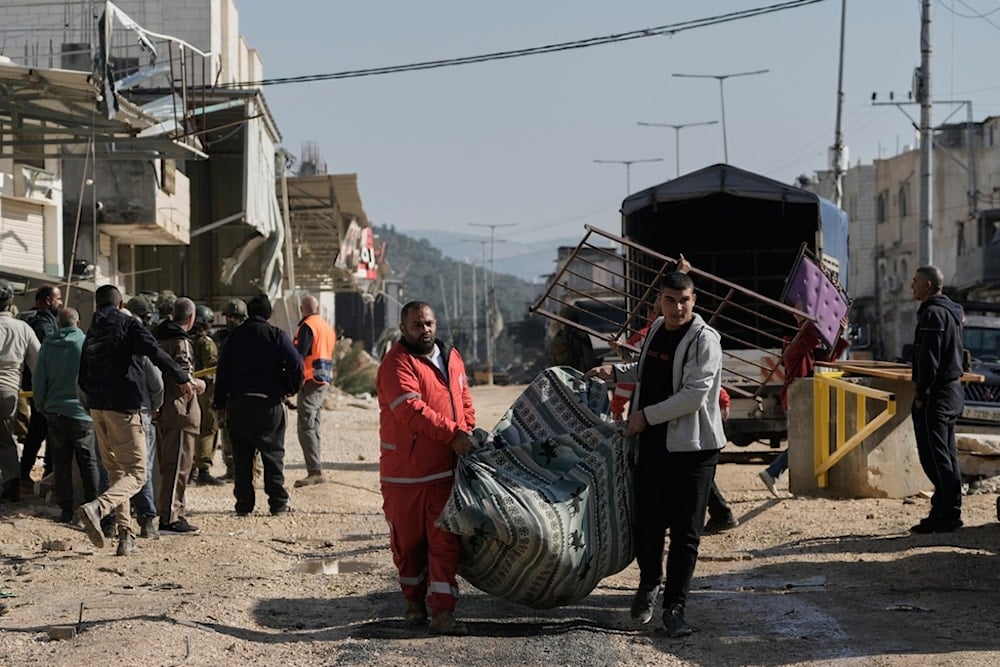
Palestinians collect their belongings ahead of a planned Israeli occupation forces home demolition in the refugee camp of Nur Shams, in the West Bank city of Tulkarem, Wednesday, December 17, 2025 (AP)
Hamas has warned of serious repercussions following the approval by the Israeli occupation’s finance minister, Bezalel Smotrich, of a plan to establish a new settlement city east of occupied al-Quds, describing the move as a dangerous escalation in the project of settlement expansion and annexation.
In a statement, the Islamic Resistance Movement said the new settlement plan constitutes “an additional crime added to the record of the colonial occupation, which is replete with violations of international law.”
Hamas stressed that the continued expansion of settlements acts as “fuel for tension and instability,” holding the Israeli occupation government fully responsible for the consequences of these colonial policies on the ground.
The movement called on the international community, the United Nations, and its legal and human rights bodies to assume their responsibilities and take urgent action to halt settlement projects, including imposing deterrent measures against the occupation.
Hamas also urged the Palestinian people to strengthen their steadfastness and unity in the face of ongoing Judaization and displacement plans targeting Palestinian land and presence, particularly in and around occupied al-Quds.
'Israel's' $837 million settlment expansion plan
Israeli Finance Minister Bezalel Smotrich unveiled last week a sweeping government plan to inject 2.7 billion shekels ($837 million) into expanding and entrenching colonial settlements across the occupied West Bank over the next five years. The package aims to establish 17 new colonies, bolster dozens of existing ones, and upgrade infrastructure in areas earmarked for deeper Israeli control.
According to the plan, 1.1 billion shekels will be directed toward strengthening established colonies and creating new ones. Of that sum, 660 million shekels is designated for the 17 newly approved colonial sites, while 338 million shekels will be used to develop 36 colonies and outposts still in the planning stage. These works include constructing water, sewage, and electricity networks, along with public buildings such as religious centers, schools, and community facilities.
An additional 300 million shekels will go toward launching the new colonies themselves, including 160 million shekels as an establishment grant and 140 million shekels for planning. The plan also calls for the construction of “absorption warehouses” containing around 20 caravans for families, a measure intended to accelerate the demographic entrenchment of settlers and pave the way for future expansion.
Beyond new construction, the government intends to allocate 434 million shekels for rehabilitating infrastructure in existing colonies, 300 million shekels to support colonial councils in the West Bank, 140 million shekels for installing roadblocks, and 150 million shekels to fund bus protection measures over the next three years. Israeli Security Minister Israel Katz is expected to supplement these funds with additional budgets for security upgrades, including smart fencing systems, surveillance cameras, and military equipment depots in the new colonies.
'De facto annexation'
The plan outlines a broader strategy to reinforce Israeli control over areas beyond the 1948 borders through expanded road networks, military base relocation, and administrative restructuring. These measures collectively amount to a de facto annexation of the West Bank, further entrenching Israeli regime authority over Palestinian land.
As part of the administrative overhaul, 225 million shekels will be allocated to create a new land registry unit for the West Bank, transferring jurisdiction away from the “Civil Administration.” The unit is expected to oversee registration processes affecting roughly half a million settlers and aims to regulate some 60,000 dunams by 2030.
Yediot Aharonot reported that the plan includes relocating three military bases to the northern West Bank, most notably transferring the headquarters of the Menashe Brigade to the site of the former Shanur colony. The newspaper described the relocation as a dramatic step intended to strengthen both military presence and the broader colonial project in the region.


