
Hezbollah MP opposes direct talks, backs indirect negotiations
 3 Min Read
MP Ali Fayyad reiterated Hezbollah’s position on negotiations, stressing that Lebanon should prioritize a comprehensive ceasefire and avoid any steps toward direct engagement with "Israel".
-
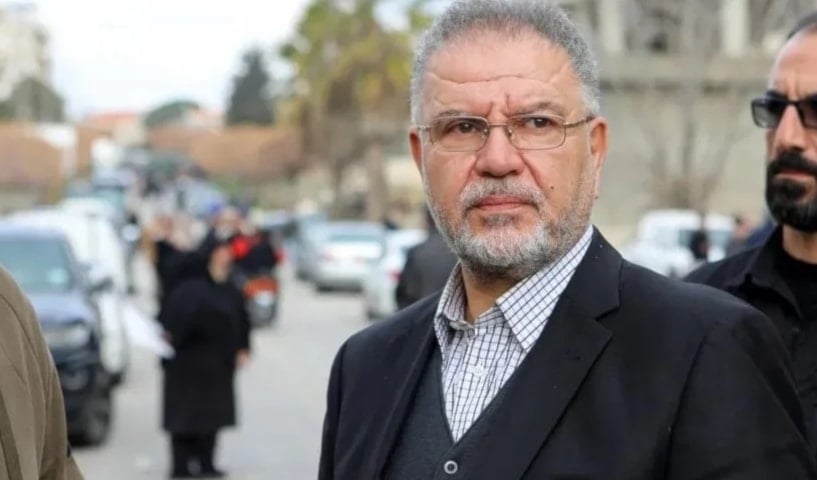
Ali Fayyad, an MP with Hezbollah’s Loyalty to the Resistance bloc (X)
Ali Fayyad, an MP with Hezbollah’s Loyalty to the Resistance bloc, renewed on Tuesday Hezbollah’s objection to direct negotiations between the Lebanese authority and the Israeli occupation authorities, while stressing at the same time that the resistance group does not seek any confrontation with the state authorities.
MP Fayyad said in press remarks: “We are asking the Lebanese authorities on what sources of strength they are relying on in these negotiations,” stressing that “the priority for the Lebanese state at this stage must be a comprehensive and complete ceasefire, including the south of Lebanon.”
He added: “We reject direct negotiations and call for indirect negotiations.”
Fayyad also stressed that a ceasefire must be a precondition before entering any negotiations.
He further noted that “the government’s refusal to proceed toward a peace agreement, a security arrangement, or normalization with the occupation is a positive step, but it remains insufficient.”
Hezbollah expresses readiness to cooperate with the Lebanese state
On the domestic Lebanese front, the MP stated: “We do not want any confrontation with the Lebanese authorities,” adding: “The closer the Lebanese state adheres to national principles and constants, the closer we are to it.”
Fayyad also referred to comments made by Hezbollah Secretary-General Sheikh Naim Qassem in a message earlier in the day, noting that Qassem expressed readiness to cooperate with the Lebanese state while also declaring opposition to direct negotiations.
He stressed that Lebanese political discourse must move forward without sliding toward normalization agreements with the Israeli occupation.
“The resistance can exhaust the occupation”
In parallel with the political situation, Fayyad addressed the resistance’s confrontation with "Israel" in the south, saying: “Our confrontation with the Israeli occupation is primarily grounded in the realities on the ground, and our main vulnerability lies in the occupation’s targeting of civilians,” adding that “the resistance is in a strong position and capable of exhausting the occupation on the battlefield.”
He pointed out that “the wider the theatre of operations expands, the greater the resistance’s capacity to strike the occupation,” noting that “the resistance is focused on tactical maneuvering, asymmetric warfare, and striking deep behind enemy lines,” and warning that “any advance by the occupation toward the Litani River would expose its forces to sustained ambushes and multiple attack vectors.”
Regarding regional linkages, Fayyad said that “the primary factor in confronting the occupation is the battlefield itself,” and that “the second factor is the inclusion of a ceasefire in Lebanon within Iran's negotiation framework,” framing it as a key regional dimension shaping the broader political and military equation.
He added: “In the event of a renewed war between Iran and the United States, the Lebanese scene will become significantly more complex, and the Lebanese state would not be able to reach a resolution on its own, without broader regional dynamics coming into play.”


