
Hormuz is Iran's 'atomic bomb', Iranian Deputy Speaker says
 3 Min Read
Iran's Ali Nikzad described the Strait of Hormuz as the country’s "atomic bomb," signaling its strategic leverage amid ongoing tensions and stalled diplomacy.
-
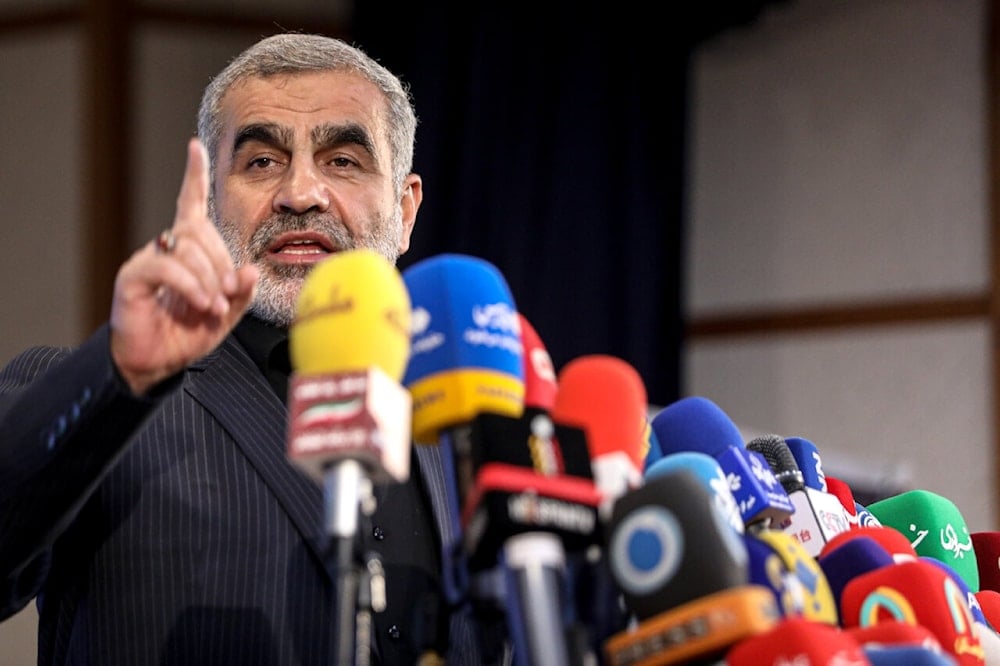
Iranian Deputy Parliament Speaker Ali Nikzad speaks during a press conference in Tehran (Tasnim)
Iran’s Deputy Parliament Speaker Ali Nikzad on Friday affirmed Tehran’s strategic posture over the Strait of Hormuz, describing it as a sovereign asset central to the country’s ability to counter external pressure.
“The Strait of Hormuz is not an international maritime route; it is Iran's natural right, its 'atomic bomb,' and we stand firm in our rightful place,” Nikzad was quoted as saying by Iranian news agency Tasnim.
His remarks come after weeks of US-Israeli aggression, aimed at asserting control over critical energy routes and regional resources. Although a temporary ceasefire was announced on April 7 and later extended by US President Donald Trump, negotiations in Islamabad have failed to produce a lasting settlement, leaving tensions unresolved.
In the weeks since the outbreak of hostilities, maritime activity through the Strait has been severely disrupted, underscoring its central role in global energy flows. The waterway normally carries around a fifth of the world’s oil supply and a significant share of liquefied natural gas exports, while also serving as a primary corridor for shipments to Asia, including a substantial portion of China’s crude imports from Gulf producers.
Hormuz leverage
Iranian officials have increasingly framed control over the Strait as a legitimate defensive tool in the face of foreign military and economic pressure, arguing that stability in the waterway is inseparable from respect for Iran’s sovereignty. In this context, Tehran has portrayed recent tensions as part of a broader attempt to exert control not only over territory, but over the routes, pricing, and circulation of energy itself.
Recent statements from Iranian officials stress that any disruption is a direct consequence of external escalation, while signaling openness to regulated maritime arrangements that reflect regional realities and reduce reliance on Western-controlled systems of trade and enforcement.
The ongoing standoff has already had global repercussions, with reduced shipping flows contributing to rising energy prices and renewed volatility in international markets. Analysts note that even limited restrictions in the Strait can have outsized effects, given its role as the primary export route for Gulf energy producers and a central artery in the global energy system.


