
ICE children detention amid crackdown spikes despite judicial pushback
 4 Min Read
Under Trump’s renewed immigration enforcement, ICE has detained a growing number of children, including toddlers and preschoolers.
-
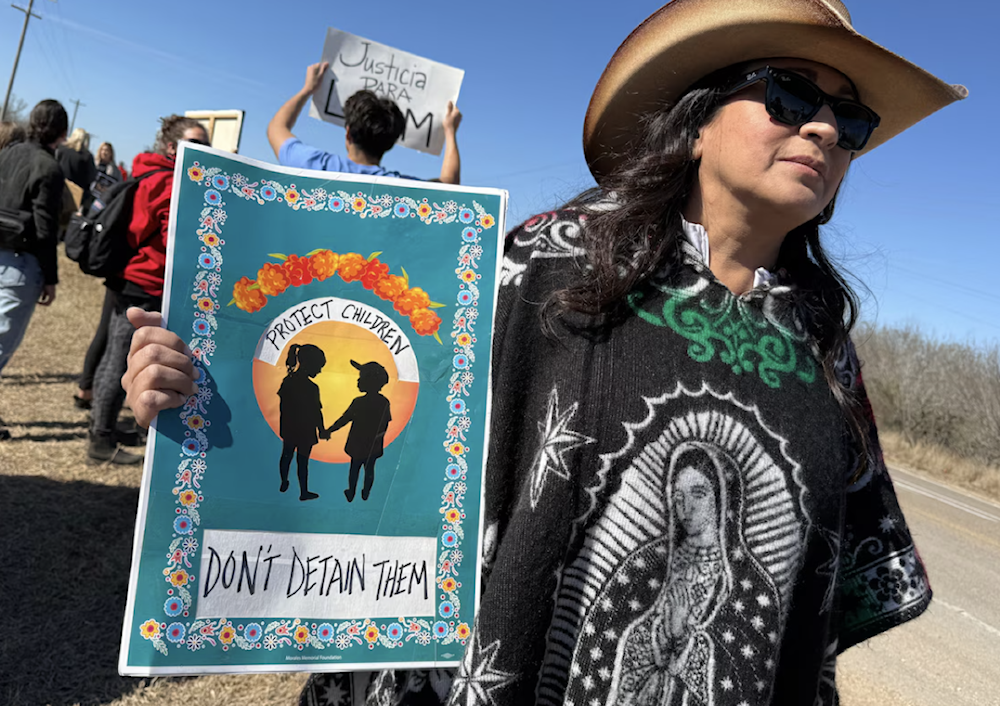
A protester outside the South Texas Family Residential Center in Dilley, Texas, on January 28, 2026 (AFP)
A federal judge has ordered the release of 5-year-old Liam Conejo Ramos and his father from immigration detention, calling their arrest part of an "ill-conceived and incompetently-implemented" deportation campaign.
Liam, detained after returning from preschool in a Minneapolis suburb, has become one of the youngest faces of the growing number of children swept up in Immigration and Customs Enforcement (ICE) raids under President Donald Trump's second-term immigration policies.
Trump's immigration policy is facing unprecedented pressure following the death of two protesters at the hands of federal agents in Minneapolis. The fatal incidents have triggered sharp public criticism and internal rifts within the Republican Party, forcing the administration to recalibrate its messaging and strategy on immigration enforcement.
While the White House initially framed its actions as part of a broader mass deportation campaign, public outcry, especially after the deaths during demonstrations, has compelled a more cautious tone.
Child detentions spike amid renewed family deportation efforts
Federal data and independent analyses reveal a sharp increase in children detained by ICE, as the Trump administration ramps up efforts to deport undocumented immigrants. From October to January, the number of people held in family detention nearly tripled, rising from 425 to 1,304, The Washington Post reported. Analysts estimate that at least 3,800 children were detained in 2025, including 20 infants, according to The Post.
Liam and another toddler, Chloe Renata Tipan Villacis, were detained in Minnesota and flown with their fathers to the South Texas Family Residential Center in Dilley, Texas. Lawyers and advocates report long waits for basic supplies and inadequate medical care at the facility, which was reopened last year to support the administration's aggressive enforcement drive.
Inside the Dilley family detention center: Conditions and concerns
Reports from recently released detainees depict troubling conditions at Dilley. Detainees, including children, are confined in dorm-style rooms with fluorescent lights that remain on at night and tap water that tastes of chlorine. The facility includes a chapel, school, recreational areas, and a commissary. Yet, families face pressure to sign deportation documents during routine ICE check-ins, sometimes being told they will be sent to countries they’ve never lived in.
One asylum seeker, Edward, and his sons spent 47 days in detention after being picked up during a check-in. Aury, another detainee, was held for 50 days with her three children. Her 10-year-old daughter wrote letters from detention, expressing heartbreak over their sudden confinement. Detainees report inadequate medical treatment and coercion to accept voluntary deportation in exchange for financial incentives.
Legal pushback and public outcry mount
The Trump administration’s second-term immigration strategy has sparked legal challenges and growing public criticism. Advocates and attorneys argue that ICE has increasingly detained children with no regard for long-standing protections under federal court settlements like the Flores agreement, which limits the detention of minors to 20 days.
Judge Fred Biery, who ruled on Liam’s case, condemned the administration’s “ill-conceived and incompetently-implemented government pursuit of daily deportation quotas, apparently even if it requires traumatizing children.”
Both Liam and Chloe have since been released, returning to Minneapolis with their families.
Trump’s second term: Deportation goals and policy changes
Since his return to office, Trump has made immigration enforcement a cornerstone of his administration. Executive orders have expanded deportation priorities, ended humanitarian protections for various nationalities, and sought to eliminate birthright citizenship. In March, he invoked the Alien Enemies Act to deport Venezuelan migrants without court hearings.
Congress recently passed a $170 billion spending bill boosting immigration enforcement, allowing the hiring of nearly 20,000 officers and expanding detention facilities, including plans to convert up to 23 industrial sites into detention centers, some intended for families.
Attorneys, including Kristin Etter and Eric Lee, continue to challenge the administration’s detentions. Etter described meeting a detained Ecuadorian fourth-grader in Dilley who had been arrested en route to school. Lee called the situation inside the centers worse than widely understood, with children as young as three being held in confinement.
The expanding use of child immigration detention in the US under Trump’s revived enforcement strategy has provoked legal, humanitarian, and political pushback. As the administration intensifies arrests across major cities, families and advocates brace for further escalation in what many describe as a deeply punitive system.


