
Illinois, Minnesota sue Trump administration over ICE raids
 4 Min Read
State and city officials in Illinois and Minnesota have filed federal lawsuits challenging the Trump administration's immigration raids, claiming constitutional violations and infringement on states’ rights.
-
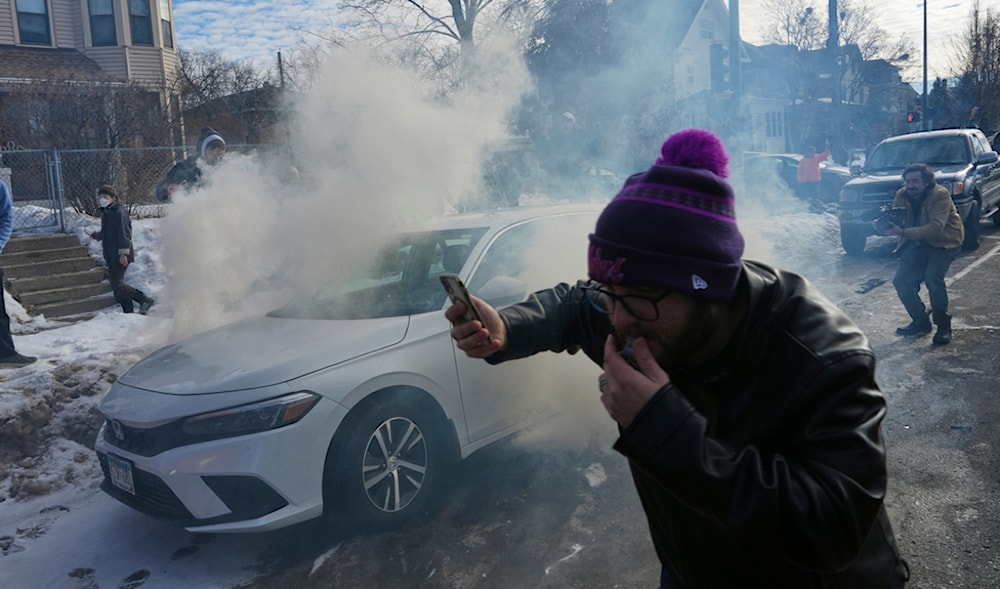
Protesters try to avoid tear gas dispersed by federal agents, Monday, Jan. 12, 2026, in Minneapolis (AP)
State and city officials in Illinois and Minnesota filed federal lawsuits on Monday against the Trump administration, citing that the mass deployment of immigration agents to the Chicago and Minneapolis regions violates the US Constitution and infringes on states’ rights.
The legal action comes amid escalating aggression and raids authorized by the Trump administration, particularly targeting Democratic-led states.
The Illinois case seeks to block US Customs and Border Protection from conducting civil immigration enforcement within the state without explicit congressional authorization. Meanwhile, Minnesota’s lawsuit demands an end to the “unprecedented surge” of federal agents in the state.
Minnesota seeks to block federal deployment surge
Filed in the US District Court, the Minnesota lawsuit, brought by the state and the cities of Minneapolis and St. Paul, alleges that ICE raids have escalated beyond legal authority. The suit claims that “thousands of armed and masked D.H.S. agents have stormed the Twin Cities to conduct militarized raids and carry out dangerous, illegal, and unconstitutional stops and arrests.”
Federal officials have defended the move as necessary to implement the Trump administration’s immigration agenda in regions where state and local governments have shown resistance.
Illinois cites unlawful raids, tear gas, and surveillance
Illinois, joined by the city of Chicago, also filed a lawsuit asserting that the federal government has initiated a campaign of intimidation under the guise of immigration enforcement. It states that the administration has "unleashed an organized bombardment" that aims to coerce state and city officials to abandon policies that protect immigrants.
The Illinois lawsuit outlines a series of complaints, including the use of tear gas, roving patrols, the collection of biometric data, and aerial surveillance. The lawsuit recalls several incidents from the past year, such as agents conducting operations in downtown Chicago, a raid on an apartment complex involving a helicopter, and two separate shootings.
Fatal shooting sparks tensions in Minneapolis
The lawsuits follow increased tensions in Minneapolis, where an ICE agent fatally shot an American woman, Renee Nicole Good, last Wednesday. The killing prompted widespread protests. While the federal government has defended the shooting as justified, local officials have dismissed the narrative as “bullsh*t” and “propaganda.”
The FBI has opened an investigation into the shooting. A state agency initially joined the probe but later withdrew, citing political interference and lack of access to evidence.
Federal government defends border patrol operations
Tricia McLaughlin, spokeswoman for the Department of Homeland Security, responded to the Illinois lawsuit, calling it "baseless" and stating that enforcing immigration law is a "clear federal responsibility" under the Constitution.
"It really is astounding that the left can miraculously rediscover the 10th Amendment when they don’t want federal law enforcement officers to enforce federal law," she said.
The administration has framed the Border Patrol deployment in Minnesota as a response to alleged fraud in state social service programs. Federal agents have been patrolling streets and conducting arrests across the Minneapolis area in recent days, often clashing with demonstrators.
Previous legal challenges to Trump's immigration tactics
This is not the first time constitutional rights and immigration issues have surfaced under the Trump administration. Previous lawsuits have challenged the president’s deployment of National Guard troops over the objections of state leaders and placed limitations on immigration agents' use of force.
A federal judge in Illinois temporarily blocked one such deployment, a ruling later upheld by an appellate court. Separately, restrictions on immigration enforcement tactics were imposed by another judge but were overturned on appeal.
Beyond Minnesota and Illinois, similar enforcement operations have occurred in Los Angeles, New Orleans, and Portland, which are largely Democratic jurisdictions. These actions reflect a broader effort by the Trump administration to fulfill campaign promises focused on aggressive deportation policies.
Read more: As Trump beats war drums abroad, ICE terror spreads at home


