
IMF demands clearer loss allocation in Lebanon's draft rescue law
 5 Min Read
IMF seeks amendments to Lebanon's draft rescue law on loss distribution as financial crisis enters its seventh year with million accounts frozen.
-
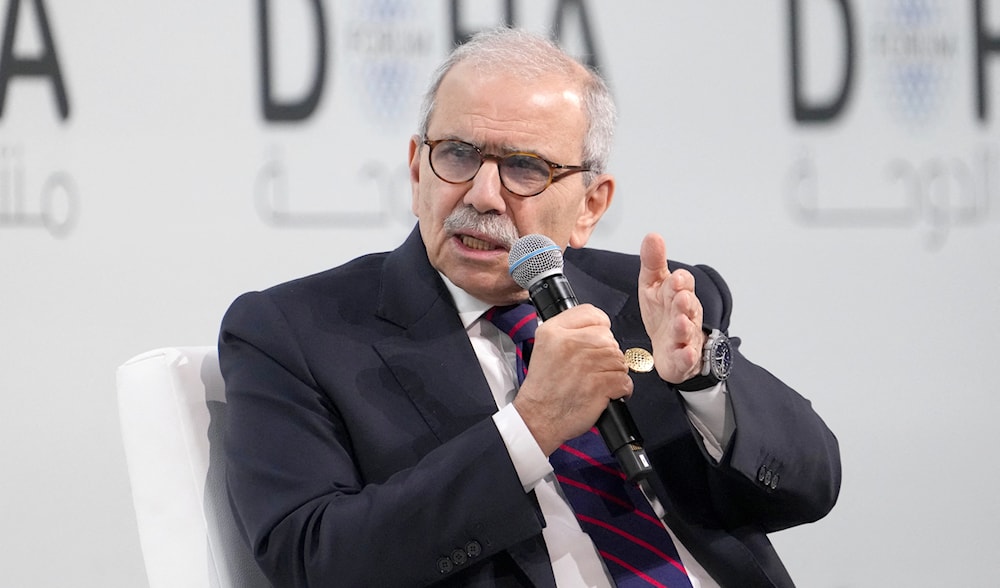
Picture of Nawaf Salam, Lebanese Prime Minister, attending Doha Forum in Qatar on December 07, 2025 (Photo by HUSSEIN BAYDOUN / MOFA / FACTSTORY)
The International Monetary Fund has called for revisions to Lebanon's draft financial gap law, raising concerns over provisions that would determine how losses from the country's historic financial collapse are distributed among key parties, Prime Minister Nawaf Salam disclosed at the World Economic Forum in Davos.
In an interview with Reuters, Salam confirmed that the fund is seeking greater clarity in the hierarchy of claims, a technical but critical component that establishes the order in which losses would be absorbed by the state, central bank, commercial banks, and depositors.
"We want to engage with the IMF. We want to improve. This is a draft law," Salam said. "They wanted the hierarchy of claims to be clearer. The talks are all positive."
Path to deposit recovery
The proposed legislation represents one element of a broader reform package that the IMF has made conditional on releasing financial assistance to Lebanon. Its purpose is to provide depositors with a clear mechanism for retrieving funds that have been inaccessible for six years, revive bank lending, and address a crisis affecting nearly a million frozen accounts.
According to the plan approved by Salam's cabinet in December and currently before parliament, depositors holding up to $100,000 would receive their funds over a four-year period, with priority given to smaller balances. Forensic audits would run parallel to these repayments to establish accountability and calculate total losses.
Government estimates from 2022 placed the financial gap at roughly $70 billion, though analysts believe the figure has since grown. Salam emphasized Lebanon's determination to secure an IMF program but cautioned that delays carry serious consequences, including the risk of moving from a financial grey list to a black list.
"We want an IMF program, and we want to continue our discussions until we get there," he said. "International pressure is real. The longer we delay, the more people's money will evaporate."
Government confronts systemic collapse
Finance Minister Yassine Jaber, working alongside Salam to advance these reforms, described the effort as necessary to rescue a banking sector crippled by years of dysfunction and prevent further deterioration into an exclusively cash-based economy. He characterized the law as Lebanon's first genuine attempt to address the simultaneous failure of its banking sector, central bank, and state treasury.
Over the past six years, reform efforts have repeatedly collapsed under pressure from political and private interests. Jaber placed responsibility squarely with parliament, warning that inaction would condemn Lebanon to "a deep, dark tunnel" with no viable exit.
"Lebanon has become a cash economy, and the real question is whether we want to stay on the grey list, or sleepwalk into a black list," Jaber told Reuters.
Technical dispute over loss distribution
The IMF's emphasis on clarifying the hierarchy of claims addresses fundamental questions about which creditors receive priority and how losses are apportioned across different parties.
Speaking at a December conference in Beirut, IMF representative Frederico Lima laid out the fund's framework. He said restructuring must begin by reducing the central bank's obligations to commercial banks, followed by a realistic revaluation of bank assets. Protection of deposits below $100,000 should be absolute, he argued, with losses distributed according to a transparent sequence.
Multiple iterations of the draft law have circulated since the government began preparing the legislation. Earlier versions reportedly outlined a distribution model that would assign roughly $16 billion of the gap to state institutions, an equivalent amount to the central bank, and approximately $12 billion to commercial banks, spread over an extended timeline.
Central bank obligations, currently estimated at $80 billion, would be reduced through eliminations of accumulated interest, unverified funds, and accounts that shifted from lira to dollars following the September 2019 collapse.
Banking sector pushback
Commercial banks have mounted resistance to certain provisions, particularly those they argue would eliminate their capital base entirely. The Association of Banks has challenged IMF recommendations that capital be written down before any deposit recovery takes place, contending that $8 billion in mandatory foreign currency reserves now held at the central bank should be credited against their share of losses rather than treated separately.
Disagreement over loss allocation has emerged as the primary barrier to forward movement. While government officials advocate for distributing the burden across all responsible institutions, banks express concern over both financial viability and potential legal liability. Meanwhile, depositors remain locked out of accounts that previously held their salaries, savings, and emergency funds.
With the legislation now under parliamentary consideration, uncertainty persists over whether political consensus can be reached. Lebanon's financial crisis is entering its seventh year, and continued delays further diminish what little value remains in frozen deposits while damaging the country's standing with international financial institutions.


