
International Coalition mission will end on Sep 30: Iraqi official
 3 Min Read
Iraqi official Sabah al-Numan tells Al Mayadeen that the International Coalition's mission in Iraq will end as scheduled on September 30, amid efforts to regulate weapons.
-
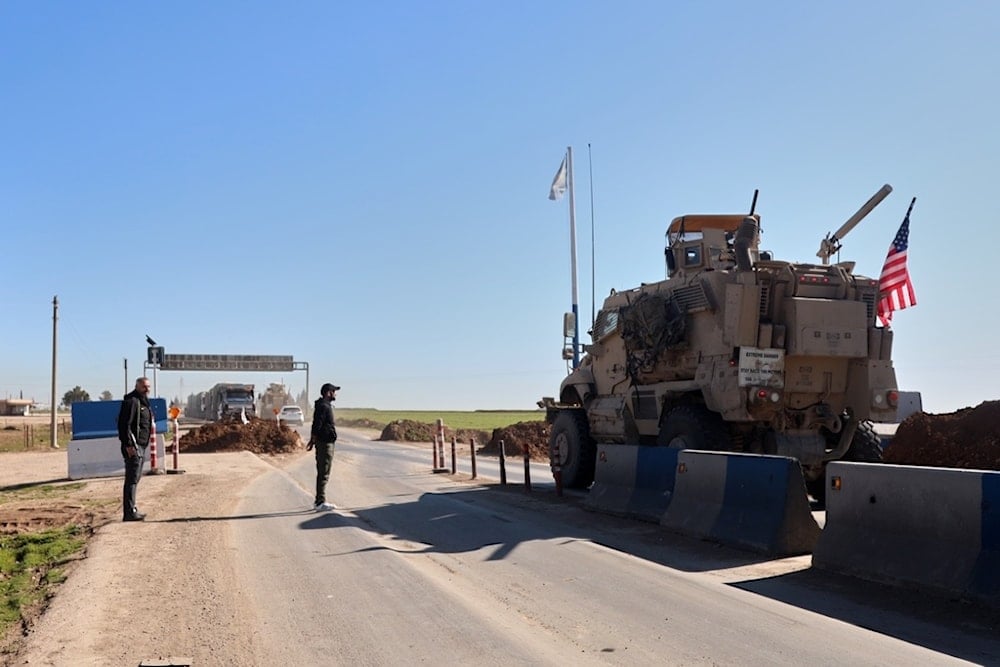
A convoy carrying US Army vehicles drives away from the International Coalition's Qasrak Base, its largest base in northeastern Syria, heading toward Iraqi territory on the outskirts of Qamishli, Syria, on February 23, 2026. (AP/Baderkhan Ahmad)
Iraqi government spokesperson Sabah al-Numan told Al Mayadeen on Thursday that the mission of the international coalition in Iraq will conclude as scheduled on September 30.
Al-Numan, spokesperson for the Iraqi Commander-in-Chief, stressed that the government remains committed to managing the issue of weapons in the country, while rejecting attempts to revive sectarian tensions or circulate malicious rumors.
The statement comes as Iraq prepares for the scheduled conclusion of the international coalition's mission, amid ongoing discussions over security arrangements and the role of Iraqi state institutions.
Baghdad stresses control over weapons
In a related development, Nouri al-Maliki, head of the State of Law Coalition, stressed that efforts to place weapons exclusively under state control must be pursued without escalation to prevent any confrontation that could threaten Iraq's stability.
Al-Maliki warned that any internal confrontation would be a loss for Iraq as a whole, rather than for any single side or component. He also cautioned against framing a potential conflict in sectarian terms, stressing that such a characterization would be misguided.
The remarks come as Iraq continues to grapple with the issue of weapons outside direct state control while preparing for the scheduled conclusion of the international coalition’s mission.
Maliki reaffirmed the Coordination Framework’s support for the government, stressing that previous criticisms of its performance should not be interpreted as support for replacing or bringing down the government. The issue of weapons has increasingly become intertwined with wider debates over Iraqi sovereignty, national security, and the country’s position amid regional tensions.
In this context, Iraqi President Nizar Amidi said earlier that no Iranian official had asked Baghdad to delay the process of placing weapons under state authority.
According to Amidi, Iranian officials stressed that the issue remains an exclusively Iraqi matter. He also underscored the role of the armed factions in the fight against ISIS, noting the sacrifices they made in confronting the group.
He said the Iraqi state is now calling on these factions to hand over their weapons and integrate into the security forces, while stressing that dialogue and mutual understanding are essential to reaching an Iraqi national solution.
Read more: PMF media head explains Iraq's weapons debate, factions | Exclusive


