
Maliki warns against internal conflict over Iraq’s weapons
 3 Min Read
Nouri al-Maliki calls for dialogue over placing weapons under state authority, warning that escalation could destabilize Iraq and serve wider regional conflicts.
-
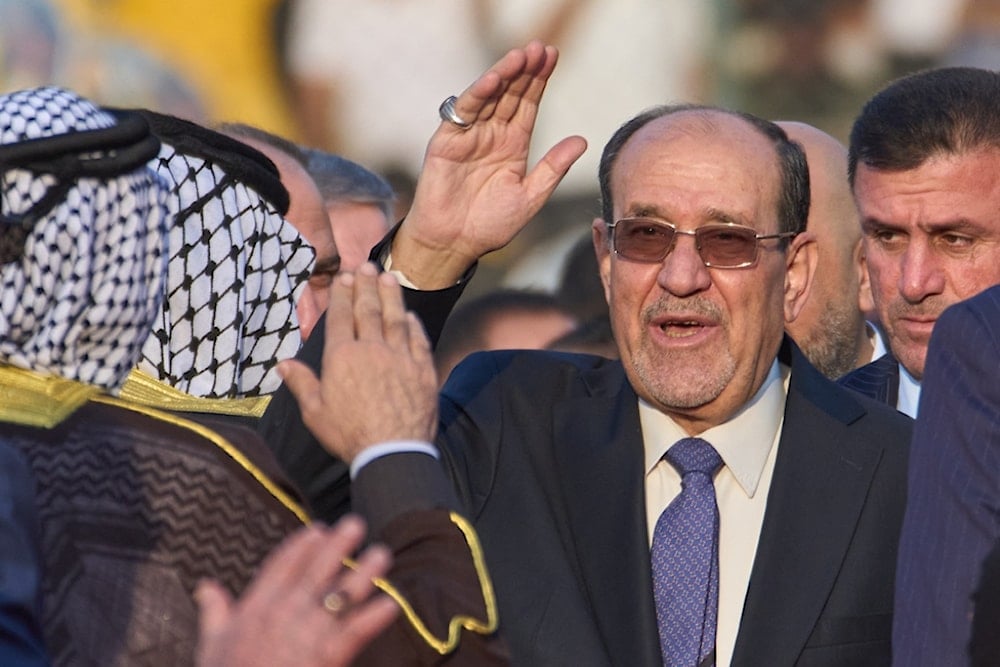
Former Iraqi Prime Minister Nouri al-Maliki arrives to his political block campaign rally before the parliamentary elections in Baghdad, Iraq, Friday, Nov. 7, 2025. (AP Photo/Hadi Mizban)
Nouri al-Maliki, head of Iraq’s State of Law Coalition, warned Wednesday against using escalation to enforce the state’s control over weapons, stressing that the issue must be addressed in a way that prevents an internal confrontation and protects Iraq’s stability.
Maliki said any internal conflict would constitute a loss for Iraq as a whole rather than for one political or sectarian group.
He also rejected the notion that any potential confrontation could simply be characterized as a “Shiite-Shiite” conflict, warning that those who view it in such narrow terms are mistaken.
Maliki warns against internal confrontation
Maliki called for the state to consolidate control over weapons through political and national understandings rather than escalation.
He stressed the need to develop a national and regional vision capable of shielding Iraq from threats and preventing the country from becoming an arena for settling broader conflicts.
“The weapons issue” has remained a sensitive political question in Iraq, particularly concerning armed factions that have played a major role in fighting ISIS and are linked to the country’s broader security architecture.
Maliki said neither the government nor the Coordination Framework would allow Iraq to slide into internal fighting.
He also called for completing the ministerial cabinet and filling vacant ministries, saying the prime minister shares the same objective.
Read more: Resistance Axis stronger than ever before: Ghalibaf from Iraq
Weapons issue must be resolved through dialogue
Maliki reaffirmed the Coordination Framework’s support for the government, stressing that previous criticisms of its performance should not be interpreted as support for replacing or bringing down the government.
The issue of weapons has increasingly become intertwined with wider debates over Iraqi sovereignty, national security, and the country’s position amid regional tensions.
In this context, Iraqi President Nizar Amidi said earlier that no Iranian official had asked Baghdad to delay the process of placing weapons under state authority.
According to Amidi, Iranian officials had emphasized that the matter was an exclusively Iraqi decision.
Amidi also highlighted the role played by armed factions in fighting ISIS, saying they had shed blood in confronting the group.
He said the state is now asking these factions to hand over their weapons and integrate into the security forces, but stressed that dialogue and mutual understanding are necessary to reach an Iraqi national solution.
Baghdad seeks national approach to prevent external interference
The positions expressed by Maliki and Amidi place emphasis on resolving the weapons question through Iraqi political mechanisms rather than confrontation.
Maliki warned that any attempt to reduce the issue to a sectarian dispute risks overlooking the wider regional and geopolitical dimensions affecting Iraq.
His call for a national and regional approach comes as Baghdad seeks to prevent the country from becoming a battleground for conflicts involving outside powers.
For Iraqi political forces, maintaining internal stability while addressing the question of weapons under state authority remains closely connected to preserving national sovereignty and preventing renewed internal conflict.
Read more: PMF media head explains Iraq's weapons debate, factions | Exclusive


