
IOF 'Hezbollah targets' narrative debunked; Lebanon buries civilians
 12 Min Read
In all its statements, the Israeli army claims striking Hezbollah fighters, infrastructure, command centers, and launch sites, but reality shows children, women, families, and homes under the rubble.
-
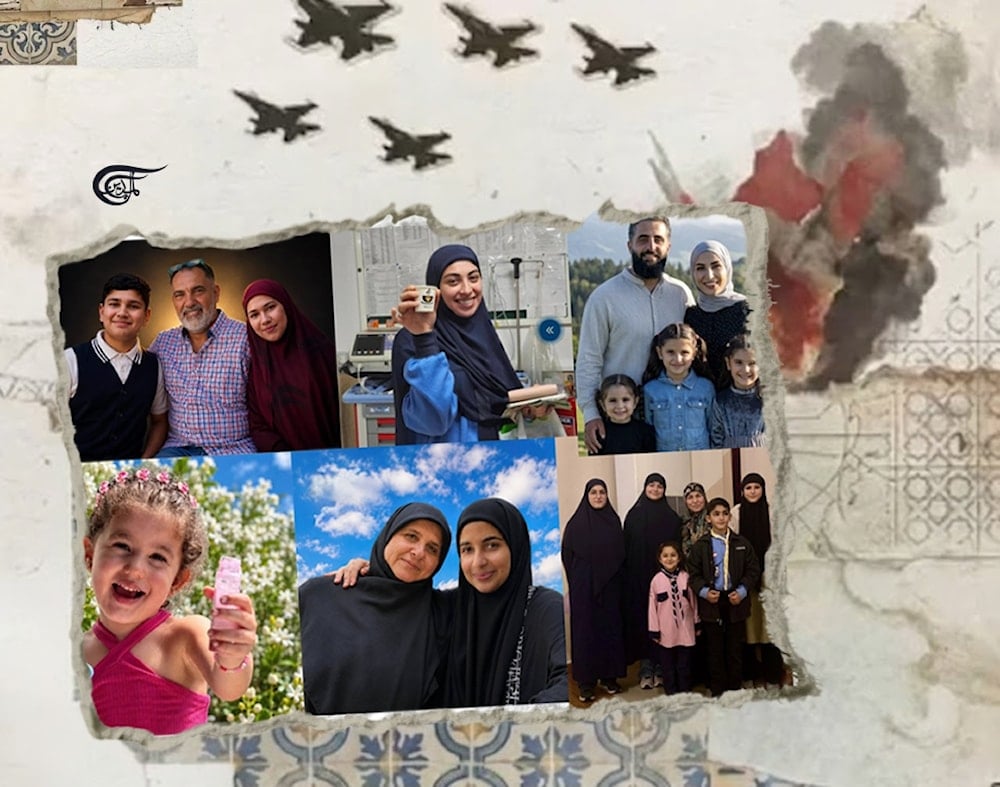
"Israel" claims "Hezbollah infrastructure"; reality on the ground says civilians (Illustrated by Batoul Chamas for Al Mayadeen English)
After every wave of strikes on Lebanon, the Israeli army claims striking Hezbollah, in response to what it insolently calls "the group's repeated violations of the ceasefire," listing fighters, command centers, rocket launch sites, and military infrastructure among the "targets".
Yet the aftermath on the ground looks nothing like a battlefield of command centers and launch sites. It resembles more destroyed homes, grieving families, and children pulled from beneath the rubble.
By the end of June 19, Lebanon's Ministry of Public Health said Israeli attacks had killed 83 people and wounded 141 others across more than 30 towns and villages, many of them women and children. Images from the targeted areas showed destroyed homes, devastated residential neighborhoods, grieving families, and civilians being pulled from beneath the rubble, directly challenging "Israel's" attempt to frame the assault as precise operations against "Hezbollah infrastructure".
Even Trump thinks these attacks are 'too much'
Even US President Donald Trump himself had questioned this strategy days earlier. In a rare public criticism of Israeli tactics in Lebanon, Trump said that Netanyahu must act "more responsibly" regarding Lebanon, warning that Syria could "do the job" of ending the Resistance if "Israel" won't "do it without killing everyone."
Speaking at the G7 summit in Evian, France, Trump addressed recent developments in the region and said he had conveyed concerns to "Israel" over its aggression on Beirut.
"I saw that attack; I saw where that bomb went. That was a vicious... that was too much. You can do too much also," Trump said.
His remarks cut into the core of "Israel's" own justification: if entire buildings are being flattened to target one alleged operative, then the claim of precision collapses under the weight of the civilians killed, wounded, and buried beneath them.
The Israeli claim came at a moment when US President Donald Trump said the United States expected a "complete ceasefire on all fronts, including Lebanon, Hezbollah, and Israel," amid diplomatic efforts following the recently announced Iran-US memorandum of understanding.
Yet, rather than halt its aggression, "Israel" intensified its bombardment of southern Lebanon, striking residential areas and leaving behind a trail of blood, rubble, and grieving families. As the aggression continued into Saturday, additional preliminary tolls were reported separately.
Despite the #US-Iran memorandum of understanding stipulating the end of war on all fronts, including Lebanon, with both signee and their allies ensuring the territorial integrity and sovereignty of #Lebanon, as well as a purported ceasefire which should've taken effect on June 19… pic.twitter.com/eXJaY4fmft
— Al Mayadeen English (@MayadeenEnglish) June 20, 2026
هذا يُعتبر ضمن وقف إطلاق النار ولا يُعدّ خرقًا له pic.twitter.com/TsqiTeQ3M9
— محمد محسن 🇱🇧 (@mmohsen1001) June 20, 2026
Israeli claim collapses under sequence of events on the ground
The June 19 assault came as diplomatic efforts were centered on enforcing a halt to hostilities in Lebanon as stipulated in the Iran-US memorandum of understanding, which Tehran said included a clause related to ending the war on Lebanon and preserving the country's sovereignty and territorial integrity.
Iranian officials had repeatedly stated that Lebanon was a central part of the understandings reached with Washington, warning that continued Israeli attacks or occupation on Lebanese territory would violate the agreement.
Yet rather than halt its aggression, "Israel" yet again escalated its strikes across southern Lebanon. The attacks targeted inhabited homes in several towns, including Harouf, Kfar Sir, al-Sharqiyeh, Qatrani, Habboush, Toul, Dweir, al-Jabour, and others.
"Israel's" claim that it was merely responding to "Hezbollah violations" collapses under the sequence of events on the ground. Hezbollah said its fighters confronted an Israeli occupation force attempting to advance toward the Kfar Tibnit-Ali al-Taher axis, describing the operation as a response to Israeli incursions and ceasefire violations, with merely soldiers on Lebanese territory targeted.
Hezbollah's Media Relations Office later rejected Israeli allegations that the Resistance had violated the ceasefire as "completely baseless," describing them as an attempt to mislead public opinion and sabotage the Iran-US agreement.
In a statement, Hezbollah’s Media Relations strongly refuted allegations promoted by the Israeli enemy regarding the Resistance's breaches of the ceasefire. The group stated that these "completely baseless claims" are a deliberate attempt to mislead public opinion, justify… pic.twitter.com/vojLHMVz5J
— Al Mayadeen English (@MayadeenEnglish) June 20, 2026
According to the Office, Israeli violations since dawn Friday exceeded 300 documented breaches and attacks, including warplane and drone strikes, artillery shelling, phosphorus shells, and attacks on more than 25 towns and villages, including Nabatieh. In that broader tally, Hezbollah said more than 111 citizens were killed and 176 others wounded, while initial information also indicated the use of internationally prohibited cluster bombs.
The statement said these facts "demonstrate without ambiguity the party that is violating the ceasefire agreement and undermining existing understandings."
كثّفت قوات الاحتلال الإسراىيلي هجماتها بالفوسفور الأبيض على منطقة #النبطية خلال الليل، متسببة بالعديد من الحرائق والدخان المكثف السام فوق الأراضي والبلدات الجنوبية. pic.twitter.com/trnlCxUy4V
— Green Southerners الجنوبيون الخضر (@GreenSoutherns) June 19, 2026
Friday's toll: Children and women among the dead
According to the Ministry of Public Health's Emergency Operations Center, the June 19 toll included victims across more than 30 towns and villages.
Among the dead were children and women in numerous locations, including:
- Harouf: 10 killed, including one child and three women.
- Doueir: Seven killed, including a child and a woman.
- Sharqiyeh: Seven killed, including two women.
- Nabatieh: 17 killed, including two children and one woman.
- Habboush: Eight killed, while 19 others were wounded, including two children and one woman.
- Jibchit: Two killed, including one woman.
- Deir al-Zahrani: Four killed.
- Zebdine: Three killed, with a child among the wounded.
- Arabsalim: Three killed, including one child, while six others were wounded, among them four women and a young girl.
- Kfarsir: Two women were killed and nine others wounded, including a child and two women.
The Ministry also reported deaths and injuries in dozens of other villages, including al-Rayhan, Ansar, Touline, Kfaroumman, Kfarjoz, Qatrani, Ghassaniyeh, Qsaybeh, and several towns in the Bekaa region.
Across the list, the affected locations were overwhelmingly residential communities rather than clearly identified military sites, as claimed in the Israeli military's statements. The victims were not, as evident, military commanders or armed units, but people killed and wounded in towns, homes, and villages.
#WATCH | Footage documents the massive destruction in the town of al-Nmairiyeh in South Lebanon due to "Israel's" aggression.#SouthLebanon #Lebanon #LebanonWar #LebanonUnderAttack pic.twitter.com/shEpBsuSNL
— Al Mayadeen English (@MayadeenEnglish) June 20, 2026
Homes reduced to rubble
Images and videos circulating from the aftermath of the strikes showed collapsed homes, devastated residential neighborhoods, and rescue teams recovering victims from beneath the rubble.
Footage from towns including Nabatieh, Harouf, and Habboush depicted entire families displaced as emergency workers searched destroyed buildings for survivors.
مجزرة جديدة يرتكبها الاحتلال في بلدة قناريت قضاء صيدا، وأكثر من 10 شهداء في حصيلة غير نهائية حيث تبحث فرق الإنقاذ عن مفقودين.
— الميادين لبنان (@mayadeenlebanon) June 20, 2026
تقرير: جمال الغربي #الميادين @JamalGhourabi pic.twitter.com/xxpd06H6Zn
Despite "Israel's" assertion that it was striking "Hezbollah infrastructure," publicly available images from the targeted areas largely show damage to civilian neighborhoods and homes, with no sign whatsoever of military installations in any of the images.
#WATCH | Footage documents the massive destruction in the town of al-Nmairiyeh in South Lebanon due to "Israel's" aggression.#SouthLebanon #Lebanon #LebanonWar #LebanonUnderAttack pic.twitter.com/shEpBsuSNL
— Al Mayadeen English (@MayadeenEnglish) June 20, 2026
The scenes from southern Lebanon expose the lies and fabrications behind the Israeli military's terminology. What "Israel" describes as "command centers, launch sites, and military infrastructure" turned out, in the aftermath, to be shattered homes, bloodied streets, and families buried under rubble.
مكان الغارة في بلدة عربصاليم pic.twitter.com/QZBV3VpFVi
— Ahmad Hamieh🇦🇷🇦🇷 (@Ahmadhamieh313) June 20, 2026
Hezbollah: 'Israel' used ceasefire to advance
While "Israel" claims its military operations are a "response to Hezbollah attacks and violations" of the ceasefire, Hezbollah announces that its operations are carried out in response to continued Israeli military advances and incursions into Lebanese territory, arguing that resistance against occupation forces constitutes self-defense enshrined in international law rather than a breach of the truce.
In statements issued on June 19 following its operations, the Resistance said its fighters monitored an Israeli force composed of armored and infantry units attempting to infiltrate toward the northern side of Ali al-Taher hill, near Kfar Tibnit. Hezbollah said the force was lured into a prepared kill zone before being targeted with various weapons, including guided missiles that struck three Merkava tanks, destroying them and setting them ablaze.
The Resistance said the operation came "based on the legitimate right to resist occupation, liberate land, and respond to the Israeli enemy's violation of the ceasefire."
A later statement by the Islamic Resistance's Operations Room accused Israeli forces of using the ceasefire to attempt yet another infiltration into Lebanese territory. The statement said Israeli forces carried out an infiltration attempt toward the Ali al-Taher heights, an area they had repeatedly failed to seize.
According to the Resistance, an Israeli commando infantry unit reached an ambush set by Hezbollah fighters and was confronted with appropriate weapons, resulting in confirmed casualties. The statement said Israeli forces then launched intensive airstrikes inside and outside the operational area, targeting civilians in an attempt to cover up a military failure.
Hezbollah said it had remained committed to the ceasefire since Friday evening, June 19, despite early Israeli violations, but stressed that it would not accept any attempt to seize territory or expand control. Its fighters, the statement added, remain on high alert and fully prepared for defensive operations to protect their land, people, and homeland.
The Islamic Resistance in Lebanon's Operations Room released a statement affirming that "Israel" has "once again resorted to false claims to justify its repeated violations of the ceasefire," stressing that the Resistance has adhered to the ceasefire since Friday evening, despite… pic.twitter.com/EgmiMB5Etg
— Al Mayadeen English (@MayadeenEnglish) June 20, 2026
This sequence challenges "Israel's" attempt to frame Hezbollah's actions as the starting point of escalation. Hezbollah's fighters were not initiating hostilities but confronting an advancing occupation force attempting to push deeper into Lebanese territory.
Israeli media acknowledges failure at Ali al-Taher
Israeli media reports further weakened "Israel's" ceasefire narrative, acknowledging that occupation forces failed to occupy the Ali al-Taher heights in South Lebanon.
Reports said the IOF faced difficult battlefield conditions during confrontations with the Lebanese Resistance, with tanks and troop movements targeted by anti-tank guided missiles and drones. Israeli media also reported casualties among occupation soldiers and said wounded troops were evacuated from Lebanese territory.
"Israel's" Channel 14 warned that "the situation in Lebanon is very dangerous for our soldiers," adding that "if there is no chance of success for our soldiers there, simply remove them."
Hezbollah MP Hassan Fadlallah said the Israeli occupation army had attempted to expand its control over Lebanese territory, stressing that the Resistance exercised its legitimate right to self-defense.
"The resistance has the full right to confront this enemy when it attacks us, as it is the aggressor and the occupier," he said.
Fadlallah said the enemy is attempting to compensate for its failure to achieve its declared objectives, including controlling southern Lebanon, destroying the Resistance, and eliminating its presence, through increased attacks on civilians.
Saturday attacks deepen the toll
The following morning, the pattern continued.
On June 20, Israeli attacks across southern and eastern Lebanon killed at least 37 people and wounded at least 48 others in a preliminary toll, according to reports. The bombardment included dozens of airstrikes and drone attacks across Nabatieh, western Bekaa, and surrounding towns, with attacks targeting residential buildings and civilian areas.
The attacks also extended to official Lebanese state institutions. Banque du Liban said its branch in Nabatieh was directly targeted by Israeli forces, stressing that the strike was neither accidental nor the result of collateral damage, but a direct hit on an official building belonging to Lebanon's Central Bank. The bank said the damage was limited to material losses, with no injuries among employees or protection personnel, who were not present inside the building at the time of the attack.
دمرت إسرائيل اليوم مبنى مصرف لبنان في مدينة النبطية .
— سُ (@Suzytf) June 20, 2026
| آخر صورة للمصرف منذ أربعة أيام وصورته الأخيرة اليوم.. pic.twitter.com/NpV2fPvu1g
On June 17, large-scale destruction was also reported at the Linda Chocolate factory in Zebdine, a civilian industrial facility in southern Lebanon.
الدمار الكبير في معمل شوكولا ليندا في زبدين pic.twitter.com/CWqjJjFhYx
— Lebanon News 24/24 🇱🇧 (New account) (@joumanakhoury_) June 17, 2026
In Qennarit, an Israeli attack on a residential building killed seven people and wounded 13 others, including five children and five women, with many others still missing. In Sohmor, Israeli attacks killed five people, while rescue teams searched for a child trapped under the rubble.
A violent Israeli airstrike struck the town of #Qennarit in the Saida district in South Lebanon, leaving an entire residential neighborhood in ruins and causing widespread destruction to nearby vehicles.
— Al Mayadeen English (@MayadeenEnglish) June 20, 2026
Circulating footage documented the scenes of devastation, with a massive… pic.twitter.com/XKFiZCpkyB
Hezbollah's Media Relations Office said that from Saturday morning alone, Israeli violations and attacks reached no fewer than 180, including airstrikes, drone strikes, artillery shelling, and sweeping-fire operations across southern Lebanon and western Bekaa.
The office said what "Israel" is committing is no longer merely a ceasefire violation, but "a full-fledged act of aggression and a continuation of war in every sense of the word." It added that "Lebanon, its people, and its Resistance have the right to defend their land and sovereignty in the face of ongoing Israeli attacks and violations."
Civilian toll exposes 'Israel's' narrative
The Israeli army's June 19 claim was clear: more than 80 "Hezbollah targets, command centers, launch positions, and military infrastructure."
Lebanon's record of the aftermath was clearer: 83 killed and 141 wounded, among them children and women, across more than 30 towns and villages.
Since midnight, the Israeli occupation has escalated its aggression on South Lebanon through attempted incursions and air raids across several towns.
— Al Mayadeen English (@MayadeenEnglish) June 19, 2026
These attacks are claimed to target "Hezbollah terrorists", the IOF says. However, as the toll climbs, photos surface of the… pic.twitter.com/vOWTs8xKZN
As "Israel" continues to frame its operations as strikes against "Hezbollah infrastructure," Lebanon's lists of the dead and wounded tell a different story: children, women, and families killed across towns, while homes and residential neighborhoods bear the brunt of the bombardment.
Every new strike is accompanied by the same Israeli fabrication: "Hezbollah infrastructure, command centers, military sites." But the bodies pulled from beneath the rubble tell a different story.
On June 19, like every other day during its aggression on Lebanon, "Israel" spoke of "military targets," but Lebanon buried civilians.
By the following morning, more families were being recovered from destroyed homes, deepening the evidence that "Israel's" infrastructure claim has become a cover for massacres carried out against Lebanese towns, homes, and families.
Read more: Lebanon healthcare workers face systemic targeting: The Lancet


