
IOF seal off Al-Aqsa Mosque during Eid, attack worshippers outside
 4 Min Read
Israeli occupation forces sealed off Al-Aqsa Mosque, forcing Palestinians to hold the Eid prayers on the streets of occupied al-Quds amid heightened military restrictions.
-
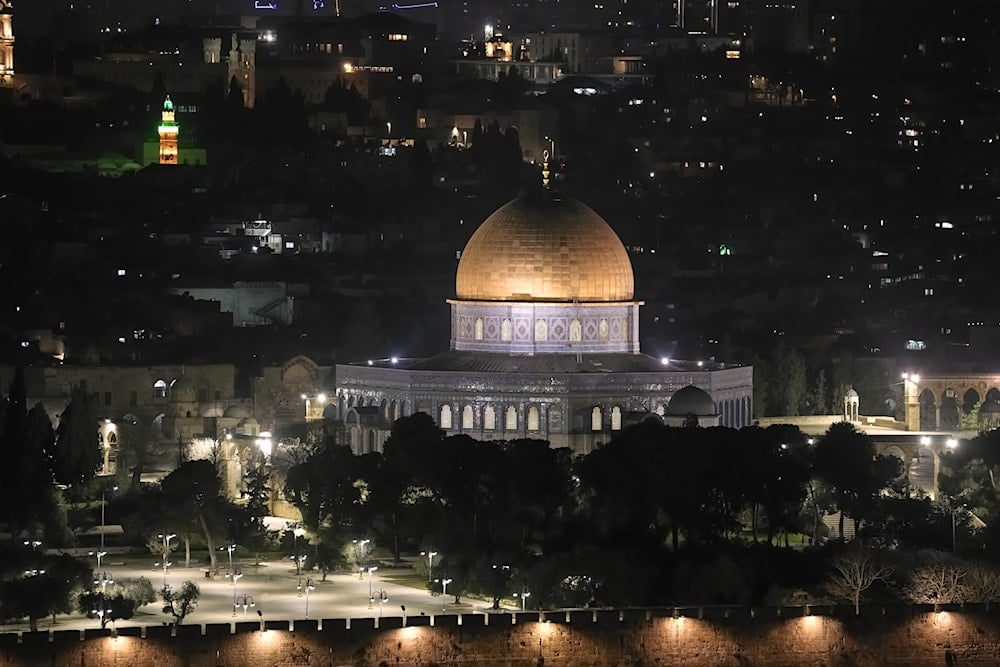
Empty courtyards of the Al-Aqsa compound are seen while Palestinian Muslims offer Laylat Al-Qadr prayers, in al-Quds, Sunday, March 15, 2026 (AP)
Hundreds of Palestinians held the Eid al-Fitr prayers in the streets of occupied al-Quds on Friday after Israeli occupation forces closed the Al-Aqsa Mosque.
Israeli forces reportedly attacked worshippers at the Bab al-Sahira area, firing tear gas toward them, while heavily deploying troops around the Bab al-Amoud area. The closures prevented Palestinians from praying inside or near the mosque, though Eid Takbirs were still raised from within Al-Aqsa.
The occupation claims this comes as part of “emergency measures” imposed amid the ongoing war on Iran.
Israeli forces also barred Palestinians from entering the Ibrahimi Mosque in al-Khalil, in the southern West Bank, to perform the Eid prayer.
This year marks an unprecedented development since "Israel" occupied eastern Al-Quds in 1967, as Palestinians were completely barred from performing Eid prayers inside Al‑Aqsa Mosque. While disruptions, restrictions, and confrontations have occurred during past Ramadans and Eids, worshippers have historically been able to pray inside the mosque or its courtyards despite checkpoints and security controls.
'Saddest day' for Muslim worshippers
Palestinians consider the move to be part of a wider Israeli strategy to leverage security tensions to tighten restrictions and entrench control over the Al-Aqsa mosque compound.
“Tomorrow will be the saddest day for Muslim worshippers in Jerusalem,” Hazen Bulbul, a 48-year-old resident of al-Quds who has marked the end of Ramadan at Al-Aqsa mosque since childhood, told The Guardian.
“What I fear is that this sets a dangerous precedent. It may be the first time, but probably not the last. Israeli interference in the holy city has been escalating since 7 October [2023].”
Israeli closure met with condemnations
The closure has drawn condemnation from the Arab League, which described it as a “blatant violation of international law” and said it risked undermining freedom of worship and inflaming tensions across the region.
The Organization of Islamic Cooperation, the League of Arab States, and the African Union Commission have expressed their strong condemnation of the closure of Al-Aqsa mosque, “especially during the blessed month of Ramadan."
In a joint statement, they said the closure “constitutes a grave violation of the existing historical and legal status quo in the Islamic and Christian holy sites in the occupied city of Jerusalem, an assault on the established religious rights and heritage of the Islamic nation, a provocation to the feelings of Muslims throughout the world, and a violation of freedom of worship and the sanctity of holy places."
“Israel, the occupying power, bears full responsibility for the consequences of these illegal and provocative measures," the statement read, adding that their continuation “portends an escalation of violence and tension and threatens to undermine regional and international peace and security."
'Israel' harasses worshipers in al-Aqsa over the years
Incidents of harassment and confrontations around Al‑Aqsa Mosque have occurred repeatedly in recent years, especially during Ramadan and other occasions, even when there were no full closures. On March 10, 2024, Israeli police were seen in scuffles with worshippers at the compound’s entrance on the first night of Ramadan, with some denied entry and tensions spilling into adjacent streets.
During Ramadan 2025, the Palestinian Ministry of Endowments reported that Israeli settlers entered the Al‑Aqsa compound at least 21 times under the protection of Israeli police, performing provocative tours in its courtyards and tightening access for worshippers throughout the holy month.
Israeli authorities also tightened controls on arrival points and checkpoints around the Old City, significantly constraining movement and adding to persistent tension around the holy site.
On March 28, 2025, thousands of Palestinians faced expanded restrictions at checkpoints north of al-Quds trying to reach Al‑Aqsa Mosque for the Friday prayer, with age limits and permit requirements imposed before entry could be granted.
Most recently, on February 20, 2026, heavy restrictions limited Palestinian access to Al‑Aqsa’s first Friday prayers of Ramadan, with only a small fraction of worshippers from the West Bank allowed entry under strict security and age criteria.


