
Iran, US expected to hold second round of talks in Islamabad on Friday
 3 Min Read
Pakistan prepares to host a second round of Iran-US talks as Foreign Minister Abbas Araghchi visits Islamabad amid ongoing mediation efforts.
-
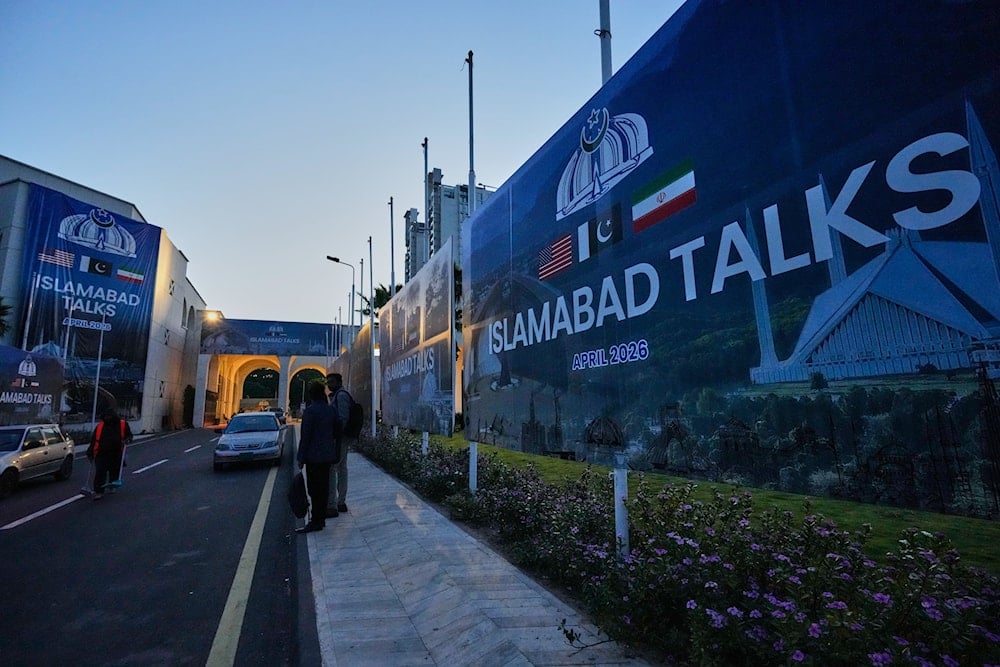
Members of media wait for transport outside a media center set up for the coverage of the US Iran talks, in Islamabad, Pakistan, April 12, 2026 (AP)
Iranian Foreign Minister Abbas Araghchi is expected to arrive in Pakistan’s capital later on Friday with a small delegation, as Islamabad anticipates a possible breakthrough toward a second round of talks between Iran and the United States, Pakistani government sources told Reuters.
"Following important discussions with the Pakistani mediation team, a second round of Islamabad peace talks between the United States and Iran is expected," the government sources said.
The sources added that a US logistics and security team is already in Islamabad to support preparations for the anticipated negotiations.
Earlier on Friday, Araghchi spoke by phone with Pakistani Foreign Minister Ishaq Dar to discuss regional developments, the ceasefire, and ongoing diplomatic engagement.
Dar emphasized the importance of continued dialogue to address outstanding issues and promote regional stability, while Araghchi acknowledged Pakistan’s “constructive” role in facilitating the process, according to the Pakistani Foreign Ministry.
The call between Dar and Araghchi was the third since Sunday, as Islamabad continues efforts to bring the United States and Iran back to a second round of talks aimed at ending the conflict. According to Iran’s Foreign Ministry, Araghchi also separately spoke with Pakistan’s army chief Field Marshal Asim Munir, though no details of the conversation were disclosed
US impositions collapse Islamabad talks
The Islamabad-mediated negotiations between the United States and Iran, which followed earlier talks held on April 11–12, 2026, initially raised expectations of a possible diplomatic breakthrough. However, Iranian officials later stated that the process collapsed amid what they described as widening gaps in the negotiating positions, particularly over US demands presented during the final stages of discussions.
On April 12, 2026, the talks ended without agreement after marathon sessions in Islamabad. According to Iranian Foreign Minister Abbas Araghchi, the negotiations had been “just inches away” from a deal before they broke down. Iranian sources later attributed the failure to “excessive demands” and shifting conditions introduced by the United States during the talks.
Iran’s Foreign Ministry emphasized that Tehran had engaged in the process in good faith but stated that Washington’s approach undermined progress. Araghchi said the Iranian delegation had entered discussions to secure a “definitive and lasting end” to the conflict, but maintained that the terms presented by the US prevented any final agreement from being reached.
Pakistani mediation efforts continued in the aftermath of the collapse, with officials in Islamabad attempting to revive momentum for a second round of talks. Iran, while criticizing the outcome, reiterated that it remained open to diplomacy, provided negotiations were based on mutually acceptable conditions rather than unilateral demands.


