
Iran airspace closed indefinitely following US-Israeli aggression
 3 Min Read
Iran has closed its airspace until further notice as US and Israeli strikes escalate tensions, with Tehran invoking its right to self-defense and launching retaliatory attacks.
-
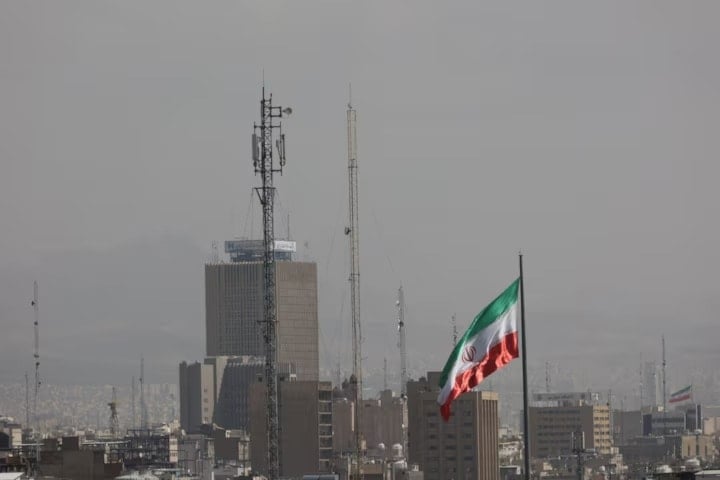
An Iranian flag flutters, as Israel and the U.S. launched an aggression on Iran, in Tehran, Iran, February 28, 2026. Majid Asgaripour/WANA (West Asia News Agency)
The Iranian airspace has been closed until further notice amid US and Israeli attacks on the country, according to the Iran Civil Aviation Organization.
Iran Civil Aviation Organization announces airspace suspension
Iran airspace closure measures were expanded on Saturday after authorities initially announced a temporary suspension. Earlier in the day, Iranian Civil Aviation Organization spokesman Majid Akhavan said the country’s airspace would be closed for six hours.
The announcement marked the first phase of restrictions before the broader extension was confirmed.
"Iran's airspace is closed until further notice," Akhavan was quoted as saying by the IRNA news agency.
The decision effectively grounds flights entering or leaving Iranian territory as authorities respond to the ongoing security developments.
Closure follows US and Israeli attacks
The Iranian airspace closure comes amid US and Israeli attacks on the country. Iranian air defenses were reported engaging hostile American and Israeli targets in the skies over Tehran, according to field reports.
The escalation follows US and Israeli airstrikes on Iranian territory earlier in the day, which Tehran condemned as violations of its sovereignty and territorial integrity.
Background: Tehran condemns US and Israeli attacks, invokes right to self-defense
In a statement addressed to the Iranian people, the Iranian Foreign Ministry condemned the "military aggression of the Zionist regime and the United States against Iran," characterizing the attacks as a violation of international law and the United Nations Charter.
According to the statement, the attacks targeted defensive and non-military sites in several cities across the country. Tehran stated that the attacks constituted a violation of Article 2(4) of the UN Charter and affirmed that, under Article 51, Iran reserves the legitimate right to self-defense.
The ministry said the attacks occurred while Iran was engaged in diplomatic efforts aimed at lifting sanctions, asserting that the aggression undermines claims of pursuing diplomatic solutions.
Regional escalation and retaliatory strikes
In the hours following the joint US–Israeli aggression, Iranian officials announced the beginning of retaliatory operations.
According to Iranian media and statements by the Islamic Revolution Guard Corps (IRGC), the first wave of ballistic missiles and drone attacks was launched toward "Israel", targeting Tel Aviv and areas in northern occupied Palestine, including Haifa.
Israeli media reported sirens sounding across multiple areas, while the Israeli Home Front Command instructed settlers to head to shelters.
Simultaneously, the confrontation widened to include US military assets in the Gulf region. Bahrain’s National Communications Center confirmed that the US Fifth Fleet’s service center was targeted by a missile strike.
The US Embassy in Qatar issued a warning advising its citizens to remain indoors due to the threat of missile attacks. Additional reports indicated that Iranian missiles targeted US-linked military installations in the Gulf, as tensions escalated across the region.
Iranian officials warned that further responses could follow, marking a significant expansion of the confrontation beyond occupied Palestine to include US military infrastructure across the Gulf.


