
Iran asserts leadership in nuclear industry despite foreign pressure
 3 Min Read
Iran says it stands at the forefront of nuclear technology, rejecting foreign pressure and defending its program as compliant with international regulations.
-
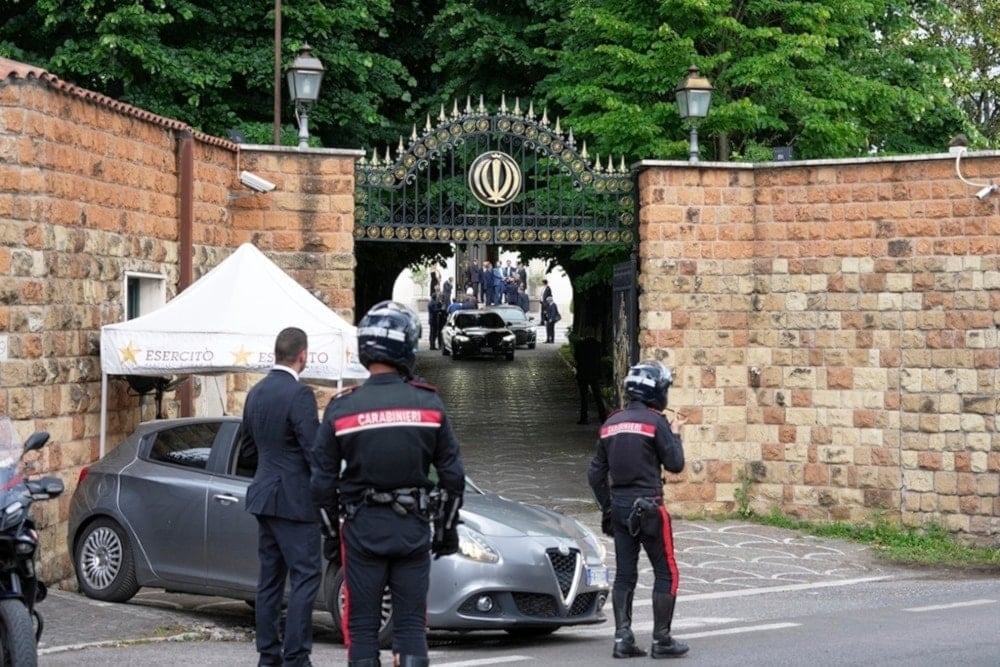
Iranian delegates leave the Iranian Embassy in Rome after a closed-door meeting at the Omani Embassy with a US delegation to discuss Tehran’s nuclear program, Friday, May 23, 2025 (AP)
Iran reaffirmed its commitment to advancing its nuclear industry, stressing that it remains a leading force in civilian nuclear technology despite ongoing attempts to undermine its progress. Mohammad Eslami, head of the Atomic Energy Organization of Iran, said on Monday that hostile powers “do not want Iran to be present in the nuclear industry,” yet the country continues to stand “at the forefront of this field.”
Eslami emphasized the importance of countering what he described as a “biased narrative” pushed by adversaries over the past years regarding Iran’s nuclear activities. He said the best response is to highlight achievements transparently and continue implementing impactful and innovative projects.
Earlier, Iranian Foreign Minister Abbas Araghchi stated that the Iranian people have “shattered all illusions of the Israeli occupation and Washington,” reaffirming that Tehran is pursuing its nuclear program in line with the International Atomic Energy Agency framework and international obligations.
Araghchi stressed that Iran’s approach remains rooted in legal and peaceful development, rejecting any political pressure designed to restrict its technological capabilities. The comments come amid renewed Western scrutiny and attempts to pressure Iran over its expanding nuclear expertise.
Iran will never accept zero uranium enrichment
Araghchi in November stated that Iran "will not accept the zeroing of uranium enrichment," describing the nuclear file as "a symbol of pride and sovereignty" for the country, and noting that Iran has "paid for it with martyrs and heavy sacrifices."
Araghchi stressed that any "agreement that includes zero enrichment would be considered a betrayal by Tehran" and "will not be acceptable under any circumstances."
He added that cooperation between Iran and the International Atomic Energy Agency (IAEA) is ongoing, but clarified that "this cooperation does not include inspections of the facilities that were targeted in the recent attack," noting that Iran will not engage with the agency regarding sites bombed by the United States and "Israel."
He pointed to recent IAEA technical work at the Bushehr nuclear power plant as an example of cooperation with facilities that were not attacked.
Araghchi’s comments reflect Iran’s firm position at a moment of heightened pressure, as Western governments push for expanded restrictions on Iran’s peaceful nuclear program through political maneuvering at the IAEA and continued sanctions.
Iranian officials argue that these efforts seek to impose conditions that violate the Nuclear Non-Proliferation Treaty (NPT), especially Iran’s right to enrichment, while ignoring the security threats Iran has faced following direct US-Israeli strikes on its nuclear infrastructure.


