
Iran delegation won't travel to Pakistan, US reneged on commitments
 3 Min Read
Iran and the US reportedly agreed to a 10-point ceasefire framework, but tensions rise amid US violations of several terms, including the ceasefire in Lebanon.
-
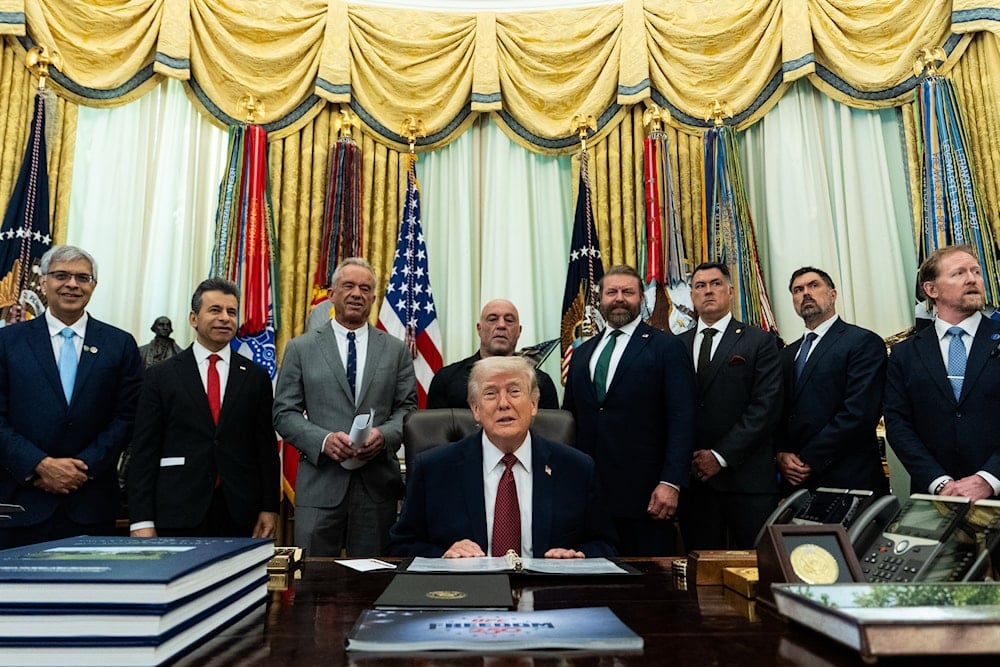
US President Donald Trump speaks in the Oval Office of the White House, Saturday, April 18, 2026, in Washington (AP)
Iran has informed the American side, via the Pakistani mediator, that its delegation will not travel to Islamabad on Wednesday, Tasnim News Agency reported on Tuesday.
The agency added that Iran had agreed on the ceasefire based on its 10-point ceasefire proposal, which the US initially accepted, as explicitly confirmed by Pakistan.
However, in the days that followed, the US began to backtrack on its commitments, including enforcing a ceasefire in Lebanon, which significantly complicated the diplomatic track.
Tasnim added that during the first round of negotiations in Islamabad, the United States had excessive demands, which, in essence, violated Iran's proposal.
Participation in Islamabad talks held back by US contradictions: Baghaei
Earlier, Iranian Foreign Ministry spokesperson Esmaeil Baghaei said that Iran has not yet reached a final decision on whether to participate in upcoming talks in Islamabad, attributing the delay to contradictory messaging and conduct by the United States.
Speaking to Iranian state television, Baghaei stated that “no final decision has been made regarding participation or non-participation in negotiations in Pakistan,” stressing that “the reason is not an inability to make a decision, but rather the contradictory messages, conflicting behavior, and unacceptable actions from the American side.” He also characterized the recent US attack and the seizure of an Iranian vessel as “a blatant violation of international law, maritime piracy, and state terrorism.”
Baghaei said Iran’s diplomatic approach is strictly results-oriented, adding that “whenever negotiations become result-oriented and produce tangible outcomes, Iran will decide on its participation.” He further emphasized that “simply going back and forth is not, in itself, a criterion for the success of a process, nor does it have inherent value,” noting that decisions are made after a comprehensive assessment of all relevant factors.
He also accused the United States of undermining ceasefire arrangements from the outset, saying that although the ceasefire in Lebanon was part of the broader understanding, it was not implemented despite earlier agreements reflected in initial statements.
According to Baghaei, following discussions held in Islamabad, it was agreed that each side would fulfill its commitments. He said the Iranian foreign minister later confirmed this understanding, but that Washington’s response was: “We thank Iran very much, but we will continue the naval blockade.”
Baghaei described the naval blockade as unlawful, stating that it constitutes “a violation of international law according to international legal standards and a clear breach of the ceasefire understanding.”


