
War on Iran leaves Tehran stronger, regional balance in its favor
 5 Min Read
Despite the heavy damage it took, Iran is emerging stronger after the US-Israeli war on it, due to shifting regional balances, shifty US alliances, and the shakup in the global economy.
-
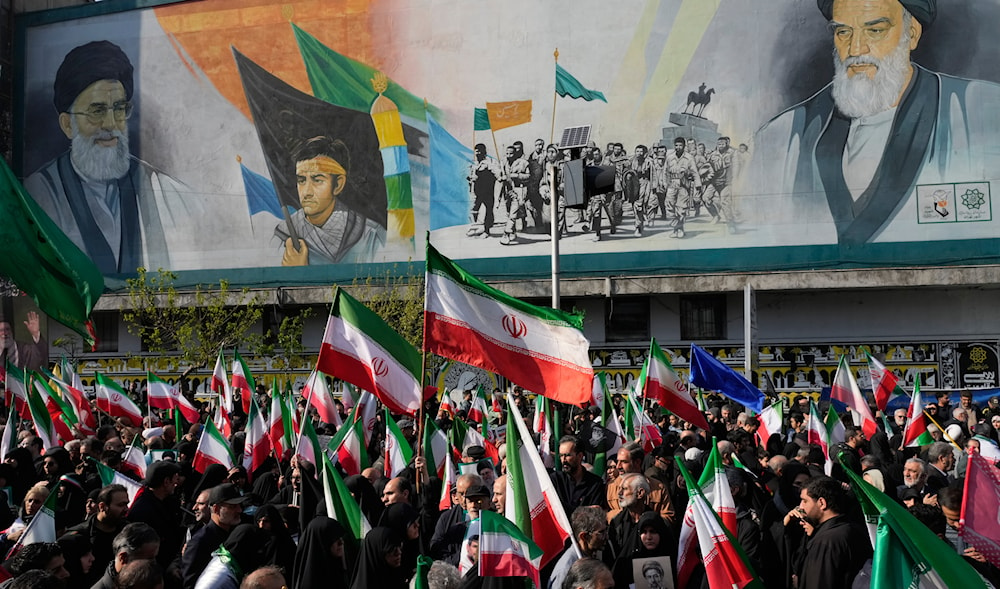
Mourners carry Iranian flags in Tehran, Iran, Wednesday, April 1, 2026 (AP)
The war on Iran has significantly altered the strategic balance in the Middle East, according to a commentary published by The Daily Star. The analysis says the war has undermined confidence in the United States’ security umbrella in the region.
The analysis says the war’s economic impact has been heaviest in the Middle East, but its effects have also been global. Damage to energy infrastructure and disrupted oil and gas shipments have unsettled markets and driven prices higher worldwide.
It adds that the International Energy Agency called it “the largest supply disruption in the history of the global oil market,” noting that gas shortages and damage to LNG facilities may take years to recover from, leading some countries to raise prices and introduce rationing measures.
'Abrupt darkening' of global economic outlook
The IMF has described the situation as an “abrupt darkening” of the global economic outlook, marked by rising risks and difficult policy choices for countries. In its latest World Economic Outlook, it forecasts slower growth and higher inflation, according to The Daily Star.
The IMF report estimates global growth at 3.1% this year, with inflation expected to increase, calling it a “sharp deviation” from recent disinflation trends. The report warns that these conditions could even push the global economy toward a recession.
According to The Daily Star, the war’s economic impact varies, with Global South countries and net energy importers expected to be hit the hardest. A UNDP report warns the fallout could push over 32 million people into poverty, with rising energy and food costs and weaker growth reversing development gains in poorer states.
It adds that IMF Managing Director Kristalina Georgieva said that even if a lasting peace is reached, the conflict will permanently “scar” the global economy and leave lasting damage to living standards.
Far-reaching ramifications on regional and global US alliances
The Daily Star goes on to argue that Gulf Cooperation Council (GCC) states now view Washington as either unable or unwilling to protect them during crises, while prioritizing "Israel’s" security interests. As a result, these countries may reassess their reliance on a single security power and consider diversifying their defense and strategic partnerships.
It further notes that regardless of the Strait of Hormuz's future status, Iran’s ability to influence the flow of Middle East energy exports has become evident. It adds that Iran’s strengthened position could prompt Gulf Cooperation Council (GCC) states to pursue a working accommodation and normalize relations with Tehran, noting that Saudi Arabia had already moved toward rapprochement with Iran before the escalation of regional conflict.
The Saudi-Pakistan defense agreement is cited as an example of Saudi Arabia’s efforts to diversify its security partnerships. The vulnerabilities exposed among GCC states during the war are expected, in the longer term, to push them to develop new security frameworks, particularly as the GCC’s collective security system is seen as having fallen short.
In this context, members of the Quad, Pakistan, Saudi Arabia, Türkiye, and Egypt, may eventually consider formalizing their informal coordination into a structured regional security arrangement.
Consequences even on NATO
The analysis says the war on Iran has also had major consequences for NATO. It notes that tensions between the United States and Europe were already rising due to earlier disputes over tariffs, criticism of European countries as “freeloaders", and questions raised by Donald Trump about NATO’s relevance.
The piece emphasizes that the rift deepened following the US-Israeli war on Iran. According to The Daily Star, European allies refused requests for support, including naval involvement near the Strait of Hormuz, and were neither consulted before the escalation nor willing to join a conflict they opposed, with some European leaders reportedly describing it as “illegal".
'Israel' grows more isolated, Iran emerges in stronger position
The diplomatic fallout of the war has contributed to the growing international isolation of "Israel". The Daily Star links this to declining global support after the war on Gaza and says the war on Iran has intensified criticism from several European countries.
It notes measures such as Spain’s arms embargo, Italy's suspension of a defense agreement, and France's restriction of airspace access for US weapons transfers. It also highlights increased EU-level criticism of Israeli policy and a petition calling for the suspension of the EU-"Israel" Association Agreement.
In the United States, the analysis says public support for "Israel" has fallen sharply, with polls showing a majority now holding unfavourable views. It adds that younger Americans and some political groups have become more critical, signalling a broader shift in opinion.
Iran, though weakened by the war, according to The Daily Star, is emerging in a stronger position, with control over the Strait of Hormuz providing it with strategic leverage as it rebuilds its defence capabilities.


