
Iran destroys key US THAAD radar in Jordan as war intensifies
 6 Min Read
Satellite imagery confirms Iran destroyed a $300 million US THAAD radar in Jordan, underscoring Tehran’s strategy of sustained strikes.
-
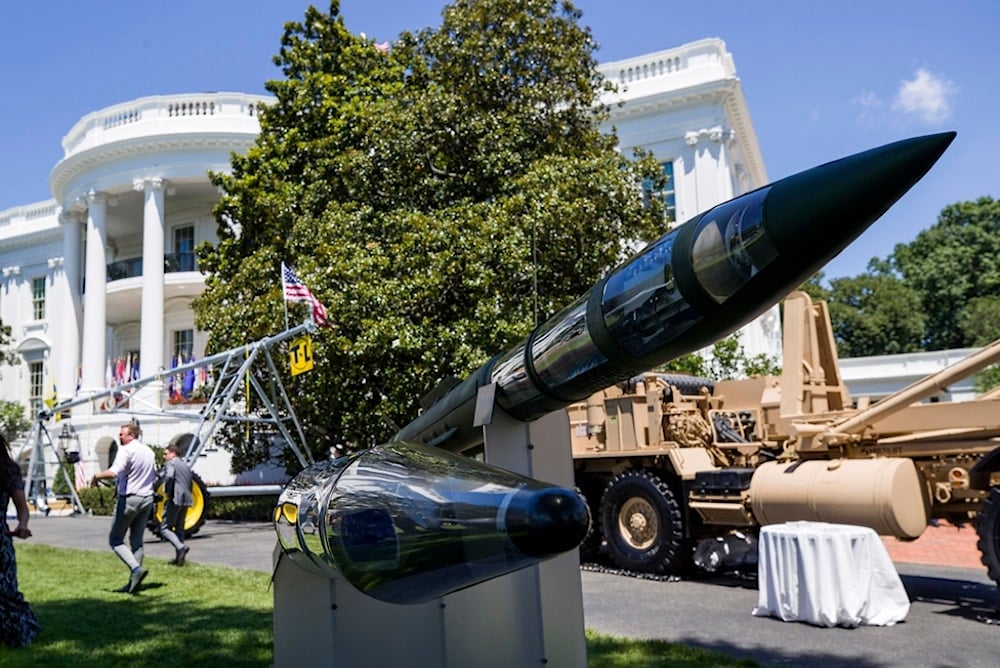
FILE - A Terminal High Altitude Area Defense (THAAD) anti-ballistic missile defense system is displayed during a Made in America showcase on the South Lawn of the White House, July 15, 2019, in Washington (AP)
Satellite imagery has revealed that a key radar system used by the United States’ Terminal High Altitude Area Defense (THAAD) missile defense network was destroyed during Iranian strikes in the early days of the war, NDTV reported, citing a US official.
According to reports citing commercial satellite imagery, the AN/TPY-2 radar system, manufactured by RTX Corporation, was struck at Muwaffaq Salti Air Base in Jordan. The radar, which plays a central role in directing THAAD missile interceptions, is estimated to be worth around $300 million.
A US official later confirmed the destruction of the equipment, which forms a critical component of Washington’s missile defense infrastructure deployed across West Asia.
Data compiled by US-based monitoring groups indicates that two Iranian strikes targeted sites in Jordan on February 28 and March 3, though initial reports at the time suggested the attacks had been intercepted.
Strategic role of the AN/TPY-2 radar
THAAD systems are designed to intercept ballistic missiles at high altitudes, often near the edge of the atmosphere, enabling them to engage threats beyond the reach of shorter-range systems, such as Patriot air defense batteries.
With the AN/TPY-2 radar now out of service, missile interception responsibilities in the area are expected to fall more heavily on Patriot systems. However, stocks of PAC-3 interceptor missiles are reportedly already under strain as the war intensifies.
The United States currently operates eight THAAD batteries worldwide, including deployments in South Korea and Guam. Each battery costs approximately $1 billion, with the radar accounting for roughly one-third of the system’s value.
A typical THAAD battery includes six mobile launchers carrying 48 interceptor missiles, a TPY-2 radar unit, and a tactical fire control and communications system, operated by around 90 personnel. Each interceptor missile, produced by Lockheed Martin, is estimated to cost roughly $13 million.
Multiple US radar systems hit
The strike in Jordan is not the first time US radar infrastructure in the region has reportedly been targeted.
Earlier in the war, an AN/FPS-132 early warning radar in Qatar was also reported damaged during Iranian attacks. Unlike the mobile THAAD radar, that installation is a fixed long-range detection system designed to identify threats at extreme distances but not guide interceptors.
The repeated targeting of such systems highlights the increasing pressure on US and allied air and missile defense networks across the region, which have faced waves of drones and ballistic missiles during Iran’s retaliatory operations.
Escalating war triggers regional disruption
Iran, despite all the pressure and sanctions, has demonstrated remarkable effectiveness in striking its adversaries and regional infrastructure.
The broader US-Israeli war on Iran and the Iranian operations in response have produced far-reaching ripples across the region and beyond.
According to Fortune, more than 23,000 flights have been canceled globally since Iran’s first retaliatory strike. Internet access in Iran has now been disrupted for six consecutive days, further complicating communications and international monitoring.
Iran expands conflict into cyber and economic domains
Beyond missile and drone attacks, Iran has reportedly expanded its strategy into cyber and infrastructure warfare.
Reports indicate that Iranian operations have targeted hyperscale data centers in West Asia operated by major technology companies, such as Amazon and Microsoft, reflecting Tehran’s view that digital infrastructure plays a strategic role in modern conflicts.
Energy infrastructure has also become a focal point. A reported Iranian missile strike on Bahrain’s only oil refinery sent shockwaves through energy markets and raised concerns about the vulnerability of Gulf energy assets.
Analysts say such attacks demonstrate Iran’s willingness to expand the battlefield to economic and technological sectors, increasing pressure on its adversaries and their regional partners.
Gulf allies express concern over widening conflict
The war has also affected regional energy infrastructure and global markets.
Following an Iranian missile strike on Bahrain’s only oil refinery, energy prices continued to rise, raising concerns about the vulnerability of major energy assets in the Gulf.
Officials in the region have warned that the war could have severe economic consequences. Qatar’s Energy Minister Saad al-Kaabi warned that the war could “bring down the economies of the world” if Gulf energy exports were disrupted and oil prices surged to $150 per barrel.
Tensions have also grown among US allies in the region. In Dubai, businessman Khalaf Al Habtoor criticized the escalation, saying Gulf countries had been placed “at the heart of a danger they did not choose.”
Analysts cited in the report also warned that the war may last longer than initially expected as Iran launches missiles and drones at multiple targets while disrupting shipping routes through the Strait of Hormuz.
A strategy of attrition
As the war continues, many observers point to signs that Iran is pursuing a strategy of attrition warfare. This strategy focuses on gradually wearing down an opponent by forcing it to continuously expend resources while sustaining losses over time.
In this war, the economic imbalance of the battlefield is becoming increasingly visible. Advanced interception systems used by the United States and its allies rely on extremely costly missiles and defense infrastructure, while Iran’s strategy has relied heavily on drones, ballistic missiles, and repeated waves of attacks.
The result is a confrontation in which the financial burden of sustaining defensive operations is falling heavily on Washington and its partners, who must deploy expensive interceptors and sophisticated systems to counter each strike.
As long as this dynamic continues, Iran’s approach allows it to stretch the conflict and impose mounting military and economic costs on its adversaries, gradually eroding their ability to sustain the pace of operations.
Read More: Iranian strikes hit US base in UAE, destroy radar and Patriot systems


