
Iran monitors borders in real time amid US pressure, stalled talks
 3 Min Read
Commander of the Iranian Army's Ground Forces affirms that they are monitoring enemy movements moment by moment, and can thwart any threat at its source.
-
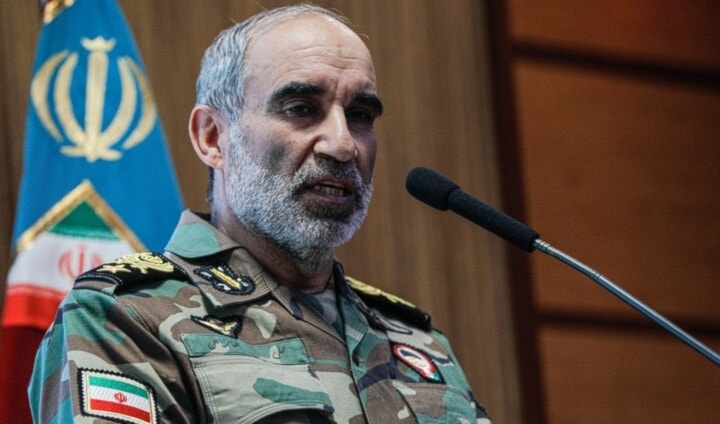
Commander of the Iranian Army's Ground Forces, General Ali Jahanshahi, undated. (Photo: Mehr News Agency)
The commander of the Iranian Army's Ground Forces, General Ali Jahanshahi, emphasized that the vigilance of the armed forces is the most important factor in deterring any miscalculations by enemies.
During a tour of ground units in southeastern Iran, Jahanshahi confirmed that Iranian forces are monitoring all enemy movements along the country's borders in real time, adding that Iran has reached a level of capability and deterrence that enables it to thwart any threat at its source.
His remarks echo a similar posture from the Navy. Rear Admiral Shahram Irani, Chief Commander of the Islamic Republic of Iran's Navy, affirmed earlier this month that Iranian naval forces are maintaining constant surveillance over all hostile movements in regional waters.
Irani also highlighted Iran's expanding deterrence capabilities, noting that destroyers, submarines, and sophisticated naval equipment are manufactured by domestic engineers, underscoring Tehran's reliance on indigenous defense production.
Tehran, Washington at odds over sanctions, nuclear scope
In a related development, a senior Iranian official told Reuters on Sunday that Tehran and Washington hold differing views on the scope and mechanism of lifting sanctions, stressing that Iran will not relinquish control of its oil and mineral resources to the United States.
The official noted that Iran will hold indirect talks with Washington in early March and that there is a possibility of reaching a temporary agreement.
Two rounds of indirect talks on Tehran's nuclear program have been held in Muscat and Geneva. While Iranian Foreign Minister Abbas Araghchi said both sides had agreed on "guiding principles" and would work toward a draft framework, the White House said significant gaps remain, with a US official saying Iran is expected to submit a written counterproposal within days.
Military buildup
The diplomatic maneuvering is unfolding against an increasingly militarized backdrop. Trump set a timeline of 10 to 15 days on Thursday to determine whether to pursue diplomacy or order military action.
An Iranian source close to Tehran's decision-making circles warned Al Mayadeen on Saturday that any war against Iran would mark the beginning of "an inevitable path toward the disintegration of the global order," triggering wide-ranging geopolitical consequences far beyond the region.
Incidentally, US Special Envoy Steve Witkoff told Fox News on Saturday that President Trump had directly asked him why Iran had not "capitulated" under mounting US pressure, saying Trump was "curious" given the significant naval and military assets Washington has deployed in the region.


