
Iran must agree to terms or face intensified bombing, Trump says
 3 Min Read
The US president has warned that if Iran does not accept undisclosed terms, the US will resume bombing at "a much higher level and intensity."
-
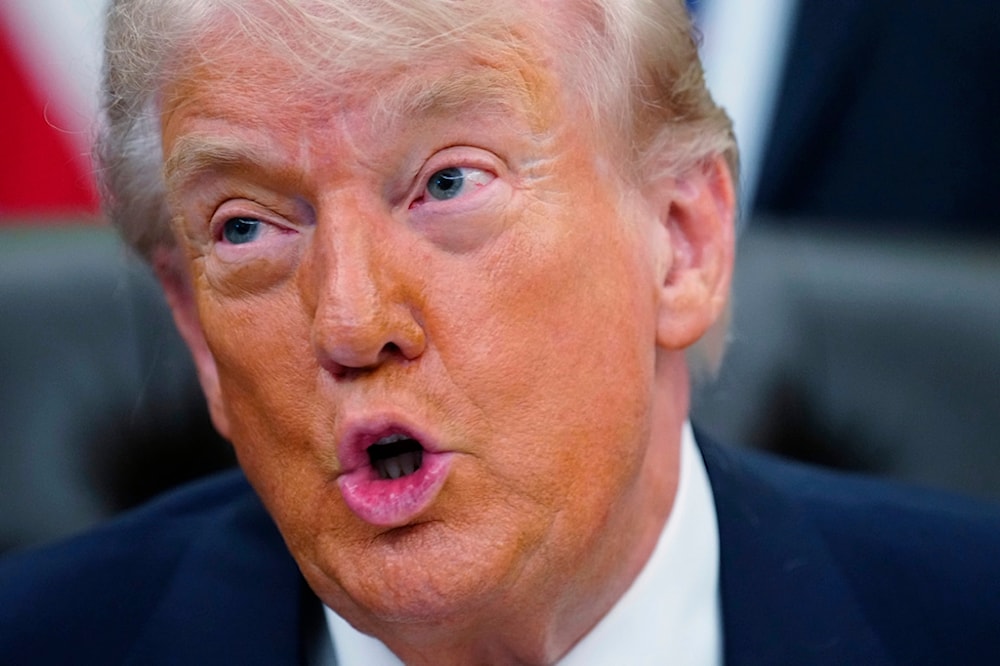
US President Donald Trump speaks before signing a proclamation in the Oval Office at the White House, Tuesday, May 5, 2026, in Washington (AP)
US President Donald Trump declared that "the already legendary Epic Fury will be at an end," provided that Tehran agrees to what has been agreed to, though he conceded that this was "perhaps, a big assumption."
In a post on Truth Social, he added that the US naval blockade would allow the Hormuz Strait to be "OPEN TO ALL, including Iran."
"If they don't agree, the bombing starts, and it will be, sadly, at a much higher level and intensity than it was before," the US president wrote.
Trump’s remarks underscore a stark escalation in rhetoric that blends conditional diplomacy with explicit threats of force, effectively tying de-escalation to unilateral demands placed on Tehran.
By framing the lifting of a naval blockade as contingent on Iranian compliance, while simultaneously warning of intensified bombing, the statement narrows the space for negotiation and reinforces a coercive approach to crisis management.
The messaging also reflects a highly theatrical tone, announcing the end of a “legendary” operation while hedging it as a “big assumption”, which risks further blurring the line between strategic signaling and political performance, potentially complicating diplomatic efforts rather than advancing them.
Ultimatum issued as ceasefire holds
In fact, Trump's message comes nearly a month after a ceasefire brought an end to the initial phase of Washington's aggression against Iran, which began on February 28. The truce has largely held, though tensions in the Strait of Hormuz have remained high, with Iran maintaining effective control over the strategic waterway.
The president's reference to "what has been agreed to" appears to allude to ongoing behind‑the‑scenes negotiations reportedly mediated by Pakistan, and which Iran has not commented about as of yet.
Iranian officials have consistently stated that any lasting resolution must include the complete lifting of all restrictions on Iranian shipping, a demand Washington has so far rejected.
'Project Freedom' paused as talks continue
US President Donald Trump recently announced the suspension of “Project Freedom,” a naval initiative meant to escort foreign vessels stranded in the Strait of Hormuz, after just days of promotion, citing ongoing efforts to reach a potential deal with Iran.
While pausing the escort mission, Trump made clear that the US naval blockade targeting Iranian ports and waters remains intact, underscoring that Washington’s pressure campaign has not been eased.
The move has been interpreted as a tactical retreat from a poorly executed initiative rather than a genuine de-escalation, particularly as the blockade continues to restrict maritime activity in the region.
The suspension comes as indirect negotiations between Washington and Tehran continue, reportedly with mediation efforts involving Pakistan.
However, Trump’s own statements have cast doubt on the prospects of a deal, with the US president repeatedly suggesting Iran has yet to “pay a big enough price,” even as he points to supposed diplomatic progress.
Despite his declarations of victory, Trump acknowledged that fighting could continue for "probably another two weeks" or "maybe three weeks." He insisted that time was not a factor for his administration, saying that "time is not of the essence for us."
Read more: Trump halts ‘Project Freedom’ after US claims unraveled in Hormuz


