
US-Iran ceasefire stopped clock on war authorization deadline: Hegseth
 4 Min Read
The Trump administration's claim was rejected by Democrats and met with skepticism by Republicans who insist the deadline for congressional authorization "is not a suggestion."
-
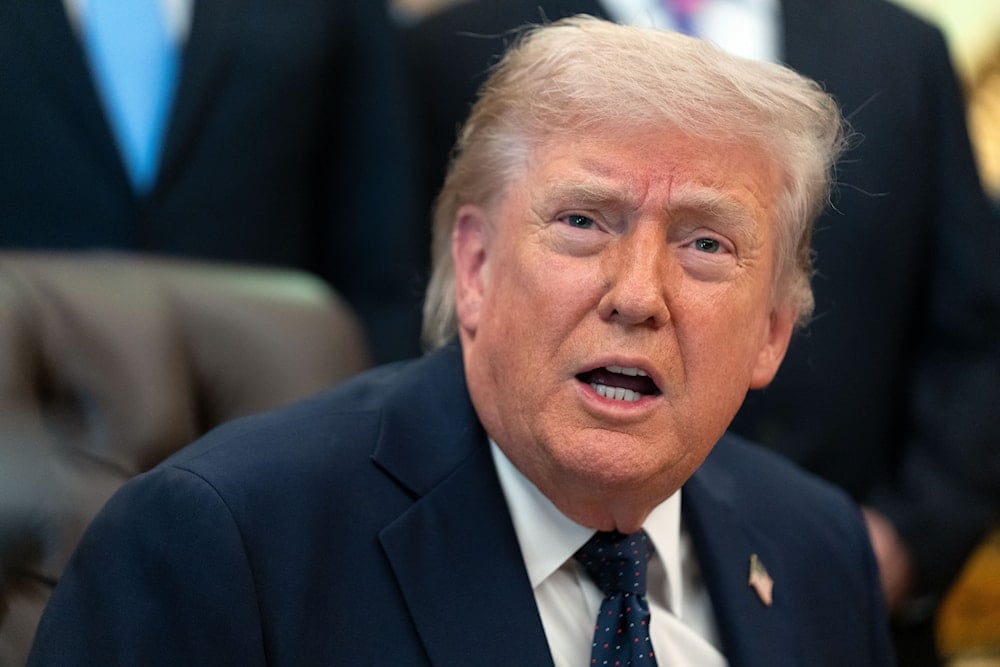
US President Donald Trump speaks during an event on health care affordability in the Oval Office at the White House, April 23, 2026, in Washington (AP)
The Trump administration is preparing to bypass a critical congressional deadline for authorizing the US-Israeli war on Iran by arguing that the ongoing ceasefire has stopped the 60-day clock required under the War Powers Resolution, a legal interpretation that has drawn sharp pushback from Democrats and skepticism from Republicans on Capitol Hill, The Wall Street Journal reported.
Under the 1973 War Powers Resolution, the president must notify Congress within 48 hours of launching military action and withdraw US forces after 60 days unless lawmakers formally declare war or authorize the use of force. Capitol Hill had widely expected that Friday would mark the expiration of that 60-day period.
During testimony before the Senate Armed Services Committee on Thursday, War Secretary Pete Hegseth argued that the current ceasefire with Iran, which took effect on April 8, effectively paused the countdown. While bombardment on Iran has halted, the US military continues to enforce a naval blockade preventing ships from reaching or leaving Iranian ports, an action considered an act of war under international law.
"We are in a cease-fire right now, which our understanding means the 60-day clock pauses or stops in a cease-fire," Hegseth told lawmakers.
Legal experts, lawmakers question administration's interpretation
The law allows for a 30-day extension if the president certifies in writing that additional time is needed to safely withdraw US forces. However, Hegseth deferred to the White House when asked whether Trump intends to seek congressional approval or send the legally required certification.
Senator Tim Kaine, a Virginia Democrat, pushed back sharply on Hegseth's interpretation, stating he does not believe the statute supports that position. He warned that the administration now faces a significant legal question regarding its compliance with the law.
Some Republicans also expressed doubt about Hegseth's argument. Senator Todd Young of Indiana questioned whether a ceasefire legally pauses the clock, noting the lack of legal precedent. He said he expects the administration to provide a formal legal justification to Congress.
Senator Josh Hawley of Missouri said the proper way to make such an argument would be to put it in writing and submit it to Congress. He added that he would prefer not to debate war authorization legislation because he wants to wind down the war rather than expand it.
Republican senator says deadline 'not a suggestion'
Senator Lisa Murkowski of Alaska announced she would introduce an Iran authorization for use of military force when the Senate reconvenes on May 11, including guardrails and reporting requirements. She acknowledged that authorizations should precede wars rather than be enacted in their midst, but said that failure to act earlier cannot serve as an excuse to abandon congressional responsibilities.
Senator Susan Collins of Maine, considered the most vulnerable Republican senator up for re-election this year, said the president's commander-in-chief authority has limits. She noted that the War Powers Act establishes a clear 60-day deadline for Congress to either authorize or end US involvement in foreign hostilities.
"That deadline is not a suggestion; it is a requirement," Collins said.
Before leaving Washington for a weeklong recess, the Senate blocked a resolution that would have directed Trump to withdraw troops from hostilities against Iran unless he obtained congressional approval. All Republicans voted no except for Collins and Senator Rand Paul of Kentucky, who joined most Democrats in supporting the measure. Collins had voted against five previous war powers resolutions but changed her position as the 60-day deadline approached.
Read more: US deems Iran hostilities “over” under War Powers law


