
Iran Navy chief: Commandos retook two tankers hijacked by US forces
 3 Min Read
Rear Admiral Shahram Irani reveals commandos boarded and recovered two oil tankers the US military seized, vowing revenge and a closed Strait of Hormuz.
-
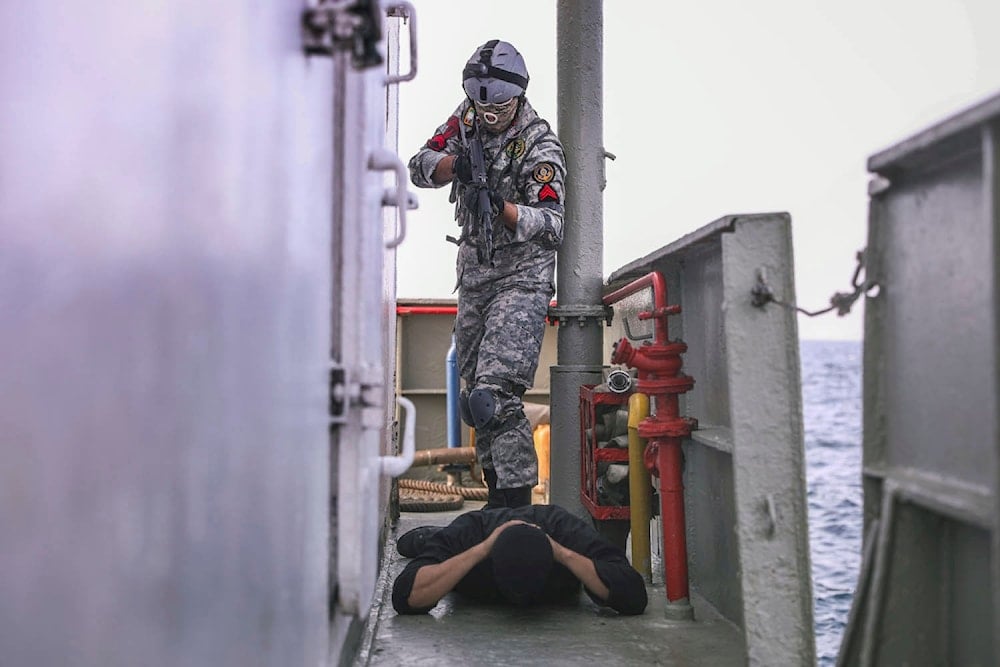
The Islamic Republic of Iran Navy special forces commando participates in a training scenario of a ship held hostage in a joint naval drill of Iran, Russia, and China in the Indian Ocean (Iranian Army via AP)
Iranian naval commandos boarded and recovered two oil tankers that the US military had hijacked, Iran's Navy commander, Rear Admiral Shahram Irani, announced, according to Fars News Agency.
In detail, he revealed the Navy's commandos boarded the hijacked vessels while the US crew were asleep.
Irani, who commands the Islamic Republic of Iran Navy as distinct from the Islamic Revolution Guard Corps Navy, said Washington used every means to push even one vessel through the Strait of Hormuz and yet failed. He revealed that his orders are for the strait to remain closed.
Iran has upgraded its combat systems and monitors and confronts every move by the adversaries, in close coordination with the IRGC Navy, he added.
Irani vows to avenge the killing of 'fathers, brothers, and children'
Irani also revealed that the US military is charging shipowners for escort services while refusing to take responsibility for attacks on them. Furthermore, he vowed that Iran will respond to the US for the killing of "fathers, brothers, and children" and will avenge them without fail, stressing that the enemy is helpless and confused and does not know where, how, or by what means it will be targeted.
On Thursday, the IRGC said two tankers hit mines north of Khasab while crossing under cover of US fighter jets, and its Navy commander said Iran has full operational control of the strait. Irani's remarks came hours after the IRGC announced that its fire forced a US F-16 to retreat from the airspace around Iran's Hengam Island.
The blockade and the tankers
On July 14, the US reimposed a naval blockade on Iranian ports after Iran's control of the Strait of Hormuz put US officials and military planners in a difficult position, as they failed to reel in surging oil prices or break Tehran's control.
In response to the maritime actions targeting its southern ports, Tehran has pivoted toward an expansive network of overland and Caspian corridors to keep commerce flowing. Relying on nearly 6,000 kilometers of land borders, Iran has rerouted fuel oil, liquefied petroleum gas (LPG), and non-oil goods via trucking and rail routes through Pakistan, Turkey, Iraq, and Central Asia, while utilizing Caspian Sea shipping lanes to trade with Russia and China.
At the same time, Iran has transformed its military dominance over the Strait of Hormuz from a disruption tool into a system of control. Through the newly established Persian Gulf Strait Authority (PGSA), Tehran has effectively turned the strait into a gated transit corridor, requiring commercial vessels to apply for passage permits, follow designated coastal lanes, and pay compulsory service fees of up to $2 million per voyage.
Read more: Shipowners offer massive bonuses to crews willing to sail Hormuz


