
Iran proves more formidable than expected, US allies losing patience
 3 Min Read
The US-Israeli war on Iran is triggering global disruption, from missile exchanges with "Israel" and cyberattacks on data centers to rising energy prices and growing frustration among US allies in the Gulf.
-
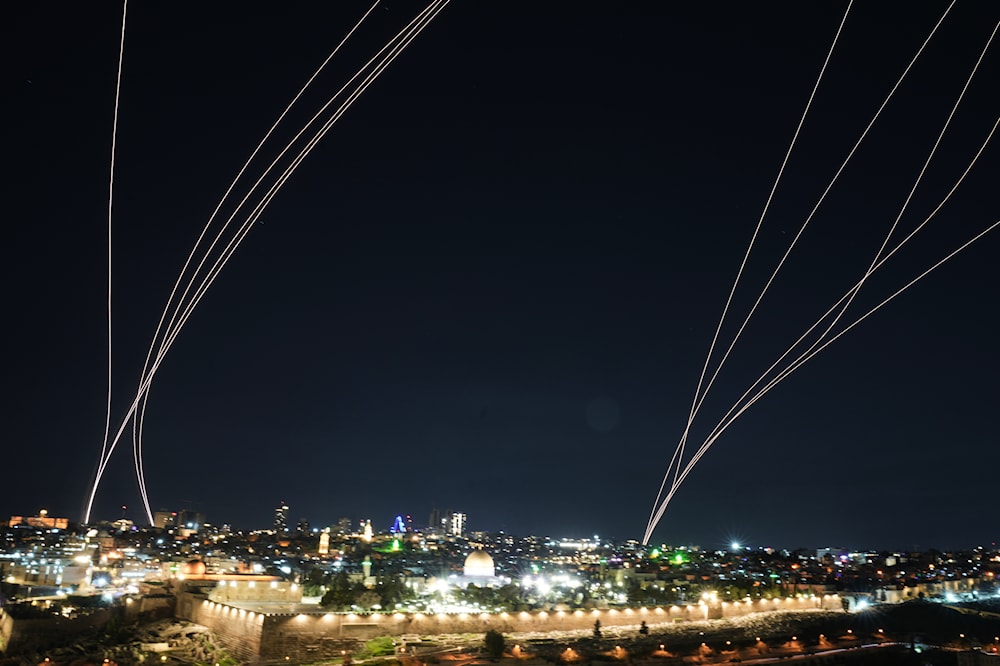
Israeli air defense system fires to intercept missiles launched from Iran toward "Israel", over occupied Palestine on March 1, 2026. (AP Photo/Mahmoud Illean)
Seven days after the war broke out against Iran, there are signs of unexpected consequences for the US and its allies in the Gulf. While Iran has been criticized and sanctioned internationally, it has also demonstrated remarkable effectiveness in striking its adversaries and regional infrastructure.
A report by Fortune on Friday reported that over the past 24 hours, "Israel" conducted multiple strikes against Beirut and continues targeting Tehran. In response, Iran launched a new missile attack on "Israel", while Qatar intercepted a drone attack aimed at the US' largest military base in West Asia.
The war's ripple effects are being felt worldwide. According to Fortune, more than 23,000 flights have been canceled globally since Iran’s first retaliatory strike. Internet access in Iran has now been disrupted for six consecutive days, further complicating communications and international monitoring.
Iranian cyber and energy strategy
Iran has expanded its focus beyond conventional strikes, targeting hyperscaler data centers in West Asia operated by Amazon and Microsoft. “The Iranians view data centers as part of the conflict,” said Matt Pearl of the Center for Strategic and International Studies, adding that these attacks are a way to exert influence on the region.
The war is also affecting energy markets. Following an Iranian missile strike on Bahrain’s only oil refinery, global energy prices continued to rise. Jordan Blum of Fortune noted, “The attack showed that Iran is now willing and able to target major energy assets of its Gulf neighbors, putting regional infrastructure at risk.”
Frustration mounts among US allies
US allies are expressing growing frustration with the Trump administration. Qatar’s energy minister, Saad al-Kaabi, warned that the war could “bring down the economies of the world” by shutting down Gulf energy exports and driving oil prices to $150 a barrel.
In Dubai, the business community voiced strong criticism. Billionaire hotel owner Khalaf Al Habtoor wrote on X: “Who gave you the authority to drag our region into a war with Iran? You have placed the Gulf Cooperation Council and Arab countries at the heart of a danger they did not choose.”
Many analysts now believe the conflict may last longer than initially expected. Economist Ed Yardeni said his team previously thought the war would be short.
“On Tuesday, we had second thoughts about the length of the conflict. Iran’s regime had prepared by adopting a chaos strategy, launching missiles and drones not just at U.S. and Israeli targets, but also at neighboring countries. The strategy includes disrupting shipping through the Strait of Hormuz. By causing widespread disruption, Iran hopes to pressure its adversaries into a ceasefire that preserves the regime’s power.”


