Iran's Assembly of Experts says leadership selection process underway
 3 Min Read
Presidium members of Iran's Assembly of Experts confirm the leadership selection process is proceeding constitutionally, as the 88-member body moves toward appointing Sayyed Khamenei's successor.
-
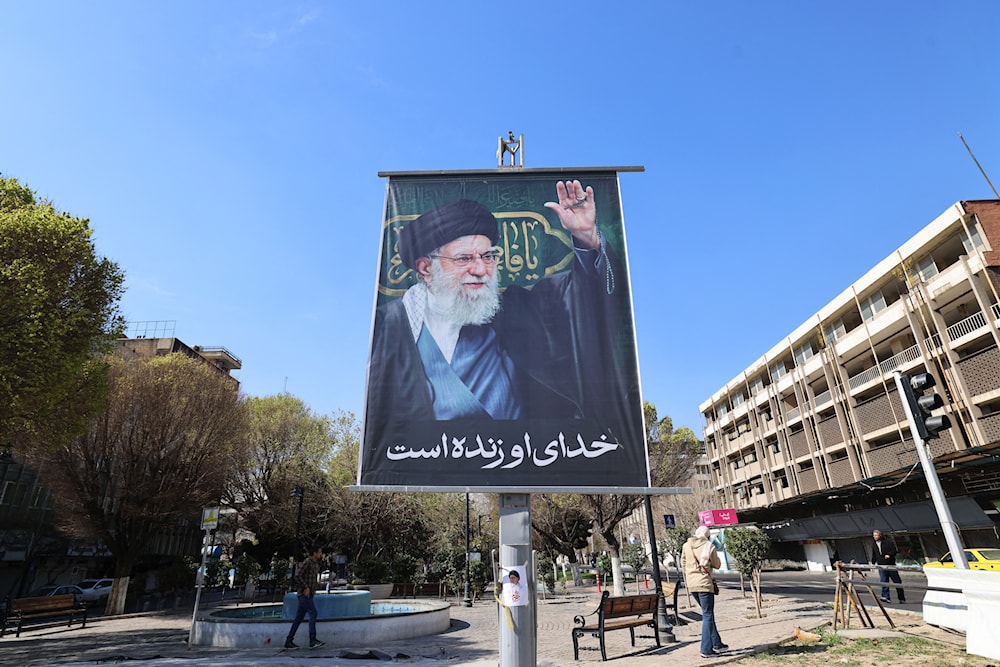
A poster with a picture of Iran's Martyred Leader Ali Khamenei is seen installed along a street at the Valiasr Square in Tehran on March 5, 2026. (Photo by ATTA KENARE / AFP)
The process to select Iran's new Leader is proceeding in accordance with constitutional principles and the Assembly of Experts' internal procedures, presidium member Mohsen Qomi told ISNA on Thursday.
Fellow presidium member Mahmoud Rajabi had said on Wednesday that the assembly's secretariat would soon provide final information regarding the election.
Assembly member Sayyed Ahmad Khatami, who is heading the election process within the body, had earlier confirmed that candidates to succeed the martyred Sayyed Ali Khamenei have been identified, adding that the Assembly will elect the new Leader "at the earliest possible opportunity" and is "close to selecting" him.
Khatami also warned that "enemies are attempting to undermine the Assembly of Experts following the assassination of the martyred Leader."
Fellow Assembly member Sayyed Mojtaba Hosseini struck a more cautious tone, saying it remains unclear how long the selection process will take, as it requires careful deliberation and consultations. He nonetheless expressed hope that the Assembly would convene as soon as possible and issue a final decision.
How the selection works
The Assembly of Experts is composed of 88 Islamic jurists elected by direct popular vote to eight-year terms.
When the position of Leader falls vacant, the Assembly convenes in closed session to select a successor from a shortlist of senior clerics who meet the constitutional criteria of Islamic scholarship, justice, piety, and political-social acumen.
Under the body's internal rules, a candidate must secure at least two-thirds of members' votes to be appointed Supreme Leader.
The martyred Leader did not designate a successor, instead leaving the decision to the Assembly of Experts. A source informed Fars News Agency earlier this week that the final in-person session may be postponed until after Sayyed Khamenei's burial ceremony, scheduled for next week.
The Interim Leadership Council
Following Sayyed Khamenei's martyrdom, an interim leadership council was formed in accordance with Article 111 of the Iranian Constitution to assume the responsibilities of the Leader pending the selection of a successor.
The council is composed of Iranian President Masoud Pezeshkian, Judiciary Chief Gholamhossein Mohseni Ejei, and Sheikh Alireza Arafi, a jurist from the Guardian Council elected by the Expediency Discernment Council.
The position of Leader, also referred to as the Jurist Guardian (Vali-e Faqih), represents the highest authority in Iran's political and religious system. Rooted in the doctrine of Jurist Guardianship (Velâyat-e Faqih), the role grants its holder supreme authority over the executive, legislative, and judicial branches, and shapes domestic policy, national institutions, and Iran's broader strategic orientation.
Sayyed Ali Khamenei assumed the position in June 1989 following the death of the Islamic Republic's founder, Sayyed Ruhollah Khomeini, and held it for approximately 36 years.