
Iran's Pezeshkian vows economic justice amid inflation and unrest
 3 Min Read
President Masoud Pezeshkian says Iran’s subsidy reforms aim to protect livelihoods, curb corruption, and raise purchasing power amid inflation and protests.
-
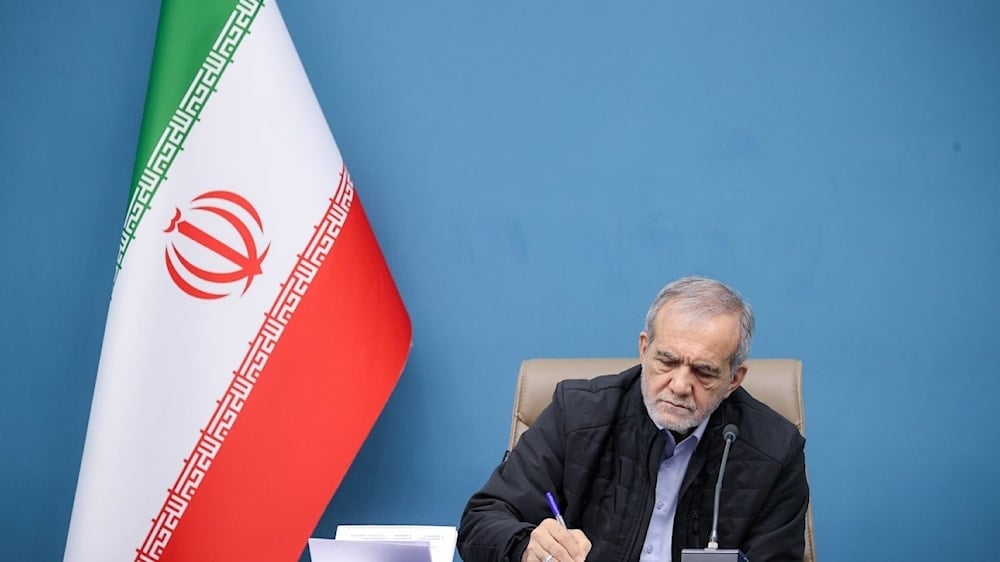
Image of Iranian President Masoud Pezeshkian writing documents in an undated photo (president.ir)
Iran's top priority under current conditions is improving economic conditions and safeguarding people’s livelihoods, President Masoud Pezeshkian said, stressing that subsidy reform is intended to achieve economic justice and uproot corruption and discrimination.
Pezeshkian said the government must carefully examine the background, dimensions, and causes of the recent painful events in the country, while working to rehabilitate and contain young people who were misled and drawn into the unrest.
“After the economic measures taken, we can confidently announce that no corruption will occur in the distribution of cash resources, that all citizens will benefit from support for essential goods, and that the purchasing power of the three lowest income groups will increase,” he said.
Government distinguishes protest from unrest
At the same time, Iranian Vice President Mohammad Reza Aref said the government is intensifying efforts to address living conditions and meet the legitimate demands of the people, noting that effective plans have been approved within the government to this end.
Aref stressed that the government distinguishes between protest and acts of unrest and listens to voices of objection.
He added that it was expected that “the enemy would not stop obstructing the path Iran has taken toward economic stability after its repeated failures, particularly after the 12-day war,” saying that “the people foiled the enemy’s plans and forced mercenaries to retreat through their awareness and timely presence.”
Unrest leaves massive damage behind
The remarks follow developments earlier this month, where armed riots targeted multiple Iranian provinces, derailing protests recognized by authorities regarding economic grievances. Iranian Parliament National Security and Foreign Policy Committee Chairman Ebrahim Azizi revealed new figures highlighting the scale of damage caused during the recent unrest, shedding further light on the attacks on public property, institutions, and security forces.
Speaking at a press conference, Azizi said 3,700 people were wounded during the events, while more than 2,221 vehicles and other equipment belonging to Iran’s Internal Security Forces were damaged. He added that the riots resulted in damage to over 250 schools, 300 mosques, and 90 religious seminaries across various provinces.
Addressing Iran’s relations with Washington, Azizi stressed that no negotiations are currently taking place with the United States. The lawmaker said Washington was undermining diplomatic processes, stating that the US had “turned the negotiating table into a battlefield” and does not respect the basic principles governing negotiations.
Read more: Iran says 60,000 weapons seized en route to Tehran, two arrested


