
Iran's rising power has reshaped strategic map: Velayati
 3 Min Read
Ali Akbar Velayati notes how Western media admitting that Trump needs a temporary deal to reopen Hormuz signifies the collapse of the 'Iran pressure' doctrine.
-
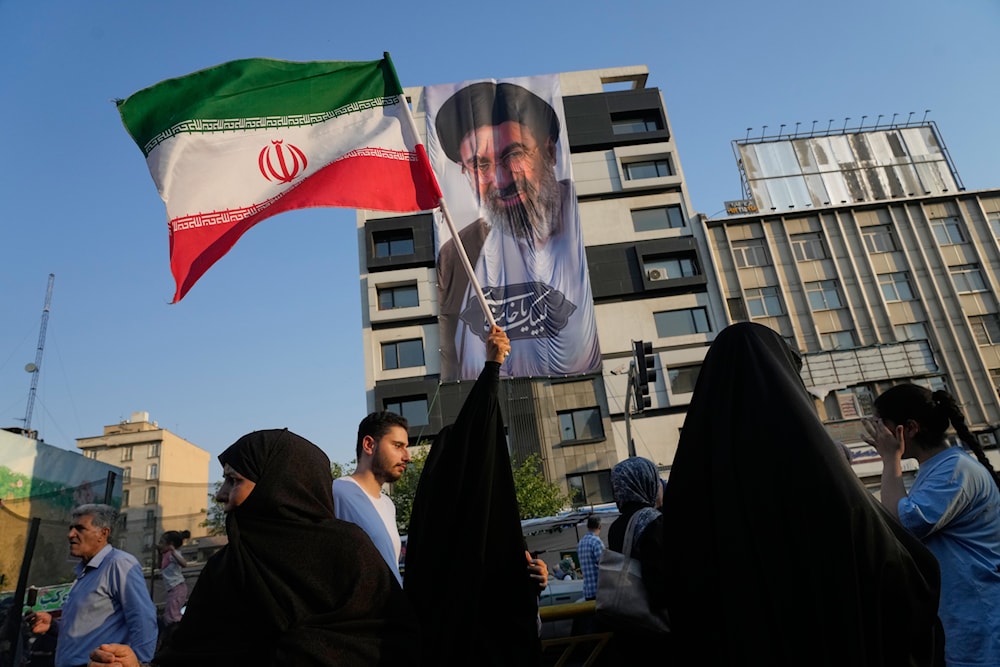
A woman holds up an Iranian flag in front of a banner showing Iran's Leader Sayyed Mojtaba Khamenei during a street festival celebrating Eid al-Ghadir, in Tehran, Iran, June 4, 2026 (AP)
The West’s long-feared “nightmare” of a rising Iran has materialized, Ali Akbar Velayati, Advisor to the Leader of the Islamic Republic of Iran on International Affairs, declared, noting that this signals the collapse of the "Iran pressure" doctrine.
In a post on X, citing Western media outlets like Reuters and The Guardian that "now admit Trump needs a temporary deal to reopen #Hormuz," Velayati contended that this represents "the collapse of the 'Iran pressure' doctrine and a victory for the resistance."
“The West’s long-feared nightmare has materialized, Iran’s rising power has reshaped the strategic map,” Velayati wrote
1) The West's long-feared nightmare has materialized Iran's rising power has reshaped the #strategic map. Reuters & The Guardian now admit Trump needs a temporary deal to reopen #Hormuz. This is the collapse of the 'Iran pressure' doctrine and a victory for the resistance.
— Aliakbar Velayati (@Drvelayati_ir) June 6, 2026
Moving to actors in the region, Velayati stated, "Yet a graver strategic blunder is being made by those in the region clinging to the illusion of appeasement," to the United States and "Israel", emphasizing that "the new geometry of power will NOT be built on weakening the resistance."
2) Yet a graver strategic blunder is being made by those in the #region clinging to the illusion of appeasement. The new geometry of power will NOT be built on weakening the resistance.
— Aliakbar Velayati (@Drvelayati_ir) June 6, 2026
In his most pointed comment, the senior advisor rejected what he called “diplomatic wishful thinking,” asserting that lasting stability cannot be achieved through unbacked commitments.
“Diplomatic wishful thinking carries a heavy price — lasting peace grows from a balance of power, not from hollow, unbacked commitments,” Velayati said.
3) "Diplomatic wishful thinking carries a heavy price —lasting peace grows from a balance of power, not from hollow, unbacked commitments."#Geopolitics #MiddleEast
— Aliakbar Velayati (@Drvelayati_ir) June 6, 2026
Witkoff, Kushner visit nuclear experts for consults on Iran talks
Velayati's remarks come as talks between the United States and Iran stall, as Washington continues moving goalposts and imposing unrealistic demands that infringe on Tehran's sovereignty, including shutting down its nuclear program.
Most recently, on June 4, US President Donald Trump’s special envoy Steve Witkoff and his son-in-law Jared Kushner visited the Oak Ridge National Laboratory in Tennessee to consult experts who could play a role in future nuclear negotiations with Iran, according to a source familiar with the matter. The visit was first reported by Axios and later confirmed by Reuters.
The consultations come as the United States continues military operations against Iran more than three months after Washington and “Israel” launched an unprovoked aggression on the country. Despite ongoing diplomatic contacts, clashes have persisted across the region, with US forces carrying out additional strikes against Iranian sites in recent days.
According to Axios, specialists at Oak Ridge could eventually be involved in designing mechanisms related to Iran’s enriched uranium stockpile, future enrichment limits, and verification procedures if negotiations advance.
Trump has insisted that any future agreement must ensure that Iran does not develop a nuclear weapon, despite the Islamic Republic's repeated rejection of any intentions to develop one and assurances.


