
Iran says IAEA report ignores strikes on nuclear sites, deflects blame
 3 Min Read
An Iranian official criticized the IAEA report and its chief, Rafael Grossi, accusing the agency of bias over nuclear site assessments after US-Israeli strikes.
-
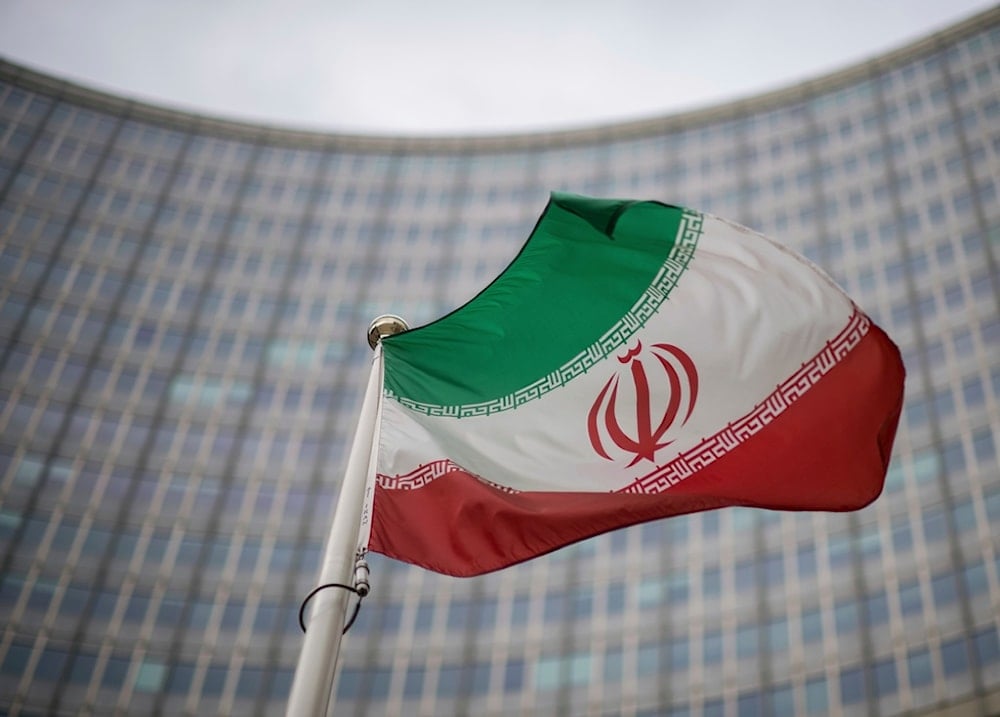
A national flag of Iran waves in front of the building of the International Atomic Energy Agency (IAEA) in Vienna, Austria, December 17, 2021 (AP)
An Iranian official has strongly criticized a recent report by the International Atomic Energy Agency (IAEA) and remarks by its Director General, Rafael Grossi, accusing the agency of political bias in its assessment of Iran’s nuclear program.
Kazem Gharibabadi, Iran’s Deputy Foreign Minister for Legal and International Affairs, said in a social media post that claims of “ambiguity” and “lack of access” to certain Iranian nuclear sites did not arise in isolation, but were the result of US-Israeli military strikes on nuclear facilities.
He said the IAEA did not condemn attacks targeting nuclear sites that were under international inspection, arguing that the agency cannot ignore the source of disruption and then use its consequences to form conclusions against Iran.
Iran questions IAEA neutrality
Gharibabadi further criticized the agency’s reporting, saying it is inconsistent to assess the impact of military strikes on Iranian nuclear facilities without holding those responsible accountable.
در پی انتشار گزارش اخیر آژانس و اظهارات رسانهای مدیرکل آن درباره فقدان دسترسی به برخی تأسیسات آسیبدیده، وضعیت ذخایر اورانیوم و موضوع موسوم به «از دست رفتن پیوستگی دانش» در برنامه هستهای ایران، لازم است چند نکته مورد تأکید قرار گیرد:
— Gharibabadi (@Gharibabadi) June 6, 2026
اول، آقای گروسی از «ابهام»، «فقدان دسترسی»…
He added that if the IAEA wants to remain part of a diplomatic solution, it must adhere to neutrality and avoid turning technical assessments into political pressure tools.
According to Gharibabadi, targeting facilities under safeguards agreements and then citing resulting disruptions as evidence against Iran undermines the credibility of international monitoring mechanisms.
Nuclear safeguards and escalation concerns
The Iranian official said attacks on nuclear facilities violate not only Iran’s sovereignty but also international safeguards agreements and the credibility of the Nuclear Non-Proliferation Treaty (NPT).
He also criticized repeated references to Iran’s 60% uranium enrichment level and hypothetical weapons-related scenarios, calling such framing political rather than technical, while insisting Iran’s nuclear program remains within the framework of IAEA agreements.
His remarks came after a recent IAEA report warned that the agency’s inability to fully verify nuclear material in Iran raises concerns over potential proliferation risks.
The agency had called on Tehran to provide immediate clarification regarding its enriched uranium stockpile, describing the lack of verification access as “concerning".
IAEA's record of complicity
Iran's relationship with the IAEA has long been defined by structural bias on the IAEA's part masquerading as technical oversight. As far back as February 2025, the AEOI pointed out that roughly a quarter of all IAEA inspections were dedicated to its nuclear facilities, despite those facilities representing less than 3% of the world's nuclear sites
The decisive rupture came in June 2025, when the IAEA passed a non-compliance resolution against Iran, the day before "Israel" launched its unprovoked aggression against the Islamic Republic.
Tehran accused the agency of providing the Israeli regime with diplomatic cover for its attacks and revealed that sensitive nuclear data shared with the IAEA had been leaked to Israeli intelligence, leaks that Iranian officials say contributed to the assassination of nuclear scientists. Iran suspended all cooperation and barred Grossi from its facilities.
A partial reset came via the Cairo Agreement in September 2025, brokered by Egypt, under which the IAEA formally acknowledged the illegality of the strikes. But when the US and E3 passed a new censure resolution weeks later, Tehran terminated the deal entirely.
When the current war began on February 28, the IAEA again stopped short of condemning the aggression, instead urging the aggressor and the aggressed to show restraint.


