
IAEA's role is verification, not political messaging on Iran: Baghaei
 3 Min Read
Iranian Foreign Ministry spokesperson Esmail Baghaei criticized the IAEA for exceeding its mandate, accusing it of political interference and questioning its impartiality and credibility.
-
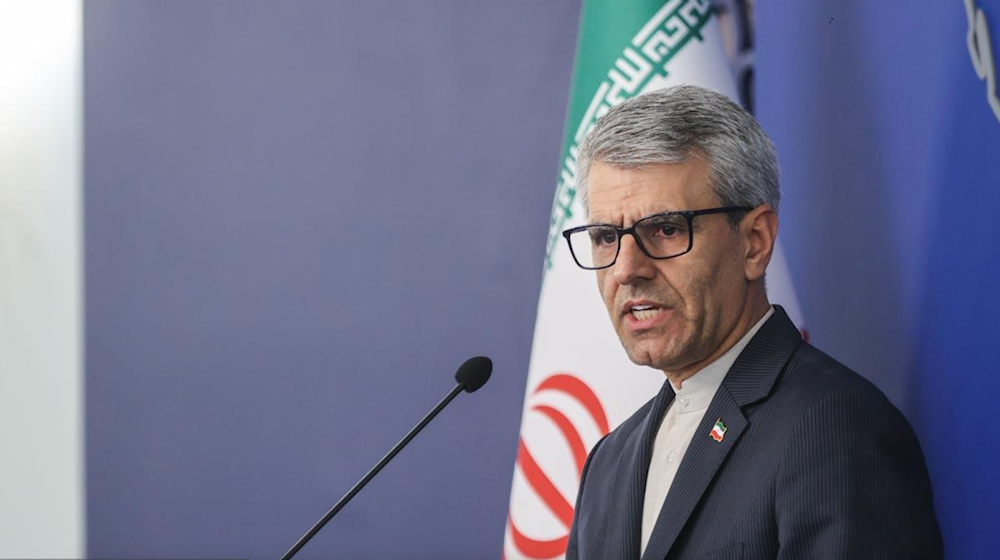
The spokesperson for Iran’s Ministry of Foreign Affairs Esmail Baghaei speaks during a press conference. (WANA news agency)
Foreign Ministry spokesperson Esmail Baghaei blasted the International Atomic Energy Agency's interference in Iran's sovereign affairs, stressing instead that its mandate is restricted to nuclear verification.
"The IAEA’s mandate is verification, not political messaging about the Strait of Hormuz, Iran’s missiles, or how Tehran should conduct itself," he said in a post on X, further condemning the agency's bias and warning that such conduct undermines its credibility and effectiveness.
"When professional impartiality is compromised for political signaling or personal ambition, institutions erode their credibility — and, over time, their effectiveness as well."
The IAEA’s mandate is verification, not political messaging about the Strait of Hormuz, Iran’s missiles, or how Tehran should conduct itself.
— Esmaeil Baqaei (@IRIMFA_SPOX) May 10, 2026
When professional impartiality is compromised for political signaling or personal ambition, institutions erode their credibility — and,…
The remarks come amid mounting criticism of the IAEA’s handling of the situation surrounding Iran’s nuclear program, with Tehran saying that the agency is overstepping its technical mandate and adopting politically charged positions.
Iranian officials have also pointed to the agency’s failure to launch meaningful investigations into Israeli and US strikes near Iranian nuclear facilities, despite repeated warnings over the risks such attacks pose to nuclear safety and regional stability.
IAEA's record of complicity
Iran's relationship with the IAEA has long been defined by structural bias on the IAEA's part masquerading as technical oversight. As far back as February 2025, the AEOI pointed out that roughly a quarter of all IAEA inspections were dedicated to its nuclear facilities, despite those facilities representing less than 3% of the world's nuclear sites
The decisive rupture came in June 2025, when the IAEA passed a non-compliance resolution against Iran, the day before "Israel" launched its unprovoked aggression against the Islamic Republic.
Tehran accused the agency of providing the Israeli regime diplomatic cover for its attacks, and revealed that sensitive nuclear data shared with the IAEA had been leaked to Israeli intelligence, leaks that Iranian officials say contributed to the assassination of nuclear scientists. Iran suspended all cooperation and barred Grossi from its facilities.
A partial reset came via the Cairo Agreement in September 2025, brokered by Egypt, under which the IAEA formally acknowledged the illegality of the strikes. But when the US and E3 passed a new censure resolution weeks later, Tehran terminated the deal entirely.
When the current war began on February 28, the IAEA again stopped short of condemning the aggression, instead urging the aggressor and aggressed to show restraint.
Read more: Iran reviews NPT exit as inspections facilitate US-Israeli espionage


