
Iran stresses need for immediate lifting of Yemen blockade: Velayati
 3 Min Read
The Iranian advisor for political and international affairs says Iran’s victory after the 40-day war has strengthened Yemen’s role as a key Resistance Front pillar.
-
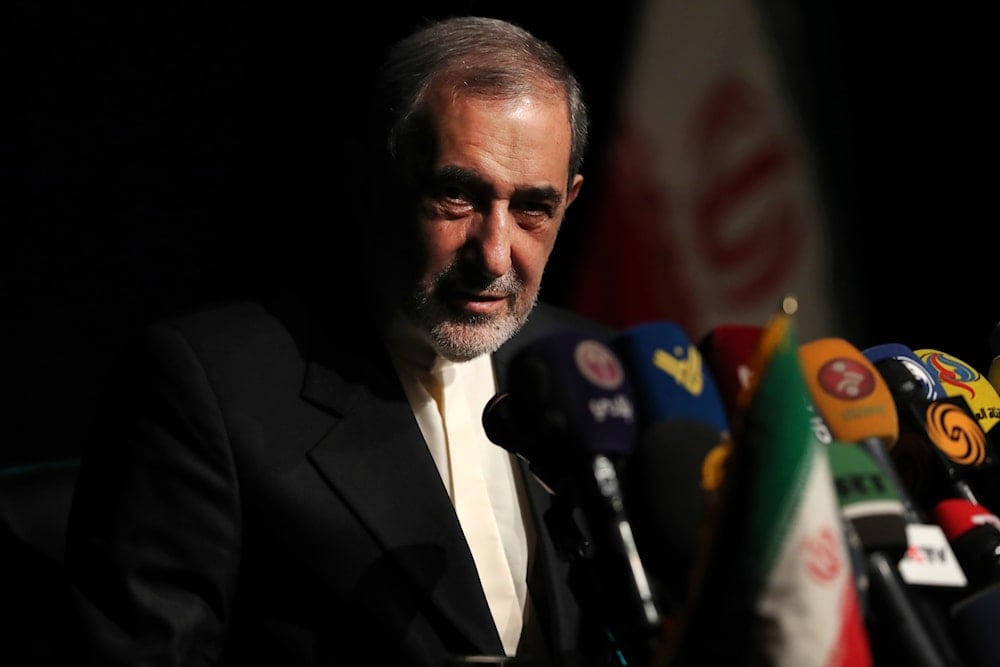
Ali Akbar Velayati, advisor to the Iranian Leader Sayyed Ali Khamenei for international affairs, speaks in a press conference on the new US peace initiative for the Middle East, in Tehran, Iran, Thursday, Jan. 30, 2020 (AP)
Iranian advisor for political and international affairs Ali Akbar Velayati reaffirmed Tehran’s firm support for Yemen and the Resistance Front, stressing the need for an immediate end to the blockade imposed on the Yemeni people.
Velayati made the remarks during a meeting with a delegation from Yemen’s Ansar Allah movement, where he underlined that Iran’s position in the face of colonialism and efforts to eliminate the Resistance remains “strong, clear, and firm.”
He said the developments following the 40-day war had reshaped the regional equation, declaring that the United States “no longer has a place” in West Asia and that the balance of power has shifted in favor of the region’s resisting peoples.
Velayati also described Yemen and Hezbollah as two central pillars of the Resistance Front, saying both play a key role in defending the region’s independence against foreign hegemony.
His remarks come as Yemen continues to face the consequences of years of blockade and aggression, while Ansar Allah has maintained its position in support of regional resistance movements and in opposition to US and Israeli policies in West Asia.
Yemen’s rising role after Iran’s victory
For the Yemeni Resistance, Iran’s victory carries implications beyond morale. It reinforces Ansar Allah’s position as a central front in the regional balance of deterrence, rather than a peripheral actor confined to Yemen’s internal war. By withstanding US-Israeli pressure, Iran has strengthened the argument that the Resistance Front can impose costs across multiple arenas, from Lebanon and Iraq to Yemen and the Red Sea.
Ansar Allah leader Sayyed Abdul-Malik al-Houthi had already hailed Iran’s victory over the United States and “Israel", stressing that Yemen remains ready to confront any aggression targeting Gaza or any front within the Axis of Resistance. His position reflected Yemen’s growing role as a regional pressure front tied directly to the wider confrontation with US-Israeli hegemony.
That role was also evident during the war, when Yemen’s Armed Forces warned that their “fingers are on the trigger” if new parties joined the US-Israeli aggression on Iran or if the Red Sea were used for hostile operations against the Islamic Republic. Reuters noted that Yemen’s position overlooking the Red Sea gives Ansar Allah the ability to threaten shipping lanes around the Arabian Peninsula and strike targets beyond Yemen.
This makes Yemen’s geography one of its most important sources of leverage. The Red Sea and Bab al-Mandab are not symbolic arenas; they are global trade arteries. The Suez Canal route, which links Asia, Europe, and the Mediterranean, accounted for around 10% of global seaborne trade before Houthi operations forced major shipping companies to reroute around Africa, increasing costs and transit times.
In this context, Iran’s victory enhances Yemen’s strategic weight. It signals that the Resistance Front can no longer be treated as separate, isolated fronts, but as an interconnected regional force capable of shaping military, political, and economic calculations. Pressure on Iran can draw responses from Yemen; aggression on Gaza can affect maritime routes; and the siege of Yemen can become part of the wider struggle over the future balance of power in West Asia.
Read more: Ghalibaf meets Resistance Front representatives from Lebanon, Yemen


