
Iran, UAE seek to restore ties after US war on Iran
 3 Min Read
Pezeshkian says Tehran and Abu Dhabi agreed to restore relations after wartime tensions, signaling a diplomatic shift amid wider regional efforts to de-escalate.
-
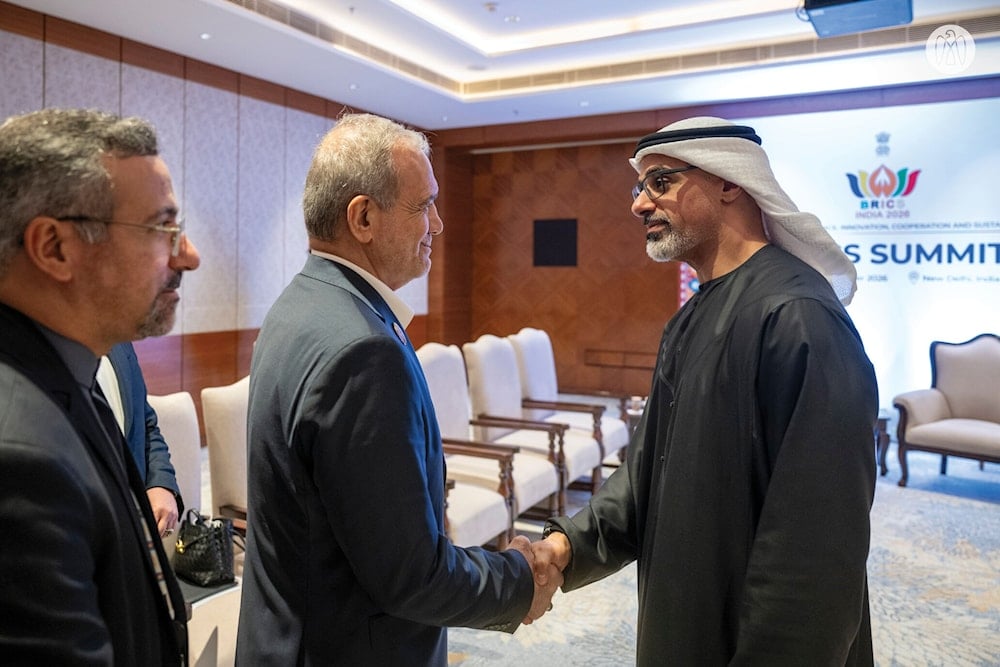
Iranian President Masoud Pezeshkian and Abu Dhabi Crown Prince Khaled bin Mohamed bin Zayed on the sidelines of the BRICS summit in New Delhi, India, on Saturday, September 12, 2026 (Abu Dhabi Media Office)
Iranian President Masoud Pezeshkian said following the BRICS summit in India that Iran and the UAE want to restore relations following the US war on Iran.
"For the first time since the war and the incidents that occurred in the Persian Gulf, we had a constructive exchange with the crown prince of Abu Dhabi," Pezeshkian said a day after a meeting with Abu Dhabi Crown Prince Khaled Bin Mohamed Bin Zayed Al Nahyan on the sidelines of the BRICS summit.
The Iranian President added that "it was agreed that we would turn the page, look to the future and build it together."
Pezeshkian and Abu Dhabi's Crown Prince met on the sidelines of the BRICS summit in New Delhi on Saturday, where the two discussed "regional and international issues, de-escalation, stability, and efforts to advance regional peace and development," per the Abu Dhabi Media Office.
Read more: Iran sets seven conditions for reopening Strait of Hormuz: Tasnim
Iran-UAE relations
Relations between the two nations deteriorated following the opening of the US-Israeli war on Iran in late February. Iranian retaliatory strikes targeted US assets located within the UAE after the Emirate facilitated the aggression against Tehran.
Iran's Foreign Ministry condemned the UAE's "subversive actions" and coordination with hostile actors, repeatedly denouncing Abu Dhabi's continued hosting of foreign military bases and equipment used by parties directly threatening Iran and the region's stability.
Tehran noted that the UAE's actions "contradicted the principle of good neighborliness" and violated the UN Charter via its open cooperation with the United States. Iran rejected Emirati claims regarding Iranian missile and drone launches, stating that military measures were strictly defensive and aimed at repelling US aggression.
By mid-June, senior Emirati and Iranian national security officials held a face-to-face meeting since the war began, an unannounced meeting reported by Bloomberg as a significant and direct effort by both sides to reduce tensions.
The report added that the UAE initiated the outreach after concluding that Iran's government was unlikely to be removed from power despite sustained US-led pressure, forcing the hands of Emirati officials to prioritize engagement over continued confrontation.
Read more: Iranian separatist groups refuse to leave Iraq border area


