
US facing setbacks as pressure fails against Iran, Yemen | Exclusive
 9 Min Read
Professor Mohammad Marandi argues that US pressure has failed to break Iran and says Yemen’s resistance is reshaping the regional balance.
-
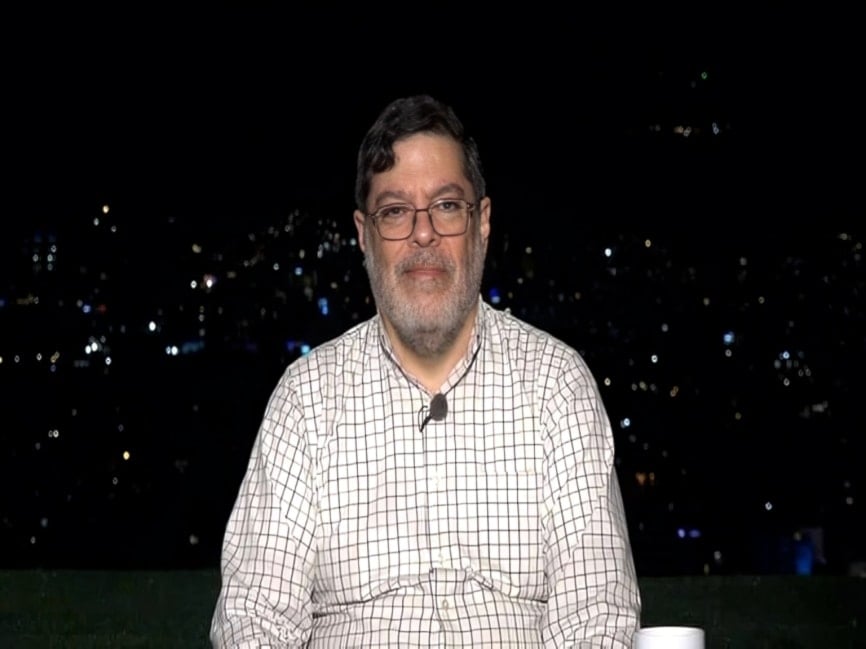
Iranian professor of English literature and Orientalism at the University of Tehran speaking to Al Mayadeen during the program The Grand Standoff: Iran and the World, Tehran, Iran, September 12, 2026 (Screengrab/ Al Mayadeen TV)
Professor Mohammad Marandi said the regional balance of power is undergoing a major shift, pointing to gains by Yemen’s armed forces and mounting pressure on Saudi Arabia as evidence that US and allied policies in West Asia are failing.
Speaking on The Grand Standoff: Iran and The World, Marandi said Saudi Arabia had repeatedly rejected Iran’s calls to resolve its conflict with Yemen directly and respect the Yemeni government in Sanaa.
He argued that the war, which he said is a genocidal war that began more than a decade ago, could have been avoided if Saudi Arabia had pursued a more reasonable policy toward Yemen.
Marandi said Yemenis are now “liberating their land from effective Saudi occupation,” while the Yemeni armed forces are inflicting significant damage on Saudi economic and military assets.
He argued that Yemen’s demands remain centered on ending the blockade and siege and withdrawing Saudi forces, mercenaries, and affiliated troops from Yemeni territory.
“As long as there's a siege on the people of Yemen, the Saudis shouldn't have zero expectations,” Marandi said, adding that Riyadh cannot expect Sanaa to halt military operations while Saudi forces and equipment remain involved in the war.
Marandi rejects claims Iran controls Yemen, Hezbollah
Marandi rejected claims that Iran dictates the decisions of its regional allies, stressing that Yemen and Hezbollah make their own decisions. “I said that Iran does not make decisions on behalf of Yemen and the people of Yemen make their own decisions and the same is true with Hezbollah,” he said.
He argued that Western governments describe these groups as “Iranian proxies” because they do not want to recognize their political agency or indigenous character.
At the same time, Marandi acknowledged that Iran provides support to Yemen, including assistance in developing military capabilities. He said Yemeni students, academics, and engineers have the expertise to produce weapons themselves, while Iran helps Yemen develop those capabilities.
Marandi contrasted this support with US backing for the Israeli regime, accusing Washington of being a “partner in genocide” in Gaza and of supplying weapons used against civilians. He said Iran's regional policy is based on supporting indigenous populations facing US pressure, citing Afghanistan, Syria, Palestine, Lebanon, and Yemen.
Marandi argued that Iran supported the Taliban in expelling US forces from Afghanistan despite significant ideological differences between Tehran and the Taliban. He also said Iran opposed the US-backed Operation Timber Sycamore in Syria and helped prevent ISIS and al-Qaeda from taking control of the country.
Hormuz and Red Sea tensions tied to US policy
Addressing concerns over disruptions to major maritime routes, Marandi said the Strait of Hormuz had remained open until the United States and the Israeli regime launched a war of aggression against Iran. He similarly stressed that the Red Sea had remained largely normal until the United States and the Israeli regime began their war in Gaza.
Marandi said Ansar Allah's maritime operations were aimed specifically at Israeli shipping and intended to pressure the Israeli regime to end the war on Gaza. He argued that the resulting disruptions demonstrate the wider regional consequences of US policy.
“The misery that the people of the region have endured is basically because of U.S. policy,” he said, referring to developments across the Arabian Peninsula and West Asia.
Marandi acknowledged that the United States does not obtain most of its oil directly from the Persian Gulf, but argued that Washington cannot insulate American consumers from disruptions to global energy markets.
He said shortages and higher prices could affect US consumers through gasoline, diesel, helium, sulfur, LNG, and other products originating from the region, including fertilizer. While also arguing that oil companies and the US “oligarchy” could benefit from higher prices, Marandi said ordinary Americans would ultimately bear the economic costs of war.
Marandi: Gulf states should distance themselves from Washington
Marandi said the Strait of Hormuz is geographically located between Iran and Oman, and that other Gulf states could reduce their exposure to regional tensions by distancing themselves from Washington.
He said Iran has repeatedly told the UAE, Kuwait, Saudi Arabia, Qatar, and other regional countries that their problems would decrease if they moved away from the United States. “The United States is a menace to humanity. The regime is the greatest menace on this planet,” Marandi said.
He stressed that Gulf states that continue to align themselves with Washington risk becoming increasingly isolated and vulnerable to regional instability.
Disputing claims of fuel shortages in Iran
Marandi also rejected claims made by another guest on the program that Iran is experiencing fuel shortages, calling the allegations “complete nonsense.”
He said gasoline in Iran is sold through three pricing levels. The heavily subsidized rate is less than one cent per liter and covers a monthly allocation for Iranian citizens, while a second rate is less than two cents per liter. He said gasoline is also available on the open market for six cents per liter.
Marandi challenged the other guest to identify any gasoline station in Tehran where fuel is unavailable or restrictions are being imposed. He also suggested that the program's Tehran correspondent could visit any station identified by the guest and verify whether gasoline is available.
A heated debate over #Iran’s fuel situation unfolded on Al Mayadeen's The Grand Standoff: Iran and the World show.
— Al Mayadeen English (@MayadeenEnglish) September 13, 2026
President of the Global Policy Institute Paolo von Schirach claimed that "there is no more gasoline" in Iran, arguing that reserves were limited and a naval… pic.twitter.com/ApvZn0lBAz
Trump failed to break Iran through war and siege
Professor Marandi said Iran would seek to hurt US President Donald Trump politically, including during the US midterm elections, but rejected the idea that Tehran expects the Democratic Party to pursue a fundamentally different policy toward Iran.
He said that Trump had already failed to defeat Iran militarily and economically, and stated that during the 40-day war, Trump demanded Iran's unconditional surrender but eventually accepted Iran's 14-point peace plan as a framework for negotiations.
He further stressed that Trump's subsequent attempt to use economic siege warfare to force the Iranian economy to collapse also failed. “What happened after over two months? Trump had to accept the MOU,” Marandi said.
According to Marandi, the US then renewed military action but again failed to achieve its objectives.
He pointed to developments in Yemen, Saudi Arabia, and the Strait of Hormuz as evidence that the current pressure campaign is not producing the results Washington sought.
“In this siege warfare now, what is happening to the region? What is happening in Yemen? What is happening to Saudi Arabia? What is happening in the Strait of Hormuz? Things are not going well for the United States,” he said.
US seeks to restore maritime traffic amid Iran war, von Schirach says
On the other end, Paolo von Schirach, President of the Global Policy Institute (GPI), said the United States is seeking to restore normal maritime traffic and secure energy flows amid escalating tensions around the Strait of Hormuz and the Red Sea.
Speaking opposite Professor Marandi on The Great Standoff: Iran and the World, von Schirach said Washington’s main concern is maintaining the movement of oil and liquefied natural gas through key maritime routes and alternative infrastructure, including Saudi Arabia’s East-West pipeline.
He speculated that any sustained threat to maritime traffic by "Yemen’s Ansar Allah could turn the war into a global crisis," while rejecting that the group operates independently of Iran.
Von Schirach says 'Iran is fueling Yemen war'
Von Schirach argued that Iranian military and financial support is essential to Yemen’s military capabilities, saying the group receives weapons, ammunition, and funding from Tehran.
“There would be no Houthi force without Iranian military support,” he said, while acknowledging that Yemen has local grievances that could require a political settlement.
He said Iranian support means Tehran is “de facto fueling this war,” adding that Washington could face pressure to intervene if maritime traffic is seriously threatened.
Von Schirach said Saudi Arabia has the resources to address security threats along its borders, but stressed that any disruption to global shipping would make the Yemen war a wider international concern.
US less dependent on Hormuz oil, Schirach says
Von Schirach disputed that disruption in the Strait of Hormuz would directly create an oil supply crisis in the United States, noting that Washington imports little oil through the strait, he said the United States produces around 13.5 million barrels of oil per day, with about 60% of its imported oil coming from Canada and much of the remainder from Mexico.
However, he acknowledged that disruptions to global supplies still affect US consumers because oil prices are globally linked.
While Marandi acknowledged that the US does not obtain most of its oil directly from the strait, he also argued that ordinary consumers will bear the brunt of the disruptions to global energy markets.
Von Schirach said US gasoline prices had risen from around $3 to $4.50 per gallon since the war began, describing the increase as "significant but not catastrophic."
Von Schirach downplays impact of US midterms
Von Schirach also questioned whether Iran could significantly influence President Donald Trump through the November 3 midterm elections. He said losses for Republicans would not necessarily reflect the war, noting that the president’s party commonly loses congressional seats during midterms.
“Mr. Trump remains president,” he said, arguing that even a significant Republican defeat would not prevent Trump from continuing his current military and economic policies.
Von Schirach ultimately argued that Washington has little reason to change its current approach toward Tehran, despite the broader economic consequences of the war.


